ABC News: Vice-Chancellor George Williams discusses rising student food insecurity and Western Sydney University support initiatives
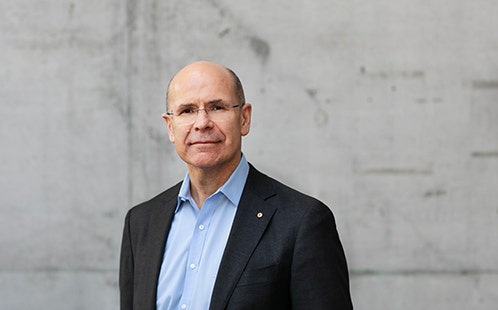
The following is a transcript of an interview that appeared on ABC News between presenter, Kathryn Robinson and Vice-Chancellor and President, Distinguished Professor George Williams AO on Monday, 21 April 2025.
Kathryn Robinson
Well, more and more university students are going hungry and sustained cost of living pressures are forcing many to go without. New research has found food insecurity among students is up 42% in 2022 to 53% in 2024, and the number of students experiencing severe food insecurity has jumped 10%. One university is running a free student pantry, providing students access to fresh and healthy food free of cost. Western Sydney University Vice-Chancellor Distinguished Professor George Williams AO is behind the program, and he joins me now. Hi there George. Thanks for your time.
George Williams
My pleasure.
Kathryn Robinson
These numbers that were run from the research from the University of Tasmania was conducted in 2022 and compared those results to 2024 and asked if food security was a problem and it found that it had really jumped. How big a problem is it at your university?
George Williams
Look. It's enormous. We've got 1 in 2 of our students with food insecurity. So in fact, it matches this study which found in Tasmania about the same figure. What we're also finding, though is it's getting worse. Again, as the survey shows, we're finding more students are struggling to actually get enough food during the week. They're skipping meals and actually it's affecting their studies. It's no surprising that many students are actually struggling to stay in university at all. And this around the country has been a massive issue. And it's explaining why for a lot of young people poverty goes with study.
Kathryn Robinson
Digging into those numbers just before we kind of look at it as a nationwide issue, I was quite surprised to find that extreme food insecurity has jumped 10%. Why are we seeing it jumping at this trend level at the extreme levels?
George Williams
It's jumped 10% to more than 1 in 4. So 1 in 4 students are in that position of skipping meals each week. It's cost of living, it's the fact that students can't pay the rent and eat at the same time. If you look in Sydney, for example, it's $47 a day for youth allowance for living out of home, but the median rent is over $100 a day. So how do you make up that gap? I was at one of our food pantries last week where we were giving out free meals, and I met one student, for example, who has to sleep in their car, and that's how they get through study. So it just does not add up to be a student these days, we don't have enough money to eat, study and live. And not surprisingly again, many are in poverty.
Kathryn Robinson
Are there certain cohorts of students that are more at risk than others?
George Williams
Very much so. So of course, if you come from a privileged, background, then it's unlikely you've got a problem. But we're talking about people who might be first in family, people from low SES and other poor backgrounds. And those are the people who are really struggling. And what the statistics are also showing is they're the ones not going to university in the same numbers. There's been about a 10% decline in people from poorer backgrounds, from pre pandemic going to university. So sadly, the very people who should be part of this social mobility process are the very people who either aren't coming to uni at all or are dropping out in big numbers.
Kathryn Robinson
You mentioned at Western Sydney University, George, that there are pantries that are run there. What is what are some of the schemes that you're running at your university, and what are some of the students telling you about how those schemes are helping them?
George Williams
Well, what they're telling us is they need food to study. And that's why these days we're in the education and the food business in order to get our students through. And for many, it's just the basics. So at our food pantries, we run them each week on one of our campuses with pop ups elsewhere. They can come in and get four items. It could be rice, oats, the basics essentially, so they can have a breakfast and have meals during the day. And we also run a lot of breakfasts and dinners. So about 23,000 we're planning this year. And it's just to get people the basics to get them through their studies. What might also surprise people is it's not just Australian students. Many of these are international students as well, who literally are using their family savings to come to Australia and then really struggling once they're here to make ends meet.
Kathryn Robinson
How could the government's be helping both federal and state? You mentioned before the federal subsidies that are on offer with youth Allowance and Austudy, perhaps better, reflecting the costs that are faced by students. But what about what some of the state governments could be doing?
George Williams
I think for international students, they could look at things like assisting them with subsidies for travel, which is already the case for domestic students. But I think more broadly, just recognising that our society is stacked against young people, it's a pretty raw deal as a young person these days just to get a rental property, let alone to get into the housing market in due course. And of course, the fees for the university are now astronomical for some degrees over $50,000 for a three year arts degree. So essentially, our society is pricing young people of their dreams, making it very hard to study and in this case, very hard to study and eat.
Kathryn Robinson
This is just one of the complexities and the challenges facing the university sector. We know it is an election coming up. What are some of the key things that the universities are asking for in this election campaign?
George Williams
Well, in my case, what we're asking for is just a fair deal for students. So it's actually not about dollars for us. We just think the fees for students should be fair. They're set by government, particularly for an arts degree that $50,000, that's the degree that has the lowest earnings on graduation. It's the degree of choice for poorer families, first in family to university women, indigenous people. And we're effectively saying you pay the highest fees for the lowest salaries. And that's actually turning them away from study in the first place. So from our point of view, it's just saying give students a fair go, give them a chance to lift up their lives, because actually we're really undermining our society by making it very hard for young people to get ahead.
Kathryn Robinson
George, it's always great speaking with you. Thank you very much for your time.
ENDS
22 April 2025
Latest News
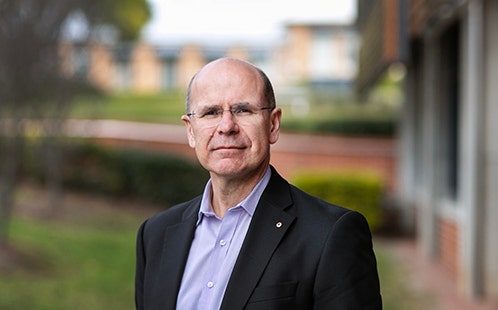
The following is a transcript of an interview that aired on ABC Radio National Saturday Extra between presenter, Nick Bryant and Vice-Chancellor, Distinguished Professor George Williams AO.

Western Sydney University are the number one Australian solar car team at the 2025 Bridgestone World Solar Challenge
Western Sydney Solar Car team has crossed the finish line placing preliminarily sixth in the world overall, and the number one Australian team in the world’s most prestigious solar car challenge.

Western Sydney University Statement on Cyber Incidents
Western Sydney University has issued an update to its community following confirmation that previously stolen personal information was published online, including on the dark web.