Western Sydney University experts call for reversal of NDIS cuts for music therapy
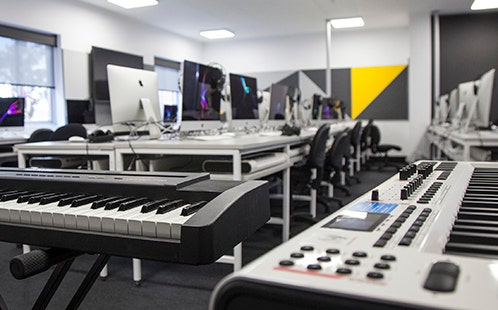
Experts from Western Sydney University’s Master of Creative Music Therapy program said the decision by the National Disability Insurance Scheme (NDIS) to significantly change the way it funds music therapy not only jeopardises the evidence-based therapeutic outcomes for NDIS participants, but also the viability of music therapy training programs to meet Australia’s skilled workforce needs.
Dr Allison Fuller and Associate Professor Alison Short oversee the two-year postgraduate Creative Music Therapy program within Western Sydney University’s School of Humanities and Communication Arts.
The University also teaches a two-year Master of Art Therapy, which is the only program of its kind in NSW and one of only five such programs in Australia. Art therapy is also impacted by the proposed changes to the NDIS.
Dr Fuller and Associate Professor Short can provide expert comment for media on the Government’s recent decision to change funding for music therapy under the Capacity Building – Improved Daily Living category. They can speak to what this means for NDIS participants, as well as the sustainable pipeline of highly-skilled workers required for Australia’s workforce needs.
Western Sydney University’s Master of Creative Music Therapy is one of only two accredited university-level music therapy programs in Australia.
Dr Fuller and Associate Professor Short said many NDIS participants and their families rely on music therapy to enhance participants’ communication, emotional regulation, and social engagement. Removing funding denies these individuals access to critical supports tailored to their unique needs.
“ Music therapy is a rigorously evidence-based allied health profession, with substantial research supporting its efficacy in improving physical, cognitive, emotional, and social outcomes for individuals with disabilities,” said Dr Fuller.
“The decision to classify music therapy as a non-therapeutic support is both inaccurate and harmful, disregarding the significant and measurable impact music therapy has on NDIS participants.”
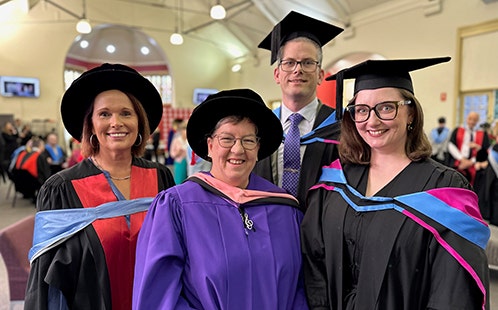
Dr Allison Fuller and Associate Professor Alison Short with Dr Oliver O’Reilly and Lauren Bortolazzo
They said the decision poses a threat to professional standards as well as other economic impacts.
“Registered Music Therapists (RMTs) complete five to six years of university training, including rigorous coursework and clinical practice. Downgrading music therapy’s status could result in unqualified individuals providing services, compromising the quality of care,” said Associate Professor Short.
“The proposed reduction in funding rates—from $193.99 to $67.56 per hour—will also force many music therapy practices to close. Businesses within Australia which serve predominantly NDIS participants, have already expressed concern about their ability to operate under these conditions.”
Associate Professor Short says this threat to education and training will have a significant impact on Australia’s future workforce needs in the allied health and social assistance industries.
“Western Sydney University has a proud history of training registered music therapists through its Master of Creative Music Therapy program. The NDIS decision puts at risk the placement opportunities that are integral to students’ education. Without sustainable funding, music therapy practices will be unable to provide these placements, threatening the pipeline of skilled professionals entering the field,” said Associate Professor Short.
“Our current cohort of 65 masters-level students have invested significant time and finances in training and registering in order to be able to provide music therapy supports to people with a disability within the NDIS.
“Additionally, we estimate that approximately 80 per cent of our graduates from the last 25 years are employed primarily within NDIS services. The impact of the decision without consultation cannot be underestimated.”
Dr Fuller and Associate Professor Short urge the NDIS and the Australian Government to halt these changes and initiate a consultation process with stakeholders, including Universities, the Australian Music Therapy Association, and service providers.
“We need to recognise music therapy as an evidence-based allied health profession, critical to the well-being of NDIS participants and the broader community. We need to ensure ongoing levels of funding to provide equitable access to high-quality Music Therapy services and support the growth of what is a much-needed, highly-skilled profession,” they said.
ENDS
27 November 2024
Latest News
ABC RN transcript: Vice-Chancellor Professor George Williams discusses higher education sector, student support, and the impact of AI
The following is a transcript of an interview that aired on ABC Radio National Saturday Extra between presenter, Nick Bryant and Vice-Chancellor, Distinguished Professor George Williams AO.

Western Sydney University are the number one Australian solar car team at the 2025 Bridgestone World Solar Challenge
Western Sydney Solar Car team has crossed the finish line placing preliminarily sixth in the world overall, and the number one Australian team in the world’s most prestigious solar car challenge.

Western Sydney University Statement on Cyber Incidents
Western Sydney University has issued an update to its community following confirmation that previously stolen personal information was published online, including on the dark web.