Western Sydney University expert asks will the Productivity Commission’s recommendations really deliver equitable Early Childhood Education and Care?
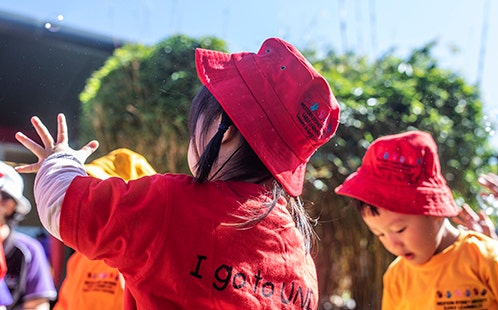
According to Associate Professor Jennifer Skattebol from Western Sydney University’s Transforming early Education And Child Health (TeEACH) Research Centre, Australia’s aspirations for equitable education requires an accessible high-quality child-care and preschool education system.
Associate Professor Skattebol, an expert in inequality and early childhood education, says that while successive Australian governments have made investments towards a universal Early Childhood Education and Care (ECEC) system, persistent inequalities in access and the quality of care remain.
Her research, particularly in high poverty contexts, suggests that the latest Productivity Commission’s report paves the way towards this system, but continued reliance on a mix of for-profit and not-for-profit services may present a significant roadblock.
“There has been a lot of anticipation about the Productivity Commission’s report into early childhood education and care. State and Territory governments are providing increasing access to free ECEC in the two years before school. The federal government has supported a 15 per cent wage increase for ECEC workers tied to a condition which limit fee increases for families. There is still much more to be done,” said Associate Professor Jennifer Skattebol.
She explains the children who stand the most to gain from high quality ECEC are still the ones most likely to miss out because of affordability, lack of cultural fit with their family life, and uneven distribution of high-quality services.
“Successive governments have invested too little in supply side infrastructure and workforce and reliance on a mixed market system has produced childcare “deserts” – a term that denotes there are more than three children aged four and under for each place available in childcare. This is also known as ‘thin markets’,” she said.
“There is a lack of supply in areas where there is little profit to make – low socioeconomic areas and remote areas. Our research was conducted with families who use high quality services in these areas and with five services that deliver high quality services - preschools, long day care and family day services.
“The Productivity Commission recommends the Australian government provides additional funding to enable the establishment of appropriate services and, where necessary, ensure their ongoing viability.”
Research led by Associate Professor Skattebol emphasises the complex work needed to provide accessible, meaningful early childhood education in high-poverty areas. This includes flexible hours, outreach, inclusion support, and adequate resources for educators to ensure cultural safety.
“Marginalised families benefit from multiple soft entry points. A key facilitator of connections between services and communities is when educators come from their local community. This is a feature of Family Day Care services where educators are often well connected locally,” she said.
“Adequate staff-child ratios are especially important in culturally diverse areas or communities, such as First Nations, refugees, and migrants. In economically disadvantaged neighbourhoods, it is essential early childhood education services reach out into communities where families may not know about how to access ECEC and need to develop trust.”
“Perhaps the most important recommendation is the establishment of an independent ECEC Commission to support, advise and monitor governments’ progress towards universal access to ECEC. A universal system fully funded by government is the only kind of system that moves away from profit imperatives and that can deliver equitable ECEC.”
ENDS
18 September 2024
Latest News
ABC RN transcript: Vice-Chancellor Professor George Williams discusses higher education sector, student support, and the impact of AI
The following is a transcript of an interview that aired on ABC Radio National Saturday Extra between presenter, Nick Bryant and Vice-Chancellor, Distinguished Professor George Williams AO.

Western Sydney University are the number one Australian solar car team at the 2025 Bridgestone World Solar Challenge
Western Sydney Solar Car team has crossed the finish line placing preliminarily sixth in the world overall, and the number one Australian team in the world’s most prestigious solar car challenge.

Western Sydney University Statement on Cyber Incidents
Western Sydney University has issued an update to its community following confirmation that previously stolen personal information was published online, including on the dark web.