Western researchers receive more than $8 million through ARC Discovery Projects scheme
Ten projects led by Western Sydney University researchers have been collectively awarded more than $8 million through the Australian Research Council’s (ARC) 2025 Discovery Projects scheme.
The Discovery Program aims to nurture research excellence, contribute to the growth of Australia’s research and innovation capacity, encourage research and training in high-quality research environments and enhance the international competitiveness of Australian research.
This funding outcome represents a 71.4% success rate for Western, notably higher than the 47% success rate across the sector.
Senior Deputy Vice-Chancellor and Vice-President (Research, Enterprise and Global) Professor Deborah Sweeney congratulated all involved in this funding success.
“This impressive funding success reflects Western’s continued focus on sustained research excellence, innovation, and outcomes that translate into impactful economic, social and environmental change for the communities we serve around the globe,” said Professor Sweeney.
For a full list of funded Discovery Projects for 2025, including a snapshot of funding by state and territory, please view the Grant Announcement Kit (opens in a new window)
For more information on the Discovery Projects scheme, please visit the ARC website (opens in a new window).
2025 ARC Discovery Projects
-
Distinguished Professor Gerard Goggin, Institute for Culture and Society ($2,175,460)
- Disability and Digital Citizenship. Disability and Digital Citizenship. This project investigates people with disability’s full participation in the digital age by advancing a new conceptualisation of digital citizenship. The project’s benefits should help optimise national digital policy and strengthen national research capabilities in the emerging area of inclusive and accessible technology.
-
Associate Professor Andrew Milne and Dr Hannah Sarvasy, School of Humanities and Communication Arts and the MARCS Institute; Professor Roger Dean, MARCS Institute ($914,548)
- Revealing Universal and Cultural Origins of Music-Induced Affect. Across almost all human cultures, music has a remarkable capacity to communicate different affects (emotions and feelings). However, it is unknown which, if any, associations between music-acoustical features and affects are universal, and which are cultural. The findings of this study will have profound implications for the use of sound and music in therapeutic applications and will help identify ways to bridge cultural divides through intercultural musical appreciation.
-
Professor Susan Hespos, School of Education and the MARCs Institute; Dr Genevieve Quek, MARCS Institute ($838,885)
- The origins and development of human analogical reasoning. This project aims to reveal how our impressive capacity for analogical reasoning emerges during the first years of life. Expected outcomes are a comprehensive picture of individual differences in early learning abilities that can support improved learning opportunities and interventions, and novel paradigms that transfer to species-comparison studies exploring the unique aspects of human cognition.
-
Professor Paola Escudero, MARCS Institute ( $604,943)
- Understanding the mastery of multiple languages and dialects. This project will provide a unifying theory of how subsequent languages are acquired after mastering two languages or dialects. Expected outcomes include a deep understanding of how multilingual and multidialect mastery proceeds, how these are represented in the brain, and how they manifest in communicative contexts.
-
Professor Vivian Tam and Associate Professor Khoa Le, School of Engineering, Design and Built Environment ($576,807)
- Hybrid nanoreinforced recycled concrete for sustainable building. This project aims to develop a durable recycled concrete using nanotechnology that can store and release thermal energy in response to temperature changes. The expected outcome is to develop a sustainable building material that can significantly reduce energy demand for heating and cooling in buildings, contributing to a net-zero emissions future and cost savings in the construction industry.
-
Professor Richard Yang, Professor Sarah Zhang and Professor Brian Falzon, School of Engineering, Design and Built Environment ( $697,299)
- 3D Printing of Recycled Thermoplastic Polymer Nanocomposites. This project aims to develop a novel 3D printing technology, Fused Granular Fabrication, to integrate innovative nanotechnology and high-performance 3D printed nanocomposites using recycled plastic reinforced with carbon nanoadditives. This project will deliver sustainable manufacturing solutions for the urgent and critical plastic waste management issue for the nation and the world.
-
Professor Scott Johnson and Dr Yollima Carrillo, Hawkesbury Institute for the Environment ($598,555)
- Synergising plant symbionts and silicon to mitigate heat stress in legumes. Legumes often become unproductive because their microbial symbionts, which turn nitrogen from air into plant-usable forms, do not tolerate high temperatures. This project aims to mitigate such heat stress by stimulating plant microbial symbionts with silicon supplementation. This could confer significant benefits to soil health and crop productivity.
-
Prof Denis Byrne and Prof Gay Hawkins, Institute for Culture and Society ($504,070)
- The legacy of coastal infrastructure: reclamations and seawalls. Positioning coastal reclamations and seawalls in Asia-Australia as artefacts of the Anthropocene, the project aims to highlight their historical role in the expansion of human habitat into the sea, provoking debate on the sustainability of human coastal terraforming practices and assisting the heritage field to reassess the significance of historic coastal infrastructure in the context of the current climate crisis.
-
Professor Brett Neilson and Professor Ned Rossiter, Institute for Culture and Society ( $ 704,099)
- Transborder Electricity Infrastructures and Geopolitics. This project aims to understand how the extension of renewable electricity grids across national borders inflects geopolitics. The project is significant for specifying how the energy transition spurs the emergence of large infrastructural systems that reorganise the spatial dynamics of globalisation. Intended outcomes include insights into how transborder grids shift regulatory frameworks to meet challenges facing populations, economies and environments.
-
Dr Hannah Sarvasy, School of Humanities and Communication Arts and the MARCS Institute and ( $557,078)
- Scope and ramifications of Indigenous language loss among PNG's youth. Some Papua New Guineans think that Australia is falling behind East Asian nations in grasping PNG’s current needs. A massive societal change is underway in PNG, through which its youth appear to be rapidly abandoning its 600-800 Indigenous languages. This could have major ramifications for social cohesion in a country where language has traditionally been a major marker of group identity. This project will assess the scope of Indigenous language loss among youth in PNG, assess the potential for intervention, and study ramifications for social cohesion, individual and community well-being, and even cognition.
ENDS
27 November 2024
Latest News
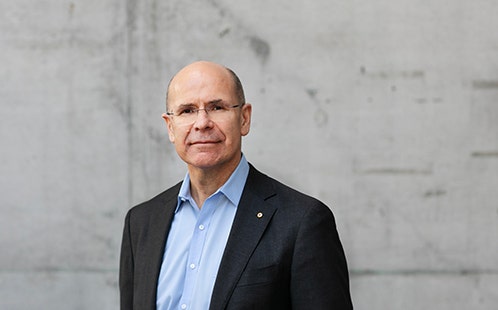
ABC RN transcript: Vice-Chancellor Professor George Williams discusses higher education sector, student support, and the impact of AI
The following is a transcript of an interview that aired on ABC Radio National Saturday Extra between presenter, Nick Bryant and Vice-Chancellor, Distinguished Professor George Williams AO.
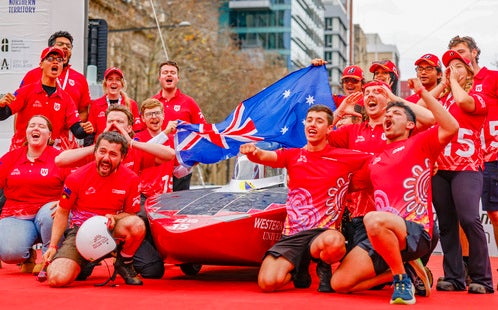
Western Sydney University are the number one Australian solar car team at the 2025 Bridgestone World Solar Challenge
Western Sydney Solar Car team has crossed the finish line placing preliminarily sixth in the world overall, and the number one Australian team in the world’s most prestigious solar car challenge.
Western Sydney University Statement on Cyber Incidents
Western Sydney University has issued an update to its community following confirmation that previously stolen personal information was published online, including on the dark web.