The Morning Edition Transcript: Australia’s student loan system is ‘broken’. Will the PM’s radical plan fix it?
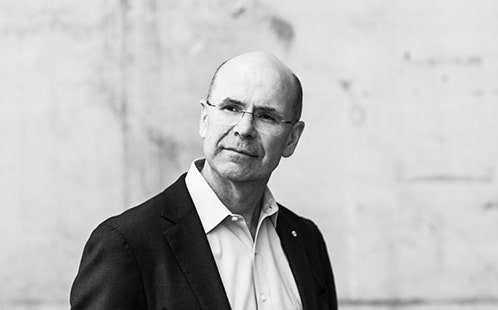
The following is a transcript of an interview that appeared on The Morning Edition podcast(opens in a new window), between presenter Samantha Selinger-Morris and Vice-Chancellor and President, Distinguished Professor George Williams AO, on Tuesday, 5 November 2024.
Samantha Selinger-Morris:
From the newsrooms of the Sydney Morning Herald and The Age. This is the morning edition. I'm Samantha Selinger-Morris. It's Tuesday, November 5th.
After weeks of media scrutiny that has painted Anthony Albanese as tone deaf and out of touch with Australians struggling with financial distress, the prime minister launched a compelling pitch over the weekend. Should labor win the next election, Albanese would slash student debts in a $16 billion proposal. Young Australians are in desperate need of help.
Student poverty and hunger has become so dire that Western Sydney University has had to establish a food pantry. Today, Western Sydney University vice chancellor Professor George Williams and federal political correspondent Paul Satchell on whether the prime minister's proposed reform would fix what many say is a broken student loan system. And if labor is using student debt relief to buy the youth vote.
Professor Williams, welcome. Can you please start by telling us what the government has proposed?
Professor George Williams:
Well, the Government's proposed a trifecta of reforms. What they've said is they're going to reduce student debt by 20%. That's for people who currently have that debt. They've also said they're going to change the level at which repayments have to start, increasing that by about $10,000, so you won't have to repay at lower income levels. And thirdly, they've announced previously they're going to change the indexation system. So instead of the debt being tied to really high inflation, it can be tied to lower wages. And that's also a key change. All of which collectively mean if you've got a student debt it's a good day. These will make a positive difference for you.
Samantha Selinger-Morris:
What this will do is help people who are just starting out, who've just finished uni, who've just finished TAFE and have now got to pay the bills, pay the rent, or are saving for a mortgage.
Samantha Selinger-Morris:
Okay, but let's get into this though, because this is a welcome proposal. But you've actually just argued in a piece that the system for setting university fees in the first place is actually broken. So can you briefly explain what the system is currently and how we actually ended up there?
Professor George Williams:
Yes, it is broken, but it's not because I think students should be free of fees. I actually think it's appropriate. If you do a university degree, you're on a track to a high paying job, a better life, and I think it's fair enough you give back in respect of that degree. And that was recognised by the Hawke government going back a long time. In 1989, they introduced the HECS system. I was actually one of the first students myself who had to pay HECS, and it was $1,800 a year, irrespective of your course.
In 1996, John Howard came in and said, yep, let's keep the system. But you should pay differently based upon your course. And again, I think that's fair enough. As someone who did a law degree, you have a higher income paying higher fees.
What happened though in 2021 was we had the job ready graduates package with the Morrison government that broke the system. Unfortunately, it removed the link between how much you pay and your salary on graduation, and the government sought to influence student choice by saying, let's make some degrees like arts degrees, history, philosophy and the like more expensive and on the other hand, much cheaper to do maths. And the idea was people might swap between philosophy and maths. Of course it doesn't happen. And in fact the whole premise of price controls affecting student choice has not worked.
Samantha Selinger-Morris:
And just to be clear, this was because the government essentially wanted to steer students based on their own priorities. They did.
Professor George Williams:
And national priorities. And again, you can understand why, if we need a lot of nurses, mathematicians and the like, well, why not send a signal to students? But sending a price signal didn't work. And less than 1 in 50 students, according to one study, actually changed by virtue of the price signal.
What it did do, though, is instead of changing preferences, is it loaded students up with massive debt. And in particular, it meant that some degrees which have the lowest incomes end up with the highest debt.
Sitting their exams, some of them today. This week are thinking about the fact that the degree that they set their heart on years ago is now going to cost them more than $40,000, in many cases more than $50,000.
Professor George Williams:
And the best example of that is your humble arts degree, which, of course, is the degree of choice for a lot of low SES students, women, indigenous peoples. And that's the entry point for many people. It's now more than $50,000 for three years, the most expensive degree you can do. And there are, of course, people who not only are going to be hit with a big debt, but in fact many will have a debt until death. They will not ever be able to pay it off.
So, I think the prioritization was wrong in the first place. It was wrong to assume that students would actually be influenced by this, as opposed to getting big debts or just not studying in the first place. And also, we end up with a system where the fees keep going up. So students these days owe a collective $81 billion because of student fees. We're collecting more from this than some petroleum taxes. And it shows. As a society, I think our whole set of prioritization is out of kilter.
Samantha Selinger-Morris:
And one thing that I, you know, really sort of stopped me in my tracks when I read your piece was that students are going hungry. So your university, Western Sydney University, opened a free food pantry. I mean, that's horrific.
Professor George Williams:
It is. And I think we don't talk enough about the fact that many of our young people who are looking to get ahead and getting an education are in poverty. I'm hearing from my students who are saying I can't afford to eat and study. Some are coming to class hungry, not having had breakfast. Of course, what happens is many drop out. They just can't afford to keep it up.
Some are not only having a full time job, but they've got two jobs in some cases because they're dealing with housing pressures. And if you think cost of living, which is a massive issue for the community, it's magnified for young people who don't have the assets they're trying to study, which doesn't pay, and they're trying to balance so many things. That often means that something like the necessities of life, like food, get missed.
And so yes, at our end, we're in the food and education business where we've opened a free pantry. We let our students have rice, oats and the like to get them through the week. And separately, we're into breakfasts and dinners and the like because we recognize that if you can't afford to eat, it's pretty hard to study.
Samantha Selinger-Morris:
Okay, so then let's talk about Anthony Albanese's pledge to wipe out 20% of a student's debt. Does this rectify this unfairness? And if not, what will?
Professor George Williams:
Well, I think the first thing to say is that a lot of people who's going to like this are 3 million people, roughly, are going to get about $5,000 wiped off their debt, and they'll be happy. It'll lead them into the election and, of course, satisfies that purpose.
And also the changes to indexation are very positive. I think giving people more time before repaying is positive. But what it doesn't do, it's all at the back end if you like. We're dealing with debt. It's the front end that is driving the problem. It's a bit like we have a housing affordability crisis in this country at the moment. You don't deal with that by dealing with mortgages. I mean, that's the wrong end of things. You've got to deal with the price in the first place, and the 20% reduction in student debt doesn't help anyone who's just paid off their degree. It doesn't help anyone who's in the system. And unless we're going to have these regular amnesties of 20% reductions, there's a lot of people who just will not benefit. And often they're the people in greatest need. It should be twinned with dealing with the fees. Students are now paying so they don't incur the large debts in the first place. And I think this is $16 billion.
I would have loved to have seen some of that go to the front end. And in particular, why don't we start with the arts degrees, which again, the highest priced degree for the lowest incomes is just wrong and unfair. And if you think of the world in which we live at the moment, where misinformation is rife, we need critical thinkers.
The world actually needs more philosophers, historians, creative writers, people who can think deeply about the society in which we live.
Samantha Selinger-Morris:
Professor Williams, thank you so much for joining us.
Professor George Williams:
My pleasure.
ENDS
5 November 2024
Latest News
ABC RN transcript: Vice-Chancellor Professor George Williams discusses higher education sector, student support, and the impact of AI
The following is a transcript of an interview that aired on ABC Radio National Saturday Extra between presenter, Nick Bryant and Vice-Chancellor, Distinguished Professor George Williams AO.
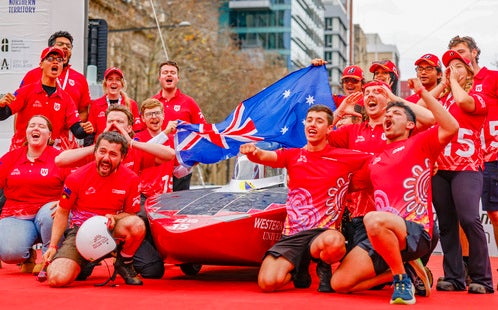
Western Sydney University are the number one Australian solar car team at the 2025 Bridgestone World Solar Challenge
Western Sydney Solar Car team has crossed the finish line placing preliminarily sixth in the world overall, and the number one Australian team in the world’s most prestigious solar car challenge.
Western Sydney University Statement on Cyber Incidents
Western Sydney University has issued an update to its community following confirmation that previously stolen personal information was published online, including on the dark web.