Senate inquiry into international student caps: Vice-Chancellor’s opening statement
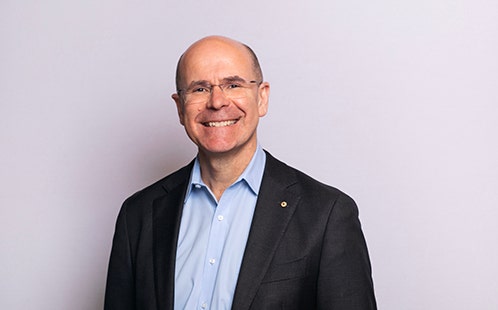
The following is a transcript of Vice-Chancellor and President, Distinguished Professor George Williams AO's opening statement delivered on Monday, 26 August 2024 at the Senate inquiry examining the proposed restriction on international student numbers.
Thank you Chair, and thank you for the opportunity to speak with you today. I do come from a position where we understand the policy issues animating this legislation, including ensuring that housing is kept at a reasonable level and availability for Australians, and also the need to deal with integrity issues. Our submission, though, is that we have two key concerns with this legislation that means that there is not in a fit point to be passed.
The first of these relates to Western Sydney. This legislation, in part, is directed at issues about the availability of housing, and we would say, and we're happy to open our books to this point, that we have a bed for every student who wishes to study with us internationally. In fact, we have capacity in our colleges, about 20 per cent capacity. We also have 500 beds that were in the process of developing and have planned for the future in line with Western Sydney's needs. It is also the case that many of our students, many, many of our students, undertake home stay, which means they actually decide not to stay in college accommodation. They live with a local Western Sydney family. They provide an income up to $400 a week to that family, and they assist those families into defraying cost of living pressures, and in fact, international students play a key role in Western Sydney in enabling people to deal with those pressures.
Another impact on Western Sydney is that we need international students in Western Sydney because they deal with key skill shortages. Our 9000 international students are often directed to solving those problems, the largest of which is nursing. We have a shortage of about 10,000 nurses in Western Sydney. Last year, most of our 1350international students studying nursing went to work in Western Sydney in defraying that issue. If we do not have international students studying nursing able to deal with those shortages, the quality of healthcare in Western Sydney will be dramatically affected.
We're also in the position [in] Western Sydney, where we need international students to fill key skills gaps as a result of the Western Sydney Airport, the Bradfield development, and major corporates such as Amazon and the like that are investing hundreds of millions of dollars and need students that cannot be met through domestic demand alone to deal with those needs. It's also, of course, the case that many local businesses depend directly upon these students for their survival.
The last point about the impact upon us, before turning to the Bill itself, is that we're a University that depends upon international students, in particular, to assist us with our equity programs. When it comes to our University, we have the largest number of low SES students in the nation, two thirds of our students, the first in family to ever go to university, and many of our students are dealing with the most basic problems that we need to assist them with. Often that's as basic as food. So, we have, for example, recently opened a Western pantry which provides rice, oats and other staples to our students. Because what we're hearing from those students is they're not able to both study and eat, and international students provide a key source of revenue to support domestic students, otherwise unable to study at university, but for the support we are able to provide.
The second point I wanted to make was about drafting issues in the Bill. And I come at this as someone very recently, a Vice-Chancellor of four weeks prior to that, a constitutional lawyer, and have appeared before many of these committees dealing with many pieces of contentious legislation. And when I look at this Bill, it's remarkable in many respects, in fact, very surprising as a piece of legislation, to even see it coming before this committee, the concentration of power is surprising. It's unfettered, coercive and being concentrated in a minister in a way that you would normally associate, in my experience, with a Biosecurity Act or a piece of national security legislation, you would not expect it in a piece of industry policy, particularly something directed at higher education.
The Bill itself bears this out very clearly in its drafting, Section 26b in dealing with the ability to set caps at a high level, of course, affecting things like jobs, viability, billions of dollars of revenue and of course, students, fails to include some of the most basic things you would expect to see in a piece of legislation of this kind. There is no criteria by which the minister makes a decision. For example, where is the reference to housing, financial sustainability, employment integrity, where is the reference also to differential impact upon States, which could lead to a constitutional issue with regard to Section 99 of the Constitution, whether Commonwealth cannot give preference to one state or another. Also, what is missing is a process, the minister may consult. Of course, that's as weak as you get in this context, but there is no process to inform this decision making which is required by the legislation. And finally, of course, there's no reasons. So, we have a power without criteria, without a process and without reasons, which, again, you would not expect to find in legislation of this kind. It's made worse in clause 26c where even the possibility of parliamentary disallowance is removed, removing even that basic check and the ability of Parliament to scrutinise these things and these issues are replicated in Sections 26e, and F. These things are magnified by the penalty provision in Section 96. It's not a clear provision, but as many times as I read, it appears to say that a provider can have its license effectively suspended should it go over the cap. It's hard to think of a more disproportionate penalty on the federal statute book than a penalty of this kind. And of course, the normal approach would be a fine of some kind to provide a clear and strong disincentive, not a use it or lose everything approach as this [does].
And finally, I just mentioned the transitional provision in Section 53, 2, which enables, in this year for the 2025 caps, the date for determining the cap to be put at 31 December this year, as opposed to 1 September. And that, of course, is completely unworkable. Combined with the penalty provision whereby you can lose your license. It's hard to imagine any industry being able to deal with this, let alone so late in the cycle. And I'd simply say that if we were to apply this to other areas, if, for example, we applied this to mining and said that we're going to regulate how much you can export, we're not going to have criteria. If you export one ton extra, you lose your license to engage in any business, and [we] will tell you the day before the new year, irrespective of what contracts you've entered into, that this is the impact upon your business, people would rightly be saying, what sort of measure is this? So, my second point, then essentially, is this is poorly drafted, not fit to be passed, and simply not adapted well to the problem that we're facing.
ENDS
26 August 2024
Photo credit: Sally Tsoutas
Latest News
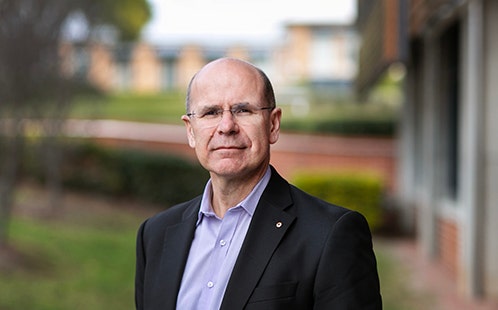
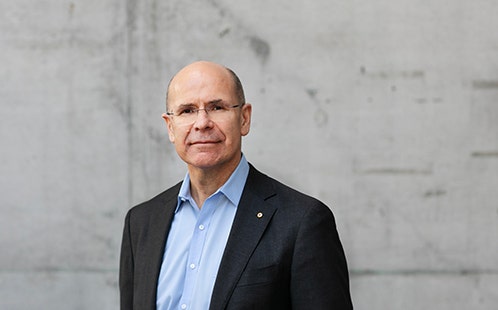
ABC RN transcript: Vice-Chancellor Professor George Williams discusses higher education sector, student support, and the impact of AI
The following is a transcript of an interview that aired on ABC Radio National Saturday Extra between presenter, Nick Bryant and Vice-Chancellor, Distinguished Professor George Williams AO.
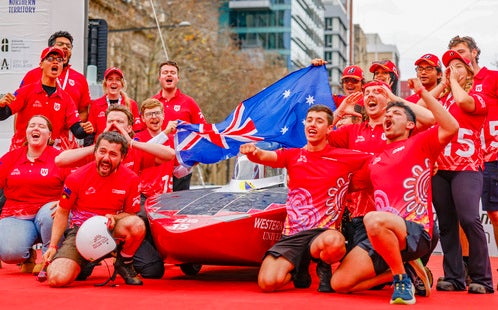
Western Sydney University are the number one Australian solar car team at the 2025 Bridgestone World Solar Challenge
Western Sydney Solar Car team has crossed the finish line placing preliminarily sixth in the world overall, and the number one Australian team in the world’s most prestigious solar car challenge.
Western Sydney University Statement on Cyber Incidents
Western Sydney University has issued an update to its community following confirmation that previously stolen personal information was published online, including on the dark web.