Opinion: Labor’s caps on international students are on the brink of defeat. Will they now act in the national interest?
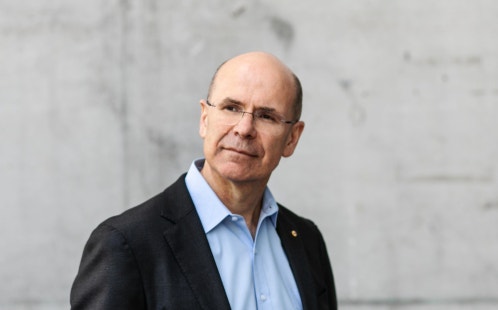
The following opinion piece by Vice-Chancellor and President, Distinguished Professor George Williams AO, was first published by The Guardian.
The expected defeat of the federal government’s proposed caps on international student numbers provides the entire nation with an important opportunity for a reset and policy reconsideration.
The legislative changes were never just about universities; their ramifications extended to the economic and social wellbeing of our communities and to the signal Australia sends the world as an outward-facing, inclusive nation.
The government’s formula for determining the international student caps was always flawed, rushed and blunt.
An opportunity now exists to pause, reconsider and put the issue beyond the election, enabling a sober assessment that genuinely examines the national interest. This should include looking at the appropriate levels of migration, the role of international education and the enormous benefits international students bring to Australia.
The student cap wasn’t subject to proper consultation.
For a policy change ostensibly designed to ease the pressure on the nation’s housing crisis, the international student cap failed to take into account differentiation on things such as housing in city, suburban and regional areas, skills shortages and community impact.
Our international students do not contribute to the nation’s housing crisis.
Every single one of our international students who wants a bed gets a bed. Western Sydney University’s purpose-built student accommodation currently has 20% spare capacity. The university is also building at least 300 new beds in Parramatta and at least 200 new beds in Bankstown.
Many of our international students also choose to live with local families. They help families make ends meet, they work filling labour shortages in local businesses, and they shop in our local communities. Without their contribution, many small businesses would struggle to stay afloat.
The proposed international student caps would have had perverse and unintended consequences on our community.
Our region relies on international students to fill acute skills shortages, including in difficult-to-staff professions such as nursing and aged care.
Most of the 1,350 international students who studied nursing and midwifery with us last year have gone on to work in local overburdened hospitals. The region is forecast to be short of 10,000 nurses next year.
The caps would have meant that, within three years, we would have 25% fewer international students being trained as nurses.
Reducing the nursing pipeline would have further strained our local public hospital system, which would affect patients directly.
International students provide the funds that help support our domestic students. Every dollar an international student brings to to the university sees 24c go to domestic students, such as our food pantry, which provides students with free vegetables, rice, oats and other household staples.
Many domestic students cannot afford to eat and study and, if we don’t provide free food, they risk dropping out.
The decision by the Coalition and the Greens to block the government’s legislation is a moment to take stock. As we have consistently said, the bill needed more thought and more consultation.
We have an opportunity now to address the real issues affecting the nation’s university students, such as the poverty many of our domestic students face.
The latest political developments leave the sector with many uncertainties. The government’s Ministerial Direction 107, implemented in December last year to reduce visa approvals among “high-risk” universities, remains, and has had a particularly devastating impact on outer suburban and regional universities. It has reduced the numbers of international students but not in a way that has served communities.
Now is the time for a reset but we must recognise that the damage is still being done as long as the direction remains in place.
ENDS
19 November 2024
Latest News
ABC RN transcript: Vice-Chancellor Professor George Williams discusses higher education sector, student support, and the impact of AI
The following is a transcript of an interview that aired on ABC Radio National Saturday Extra between presenter, Nick Bryant and Vice-Chancellor, Distinguished Professor George Williams AO.

Western Sydney University are the number one Australian solar car team at the 2025 Bridgestone World Solar Challenge
Western Sydney Solar Car team has crossed the finish line placing preliminarily sixth in the world overall, and the number one Australian team in the world’s most prestigious solar car challenge.
Western Sydney University Statement on Cyber Incidents
Western Sydney University has issued an update to its community following confirmation that previously stolen personal information was published online, including on the dark web.