Opinion: A university, not a corporation
The following article authored by Vice-Chancellor, Distinguished Professor George Williams AO was published by Meanjin (opens in a new window) on Monday, 2 December 2024.
Summer 2024
My horsehair wig is perched on my office bookshelf as a reminder of the rights I fought for as a barrister and the equity and fairness I continue to strive for every day. Of course, nothing screams pomp and ceremony like that wig—or, indeed, the vice-chancellor’s robes I am now so honoured to wear at Western Sydney University.
Traditions like these have a place in modern Australia, but the institutions they are tied to are under siege here and overseas. This is as true for universities as it is for other public institutions. Chronic underfunding, excessive student fees (including $50,000 set by the Commonwealth for a basic arts degree) and revelations that many universities have underpaid their staff while setting very high salaries for senior executives, have eroded public confidence. Universities must win back the community’s trust and respect by demonstrating their value and contribution to society.
This starts by remembering that universities are public institutions, not corporations. They exist for the public good.
Overseas polling data demonstrates the challenge. In the United States, people expressing ‘a great deal’ or ‘quite a lot’ of confidence in universities dropped from 57% in 2015 to only 36% in 2024, while those with little or no confidence increased from 10% to 32%.1 Australia no doubt has also seen a significant decline in public confidence in its universities. If our tertiary sector fails to reverse this tide, we will fail in our collective ambitions of ensuring a more caring, tolerant and united society. We are at an inflexion point. As a vice-chancellor in one of the nation’s fastest-growing, diverse and dynamic regions, I know our university must continue to prove its relevance to the daily lives of Australians. We must deliver on our promises. We must be relatable, approachable, transparent and honest.
Since taking up my role, I have railed against universities as ivory towers by emphasising our deep roots in the Western Sydney community and by advocating for reform of student fees. The idea that we would be divorced from the interests of our community is anathema to the nation’s pursuit of an egalitarian society and the needs of our students, of whom two-thirds are the first in their family to go to university and almost half speak a language other than English at home. We also have the highest number of students from low socioeconomic status households of any Australian university, and are dedicated to serving all comers no matter their postcode, background, income or identity.
The higher education sector needs to change. In the eyes of the public, it has become insular and fortified, spending too much time talking about itself and too little on making a difference in people’s lives. Redressing these challenges, I am conscious of the need to respond in unique ways: to walk our own path at Western Sydney University.
I recognise the importance of universities as society’s anchors and great civic institutions. Our job is to broaden horizons and understandings so students can go on to fulfilling and prosperous lives, as well as making a contribution to our society. A high- quality education that encourages critical thinking and problem-solving is an indisputable building block for a stronger society. Without greater knowledge and understanding, society withers. Without groundbreaking research and innovation, we stagnate.
The focus must be on the public good, not just the bottom line. Our success must be measured by how well we equip students with the capabilities, skills and confidence to thrive as society and the world of work changes around them.
These things matter to me because education transformed my life. My years in primary school were not easy: I was that child with behavioural problems that no teacher wanted in their class. When teachers began to see a potential that I couldn’t see in myself, all of this completely changed for me. I was given opportunities through education that set me on a different path.
My overriding motivation is that students today have the same chance at life.
This means improving those opportunities and outcomes in our community by providing a world-class education locally. While Western Sydney is forging ahead with record infrastructure spending including construction of the Western Sydney International Airport, large pockets of disadvantage exist. On average, the region has a higher proportion of people with tertiary attainment than the rest of the nation.2 Yet, pay rates for Western Sydney workers trail those in the rest of Sydney.3 For example, women in Sydney’s west earn on average $20,000 less than those in other parts of Sydney, even with the same levels of education.4
I must work with our community of students, staff and partners to close this divide—that’s the job of a great public institution, not a corporation. This stance is not a commentary on Australia’s business community; I am not averse to adopting lessons and processes from the corporate world to ensure systems run efficiently at universities. However, my own compass for decision-making must always be determined by how I meet our mission of excellence in teaching, research and serving the Western Sydney community.
This also applies to the thousands of international students who come to study in Australia, including at Western Sydney University. Our mission is not to chase international students to bolster our bottom line, but to educate all comers irrespective of borders. This brings enormous benefits to Australia by bolstering our standing in the region, and by fostering peace and security through education promoting a more tolerant, caring and cohesive future.
Another pain point where universities can be out of kilter with community expectations is on salaries, particularly for vice-chancellors. I agree with the University Chancellors Council which advocates for salary benchmarking, so that top salaries better reflect roles such as those of secretaries of government departments who also work in the public interest. I was pleased that this occurred in setting my pay, even to the extent of requesting a lower salary.
Our university has also pioneered a decasualisation program for academic staff. Working with the National Tertiary Education Union, we are moving staff on insecure casual contracts into permanent positions. We have a responsibility to the wellbeing of our staff, and must be beacons of progress that is inclusive and fair. We must also be great partners to ensure we unlock the opportunity and unlimited potential imbued in Western Sydney. This is how we create more opportunities through education, skills, research partnerships and innovation.
I was drawn to Western Sydney University because this university and this region have the greatest potential of anywhere in Australia. I believe this is where I can make a difference. As a public institution, our university can truly change lives for the better.
In approaching this work, I hope to shift the public conversation and reframe public expectations on how I and my peers are judged. University leadership should be judged on the positive impact we create. Judge us on the lives we change through education and opportunity. Judge us on our commitment to our mission, not just on our financials. Judge us on ensuring that no one is left behind.
I am determined to spend every hour in this job ensuring we provide education and opportunities for all. This is the glue that binds together communities and deepens social cohesion. This is the work of the nation’s universities in building a better society for all.
ENDS
2 December 2024
Notes:
1. Jeffrey M Jones, ‘U.S. Confidence in Higher Education Now Closely Divided’ Gallup (8 July 2024)
2. Marks, A., Itaoui, R., & Bergan, T. l., (2022) Untapped Talent: Western Sydney’s Remarkable but Inequitable Labour Market. Centre for Western Sydney (report uses 2021 Census data), p. 3.
3. Ibid, p. 25.
4. Itaoui, R., Smith, A., & Huppatz, K. E. (2024). Unlocking Women’s Potential: Labour Force Participation in Western Sydney, Centre for Western Sydney, p. 21.
Latest News
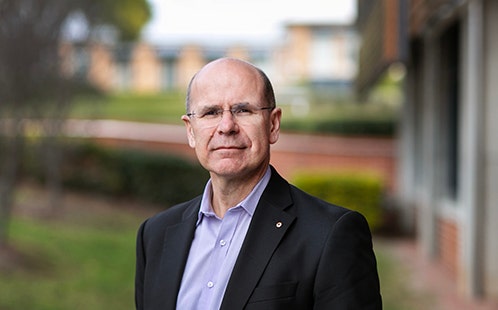
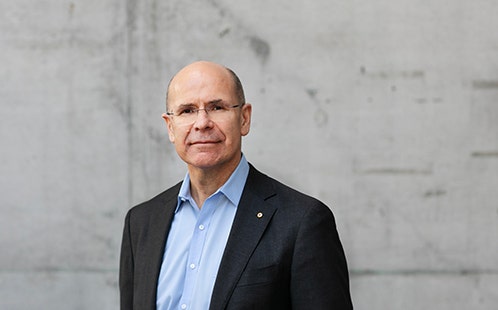
ABC RN transcript: Vice-Chancellor Professor George Williams discusses higher education sector, student support, and the impact of AI
The following is a transcript of an interview that aired on ABC Radio National Saturday Extra between presenter, Nick Bryant and Vice-Chancellor, Distinguished Professor George Williams AO.
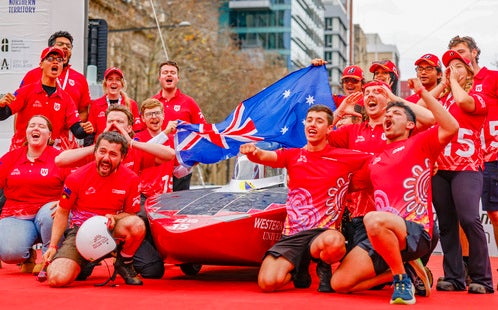
Western Sydney University are the number one Australian solar car team at the 2025 Bridgestone World Solar Challenge
Western Sydney Solar Car team has crossed the finish line placing preliminarily sixth in the world overall, and the number one Australian team in the world’s most prestigious solar car challenge.
Western Sydney University Statement on Cyber Incidents
Western Sydney University has issued an update to its community following confirmation that previously stolen personal information was published online, including on the dark web.