New survey reveals high media usage but low confidence in AI among adult Australians
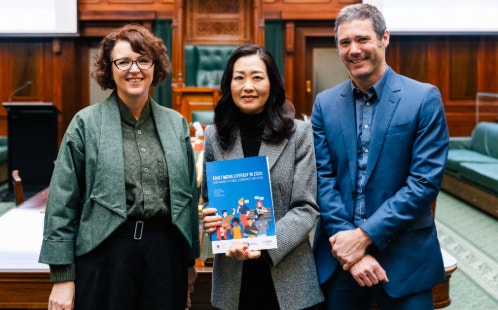
Associate Professor Tanya Notley, Western Sydney University; Professor Sora Park, University of Canberra; and Dr Simon Chambers, Western Sydney University.
A new national survey has found that most adult Australians use different types of digital media regularly, yet their overall confidence in their digital media abilities remains quite low, showing very little change since 2021.
Two thirds of adult Australians (65%) use three or more different media formats on a daily basis, and people who regularly consume a diverse range of media have far more confidence in their media abilities.
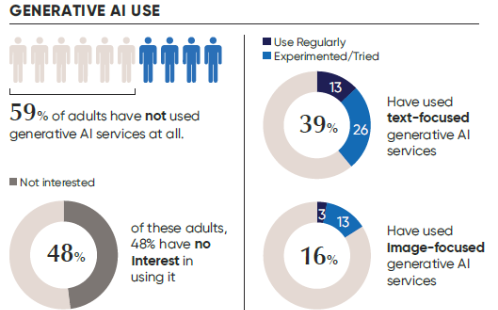
Additionally, four in ten adult Australians have experimented with text-focused generative AI services. However, there is a strong overall negative sentiment towards this technology, with the majority of adults wanting regulation to mitigate potential harms.
Many adults report encountering misinformation frequently, and there is strong support for action with four in five (80%) adults wanting the spread of misinformation addressed, a 6 per cent increase since 2021.
Almost everyone (94%) who wants misinformation to be addressed agrees that people need to be taught how to identify misinformation.
The survey – a collaboration between Western Sydney University, University of Canberra and Queensland University of Technology – asked 4,442 adult Australians in January to April 2024 about their media literacy abilities and is a follow up to the inaugural survey conducted in 2021.
Lead author Associate Professor Tanya Notley, School of Humanities and Communication Arts and Institute for Culture and Society, said despite almost all Australians using social media and digital platforms in their everyday lives, progress has been slow when it comes to adult media literacy.
“Most adult Australians are not confident about their ability to identify false and misleading information online, create a video and post it online, edit a digital photo, change social media privacy settings, or seek help from relevant authorities if they are being harassed online,” said Associate Professor Notley.
“We found that there is overwhelming demand among Australians for adult and school-based media literacy education. However, too many Australians have not received any form of media literacy education or they don’t have access to support when they need it.”
The survey found while most Australians (68%) have heard of the term media literacy, only one third (33%) have some understanding of what it means.
Older adults, those with a lower level of education and lower household income are less likely to know what media literacy means.
"There is an urgent need for more media literacy educational resources and support to address the media interests, needs, deficiencies and concerns of adult Australians. Australians want action—from governments, media companies and education providers—on issues that concern them such as online misinformation, the exploitation of their private data, racist or racially insensitive broadcast content, and risks to society that are associated with generative AI,” said Associate Professor Notley.
There is strong support for media literacy initiatives. Four out of five (82%) believe media literacy education for adults is needed. Professor Sora Park emphasised the timing is ripe.
“Australians want to know more about the rapidly changing media environment. They want to be educated about how to protect themselves and their family from scams and misinformation. However, support is not always readily available. Targeted media literacy programs are needed especially for those who have lower levels of media literacy including regional, less educated, older and people living with a disability,” said Professor Park.
Associate Professor Notley stated it is important to acknowledge that significant progress has been made since 2021 with a 9 per cent increase in adults who have some understanding of media literacy.
“This is likely the result of the advocacy efforts of the Australian Media Literacy Alliance (AMLA) and the work of Australian organisations who have implemented media literacy programs for young people, or training for teachers and librarians in recent years,” she said.
“We recommend that media literacy should be more actively promoted by governments, public institutions, education providers, policymakers, and the corporate sector.”
This report is part of the Advancing Media Literacy in Australia research program at Western Sydney University. Funding for the survey was provided by Meta Australia and the Department of Infrastructure, Transport, Regional Development, Communications and the Arts (DITRDCA). The Australian Media Literacy Alliance (AMLA) supported the report design.
For more information, read and download, Adult Media Literacy in 2024: Australian Attitudes, Experiences and Needs, here(opens in a new window).
ENDS
19 August 2024
Latest News
ABC RN transcript: Vice-Chancellor Professor George Williams discusses higher education sector, student support, and the impact of AI
The following is a transcript of an interview that aired on ABC Radio National Saturday Extra between presenter, Nick Bryant and Vice-Chancellor, Distinguished Professor George Williams AO.
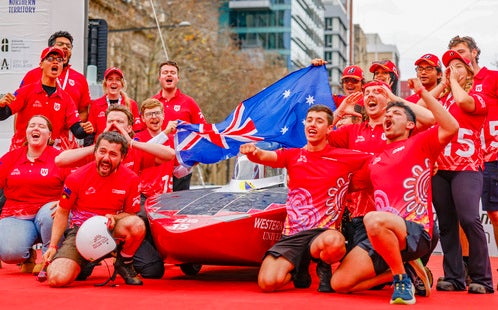
Western Sydney University are the number one Australian solar car team at the 2025 Bridgestone World Solar Challenge
Western Sydney Solar Car team has crossed the finish line placing preliminarily sixth in the world overall, and the number one Australian team in the world’s most prestigious solar car challenge.

Western Sydney University Statement on Cyber Incidents
Western Sydney University has issued an update to its community following confirmation that previously stolen personal information was published online, including on the dark web.