Music Therapy student raises concerns over impact of NDIS changes on their profession and future
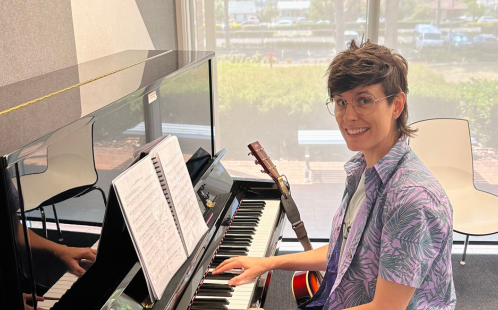
Andi is set to graduate with a Master of Creative Music Therapy this year after completing a two-year postgraduate degree at Western Sydney University. Graduates from this accredited program are eligible to become Registered Music Therapists (RMTs) with the Australian Music Therapy Association. Approximately 30 students graduate from this master’s program each year, with numbers increasing annually.
“My fellow students and I feel completely shattered by the recent NDIS announcements. We’re worried that these NDIS changes will impact participants' abilities to use Music Therapy to improve their functional capacities, and will take away their choice and control. These changes are not person-centred and not in line with the tenants of the NDIS,” said Andi.
“As new graduates, these NDIS changes make us very worried about our futures. We are wondering how we are going to keep food on the table, whilst also paying off our $30,000 HECS debts.
“In Music Therapy, we’re not just ‘using music’, far from it! We are highly trained allied-health practitioners who combine advanced administration of musical stimulus with strong evidence and broad literature on therapeutic, goal-focused applications of music in the field.
“We undergo an intensive two-year master’s degree where we study everything from developmental psychology, culture and family-centred clinical approaches, through to cutting-edge neuroscience.”
Andi added that on completion of the master’s degree, students are trained researchers, who have spent the last two years reading and writing narrative and systematic literature reviews, analysing case studies and receiving supervision whilst training in aged care, hospitals, schools, paediatric hospitals, multidisciplinary allied-health clinics and more.
“Studying to become a Registered Music Therapist is the best thing I’ve ever done. My passion and excitement for this career keeps getting stronger. As a late diagnosed Autistic adult with ADHD, and someone who is part of the LGBTQIA+ community, Music Therapy is uniquely inclusive, accessible and strengths-based.”
As a new graduate and part-time Music Therapy Assistant, Andi has already witnessed the transformative power of Music Therapy firsthand.
“I’ve seen a non-speaking child communicate their needs and preferences clearly through music, and someone sing before starting to speak. Speech uses the left side of the brain but singing accesses both the left and right hemispheres of the brain, enabling communication to become possible, even when the left-hemisphere spoken-language pathways have been impacted by injury or diagnosis.”
“I’ve also observed how a slight music tempo adjustment can help someone regulate their attention and focus for learning, and I’ve seen how drumming can support gait and sensory integration - and the list continues!”
Andi explained that evidence-based practice (EBP) is at the centre of everything Registered Music Therapists do.
“Research shows that music can prime speech, motor and cognition. In fact, even if you take just one element of music like rhythm, it only takes three beats for our body to sync with, or what we call ‘entrain to’ a rhythm. Our bodies respond to music both consciously and subconsciously, which fits with the bottom-up approaches of leading trauma researchers.”
“Music Therapy research and applied auditory and music neuroscience is now one of my special interests! The auditory system is the fastest processing system in the brain, and research with functional MRIs consistently shows that music is an unmatched tool in lighting-up multiple parts of the brain, enhancing neuroplasticity. Volker Homberg who is the President of the World Federation of Neurorehabilitation has even suggested that music’s ability to impact the brain, is a game-changer in neurorehabilitation. Music Therapy is such an exciting and innovative field to be in!
“Once we complete our two-year master’s, to remain registered with the Australian Music Therapy Association (AMTA), we must complete annual professional development hours to stay on top of the most current evidence in our field. In addition to clinical work, many of us also carry out research and present at multidisciplinary conferences across the world.
“Becoming and remaining a Registered Music Therapist is a rigorous process, and we wouldn't have it any other way.”
Sign the petition to keep Music Therapy funded as an NDIS therapeutic support: https://chng.it/nQGFZfKnKY
ENDS
2 December 2024
Latest News
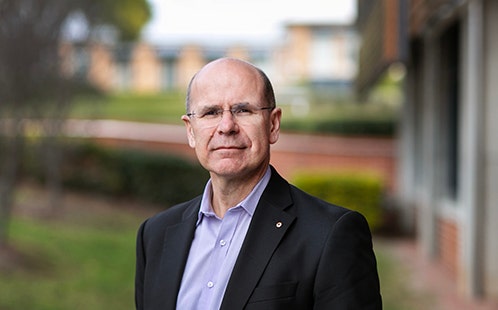
ABC RN transcript: Vice-Chancellor Professor George Williams discusses higher education sector, student support, and the impact of AI
The following is a transcript of an interview that aired on ABC Radio National Saturday Extra between presenter, Nick Bryant and Vice-Chancellor, Distinguished Professor George Williams AO.

Western Sydney University are the number one Australian solar car team at the 2025 Bridgestone World Solar Challenge
Western Sydney Solar Car team has crossed the finish line placing preliminarily sixth in the world overall, and the number one Australian team in the world’s most prestigious solar car challenge.

Western Sydney University Statement on Cyber Incidents
Western Sydney University has issued an update to its community following confirmation that previously stolen personal information was published online, including on the dark web.