International student caps will hurt Western Sydney region, warns Vice-Chancellor Distinguished Professor George Williams
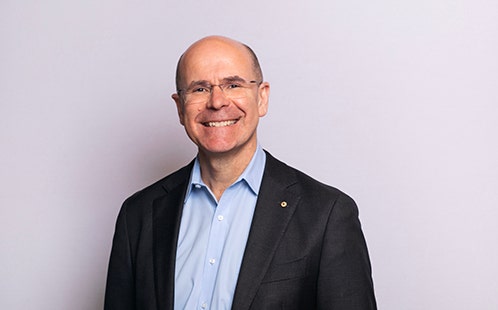
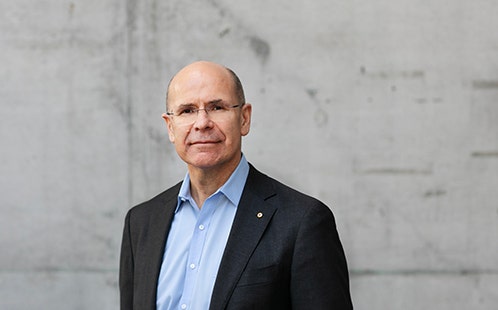
Proposed caps on international students will hurt the region by undermining its economic and social transformation, according to Western Sydney University Vice-Chancellor Distinguished Professor George Williams AO.
During today’s Senate inquiry examining the proposed restriction on international student numbers, Professor Williams said the legislation was “poorly drafted, not fit to be passed, and simply not adapted well to the problem that we’re facing’’.
He suggested the Bill could lead to constitutional issues, and the concentration of power in the hands of the Minister for Education was surprising. “It’s unfettered, coercive and being concentrated in a minister in a way that you would normally associate, in my experience, with a biosecurity Act or a piece of national security legislation,’’ Professor Williams said.
The Bill was also missing key elements, he said. “Where’s the reference also to differential impact upon states which could lead to a constitutional issue with regard to Section 99 of the Constitution, where the Commonwealth cannot give preference to one state or another.”
In his address to the Senate inquiry into provisions for the Education Services for Overseas Students Amendment (Quality and Integrity) Bill 2024, Professor Williams said the caps could have perverse effects in Western Sydney. He said they could exacerbate cost-of-living pressures for Western Sydney families who depend on international students, local businesses could go under, and the region could miss out on the skills needed to power up growth.
Western Sydney University, he said, recognises that managing our borders and demand for housing is in the national interest, especially at a time of such cost-of-living pressure for Australians.
However, he says the Bill is unlikely to achieve this outcome – not only due to the flaws within the Bill, but also because it is missing the point regarding what is happening on the ground in Western Sydney.
“This legislation, in part, is directed at issues about the availability of housing, and we would say, and we're happy to open our books to this point, that we have a bed for every student who wishes to study with us internationally,” said Professor Williams.
“In fact, we have capacity in our colleges, about 20 per cent capacity. We also have 500 beds that were in the process of developing and have planned for the future in line with Western Sydney's needs.”
Professor Williams highlighted that many of the University’s students, undertake home stay, which means they actually decide not to stay in college accommodation.
“They live with a local Western Sydney family. They provide an income up to $400 a week to that family, and they assist those families into defraying cost of living pressures, and in fact, international students play a key role in Western Sydney in enabling people to deal with those pressures.”
Professor Williams reiterated that Western Sydney University’s 9,000 international students represent part of the solution to some of Western Sydney’s biggest problems.
“We have a shortage of about 10,000 nurses in Western Sydney. Last year, most of our 1,350 international students studying nursing went to work in Western Sydney. If we do not have international students studying nursing the quality of healthcare in Western Sydney will be dramatically affected,” he said.
“We're also in the position [in] Western Sydney where we need international students to fill key skills gaps as a result of the Western Sydney Airport, the Bradfield development, and major corporates such as Amazon and the like that are investing hundreds of millions of dollars and need students that cannot be met through domestic demand alone to deal with those needs.”
“It's also, of course, the case that many local businesses depend directly upon these students for their survival.”
Additionally, the University depends upon international students, in particular, to assist with its equity programs.
“When it comes to our University, we have the largest number of low SES students in the nation, two thirds of our students, the first in family to ever go to university. Many of our students are dealing with the most basic problems that we need to assist them with. Often that's as basic as food. So we have, for example, recently opened a Western pantry which provides rice, oats and other staples to our students,” he said.
“What we're hearing from those students is they're not able to both study and eat, and international students provide a key source of revenue to support domestic students, otherwise unable to study at University, but for the support we are able to provide.”
ENDS
26 August 2024
Photo credit: Sally Tsoutas
Latest News
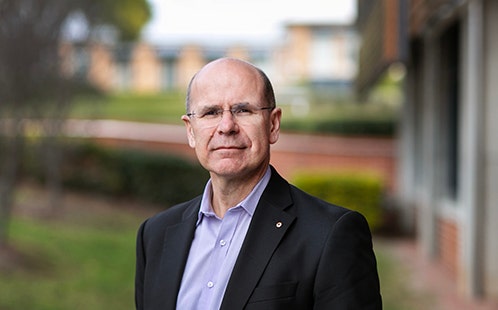
ABC RN transcript: Vice-Chancellor Professor George Williams discusses higher education sector, student support, and the impact of AI
The following is a transcript of an interview that aired on ABC Radio National Saturday Extra between presenter, Nick Bryant and Vice-Chancellor, Distinguished Professor George Williams AO.
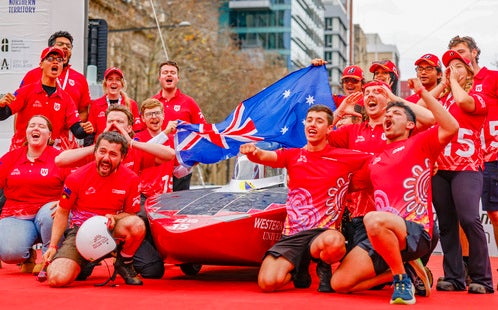
Western Sydney University are the number one Australian solar car team at the 2025 Bridgestone World Solar Challenge
Western Sydney Solar Car team has crossed the finish line placing preliminarily sixth in the world overall, and the number one Australian team in the world’s most prestigious solar car challenge.
Western Sydney University Statement on Cyber Incidents
Western Sydney University has issued an update to its community following confirmation that previously stolen personal information was published online, including on the dark web.