Give cash-strapped university students an early Christmas present
Western Sydney University says the time has come to fix the nation’s crippling student fee problem. It says a straightforward solution can be implemented at a much lower cost than the Government’s recently announced changes to grant debt relief to university graduates.
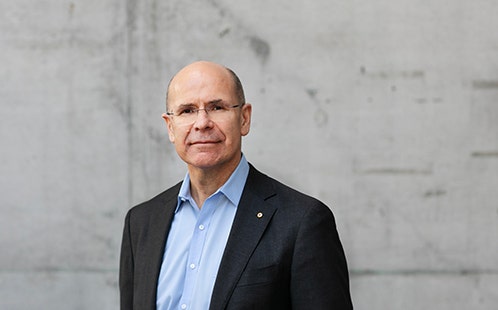
Vice-Chancellor, Distinguished Professor George Williams AO said while attention has been focussed on the political fallout over international student caps, the nation should not lose sight of the big picture.
Cost-of-living pressures and debt burdens are forcing Australian students into poverty or to give up their studies altogether. Professor Williams said the Government should respond by changing the unfair fee structure for courses.
“Just as the national Government sets fees for domestic students, so too can it change those fees. Fairness can be restored,” said Professor Williams.
University courses are allocated to 1 of four fee bands. In 2025, band 1 will be $16,992, band 2: $13,241, band 3: $9,314, and band 4: $4,627. Humanities courses are in band 1, meaning that from next year arts students will incur a three-year debt of over $50,000.
Professor Williams said the top band should be removed and courses allocated to the remaining bands based upon how much graduates can expect to earn.
Humanities degrees would move to the new mid band, with students incurring a lower debt of $28,000 for their three-year degree.
Funding should also be restored for science, technology, engineering and mathematics subjects, which are crucial to Australia’s ability to be a smart, innovative nation.
“Overall, the cost would be $1.77 billion a year, as opposed to the $20 billion the government has committed to cut 20% of existing student debt and reduce the indexation of that debt,” said Professor Williams.
“While the Government’s announced reforms are welcome, they do nothing to address the root cause of the problem, which is the fees being charged to students in the first place.”
Professor Williams said this workable and practical solution – proposed by the Government’s own Universities Accord and Innovative Research Universities (IRU) of which Western Sydney University is a member – would restore much-needed fairness in the system.
“Today’s students who are making important decisions about future university study cannot wait for the new regulatory body, the Australian Tertiary Education Commission, to be created,” he said.
“We need immediate action – starting with reducing the $50,000 cost of arts degrees that price students out of their dreams.”
The skyrocketing fees for arts degrees are the result of the Morrison Government’s 2021 Job-ready Graduates Package. This distortion currently places food and hospitality, tourism, history, communications, sociology and other humanities courses into the top funding band, alongside law, accounting and business.
“Very often arts programs are the degree of choice for many Australians who are the first in their families to go to university and who come from disadvantaged backgrounds,” said Professor Williams.
“Arts students, often from poorer backgrounds who are studying degrees that produce lower graduate incomes, are actually paying the highest fees.”
He said the Government has set an ambitious target for increasing the number of graduates for our nation’s workforce, but evidence shows meeting that target will be difficult.
“The number of students finishing high school is declining, and there’s a similar decline in the number of Australians enrolling in undergraduate programs,” said Professor Williams.
“Australia will not hit the target unless we break through the ‘invisible barrier’ that prevents young people from a wide range of backgrounds from walking through the door of opportunity to tertiary education.”
Fixing student fees needs to be coupled with other measures to relieve the cost-of-living pressures for students, according to Professor Williams.
“The Youth Allowance rate of $46 a day for students living away from home is woefully inadequate,” he said.
“The Quality Indicators for Learning and Teaching SES data shows us that financial pressures are a growing factor for students who are considering dropping out – doubling from 20 per cent in 2021 to 42.5 per cent last year.
“The University’s own data confirms this. Last year, 50 per cent of students said they were food insecure, with many forced to choose between studying and eating. The Government needs to do to more to support students by setting fair fees and keeping them in study.”
ENDS
25 November 2024
Amanda Whibley, Manager, Media & Public Relations
Photo credit: Sally Tsoutas
Latest News
ABC RN transcript: Vice-Chancellor Professor George Williams discusses higher education sector, student support, and the impact of AI
The following is a transcript of an interview that aired on ABC Radio National Saturday Extra between presenter, Nick Bryant and Vice-Chancellor, Distinguished Professor George Williams AO.

Western Sydney University are the number one Australian solar car team at the 2025 Bridgestone World Solar Challenge
Western Sydney Solar Car team has crossed the finish line placing preliminarily sixth in the world overall, and the number one Australian team in the world’s most prestigious solar car challenge.

Western Sydney University Statement on Cyber Incidents
Western Sydney University has issued an update to its community following confirmation that previously stolen personal information was published online, including on the dark web.