Experts weigh in on the Paris Olympics
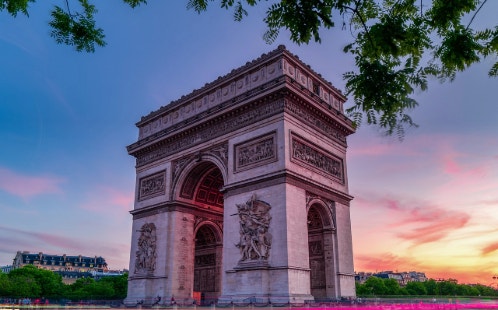
With the Paris Olympics set to shortly get underway, Western Sydney University experts share key insights on their research into issues including athlete wellbeing, tourism impacts, climate change, human rights, and more.
Associate Professor Andrew Bennie – School of Health Sciences
“The Olympic Games often reflect the pinnacle of an athlete’s career where they can achieve national and international recognition and fulfilment of life-long goals. At the same time, athletes’ health and wellbeing may be challenged during the post-Games phase when they return to ‘normality’. These fluctuations in moods and emotions are often connected with success or disappointment surrounding an athletes’ performance at the games. Fortunately, progress has been made in supporting Olympic athletes - particularly within Australian contexts - with athlete wellbeing officers being employed centrally in most Olympic contexts.”
Dr Andrew Bennie works on the traditional lands of the Darug Peoples as an Associate Professor in Health and Physical Education (HPE) and Sport Development. His research interests focus on sports coaching, factors influencing elite athlete development from a psychosocial perspective, First Nations Peoples’ sport participation, social justice, and teaching and learning in Health and Physical Education. Dr Bennie is a co-founder of Coaching Unlimited, an initiative that provides sport specific coaching accreditation and research-based workshops to support First Nations sport coaches.
Dr Michelle O’Shea - School of Business
“Paris 2024 will see full gender parity on the field of play for the first time in the Olympic Games' history. While this is cause for celebration, the inequities in Women’s sport remain deep and vast. The continued under-representation of women in sports coaching, governance, and leadership remains. These inequities continue to also be seen in high performance sport funding, athlete training facilities, and conditions. Let’s not conflate progress with success!”
Dr Michelle O’Shea is a Senior Lecturer at Western Sydney University. Her research interests are in the areas of sport, culture and society. More specifically her research involves the critical examination of professional and non-profit sport organisation functioning addressing issues relevant to gender and diversity, sport organisation community and societal impacts, sport marketing and social media communications. More recently her scholarship is concerned with illuminating and understanding how gender inequities are constructed and reproduced in broader organisation and institutional contexts. The impacts of which can in part be seen through her policy advocacy in domains relevant to women’s physical and economic wellbeing.
Professor Joseph Cheer – School of Social Sciences
“The Summer Olympics have served a purpose for many cities by ushering them onto the global stage for tourism and trade. It has also served a purpose to help countries embark on massive infrastructure projects that are once-in-a-generation. At the same time, it is criticised for directing sparse resources to a project that on balance, leaves local residents worse off. How to reconcile competing and clashing priorities remains an issue for cities that put themselves as hosts.”
Joseph Cheer is a Professor of Sustainable Tourism and Associate Dean, International in the School of Social Sciences. He is Co-Editor-in-Chief of the leading journal Tourism Geographies and Co-Chair of the World Economic Forum Global Future Council on the Future of Sustainable Tourism. His extensive body of work comprises books, journal articles, chapters, and non-traditional publications for outlets like The Conversation, World Economic Forum, Global Research Institute and UNESCO. Joseph has a developing quantitative social sciences research agenda and is particularly keen on the development of human flourishing indicators for tourism destination communities specifically, and with wider societal applications.
Dr Jess Richards – School of Business
“Whenever I think about the Olympics, the word “legacy” immediately comes to mind. The legacy of the Games however extends far beyond the host city. The true measure of Olympic legacy is whether the Games remain relevant for future generations. Despite annual criticisms and the almost inevitable budget overruns, the Olympics create something truly special. They offer us a chance to see ourselves as part of something greater than just the little pocket of the world we occupy.”
Dr Jess Richards is a Senior Lecturer in Sports Management specialising in fan engagement, fan zones, and women's sports. With extensive experience as a consultant for prominent organisations such as Rugby League, Football Australia, and Rugby Union Australia.
Dr Andy Grainger – School of Health Sciences and Translational Health Research Institute
“As we watch the world’s greatest athletes convene in France to participate in the 2024 Olympics, it is important to consider the way in which the Games have historically marginalised the most vulnerable communities in host cities. Paris, sadly, is no different. French authorities have displaced thousands of poor and marginalised peoples to make way for the Olympic spectacle. Most infamously, security officials have been loading migrants and unhoused peoples onto buses and shipping them to the French interior. While the IOC routinely makes claims about its commitment to humanity and promotes the Games as a beacon of global unity, it more often looks the other way when it comes to the human consequences of hosting this hyper-commercialised, hyper-mediated, hyper-sanitised festival of contemporary late-capitalism. This is not to suggest we can’t cheer on the athletes who inspire joy and elation among many Australians, from all walks of life; however, we do need to question who and what are ignored beneath the bright lights of the Paris Games.”
Dr Andy Grainger is a lecturer in Sport Development, Leisure, and Recreation in the School of Health Sciences at Western Sydney University. Andy’s research and teaching focuses on the critical, socio-cultural and historical analysis of sport, leisure, health, and physical culture. His current research explores the intersections of sport policy, gender equality, geopolitics, and international women’s football. Andy is a co-editor, with Adam Beissel, Verity Postlethwaite, and Julie Brice, of ‘The 2023 FIFA Women's World Cup: Politics, Representation, and Management’ and the forthcoming collection ‘Critical Perspectives on the 2023 FIFA Women’s World Cup: Events, Issues, and Controversies’.
Professor Jorge Knijnik – School of Education, Institute for Culture and Society and Centre for Educational Research
“As the Games return to their founder’s home, we will see if they can help mitigate global malaise and advance human rights, or if they will merely provide a temporary uplift without leading to meaningful engagement with critical global issues like democracy, social inclusion, and climate change.”
Dr Jorge Knijnik is an Associate Professor in the School of Education at Western Sydney University. He holds a PhD in Social Psychology by Universidade de São Paulo (Brazil). Dr Knijnik’s most recent books are: Tales of South American football: passion, glory and revolution (Fair Play Publishing); A Critical History of Health, Sport and Physical Education: The three-legged curriculum in Australia (Springer, with Michelle Gorzanelli); Historias Australianas: Cultura, Educação e Esporte do outro lado do mundo (Fontoura); Women’s Football in Latin America: Social Challenges and Historical Perspectives (Palgrave Macmillan); and The World Cup Chronicles: 31 days that rocked Brazil (Fair Play Publishing).
Emeritus Professor David Rowe – Institute for Culture and Society
“The return of the Olympics to Paris for the first time in a century, heralded by an audacious Opening Ceremony on the River Seine, raises many issues for France and future hosts, including Brisbane in 2032. The snap French parliamentary elections came uncomfortably close to installing a far-Right, xenophobic government just before the country welcomed the world to the Olympics and Paralympics. Here the nation’s tensions over cultural diversity, immigration and colonialism were exposed, not least because the host has banned its own - but not other countries’ - Olympic athletes from wearing religious symbols such as headscarves. Paris 2024, with venues reaching as far as the Pacific region for the surfing in Teahupo’o, Tahiti, highlights the acute social, political and environmental sensitivities surrounding all sport mega events like the Olympics, Paralympics and FIFA World Cup.”
Emeritus Professor David Rowe is a Cultural Researcher at the Institute for Culture and Society, Western Sydney University and a Fellow of both the Australian Academy of the Humanities and the Academy of the Social Sciences in Australia, with honorary appointments at the Universities of Bath and London, UK and Beijing Foreign Studies University, China. He has researched and published frequently on the Olympics and Paralympics in academic works such as Global Media Sport (opens in a new window), and in the media, including on the Sydney 2000 Olympics (opens in a new window) and Tokyo 2020/1 Olympics (opens in a new window). He has also given recent invited lectures on the 2024 Paris Olympics and Paralympics in Montpellier and Paris, and has a forthcoming chapter on the subject published by L’Association Francophone pour la Recherche sur les Activités Physiques et Sportives.
Dr Garth Lean – School of Social Sciences
“The Paris Olympics is projected to deliver an impressive €8.9 billion economic boost for the city. While a significant portion of this gain will stem from sponsorships, media rights, and ticket sales, the influx of both international and domestic tourists will also contribute. Although Paris and France, the world's most visited tourism destination, may experience a dip in visitor numbers before and during the Games, the global spotlight from the Olympic coverage could deliver unprecedented long-term tourist numbers. This growth will come with challenges. It is essential that Paris implements strategic planning and policies to foster sustainable growth of its visitor economy. By doing so, it can work toward ensuring that the local community reaps the benefits while effectively addressing any negative impacts.”
Dr Garth Lean is a tourism and travel specialist with more than 20 years of experience in research, training, governance, administration, planning and marketing roles with universities, government, industry, and professional bodies. He leads the tourism, hospitality and events disciplines at Western Sydney University, along with several research initiatives. Garth’s expertise spans a variety of themes including:
- Traveller/tourist experiences and behaviours.
- Travel/tourism and digital technologies.
- Personal transformation through travel experiences.
- Travel/tourism and soft diplomacy.
- Asian tourism/travel.
- Sustainable tourism, hospitality and events.
- Tourism policy and planning.
- Sustainable destination management.
- Multicultural education.
- Digital and creative research methods and communication.
To arrange an interview, please email media@westernsydney.edu.au.
ENDS
15 July 2024
Photo credit: LagrangeHervé via Pixa Bay
Latest News
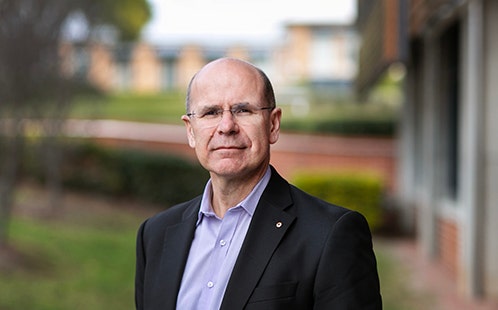
ABC RN transcript: Vice-Chancellor Professor George Williams discusses higher education sector, student support, and the impact of AI
The following is a transcript of an interview that aired on ABC Radio National Saturday Extra between presenter, Nick Bryant and Vice-Chancellor, Distinguished Professor George Williams AO.
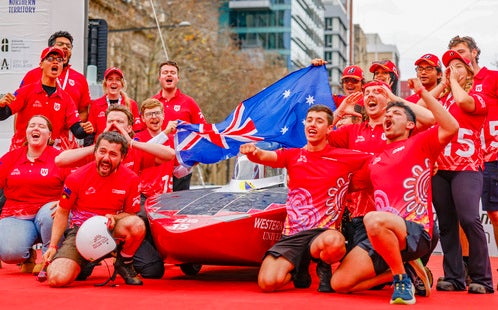
Western Sydney University are the number one Australian solar car team at the 2025 Bridgestone World Solar Challenge
Western Sydney Solar Car team has crossed the finish line placing preliminarily sixth in the world overall, and the number one Australian team in the world’s most prestigious solar car challenge.
Western Sydney University Statement on Cyber Incidents
Western Sydney University has issued an update to its community following confirmation that previously stolen personal information was published online, including on the dark web.