Afternoon Briefing: Federal government looks to cap foreign student visa numbers
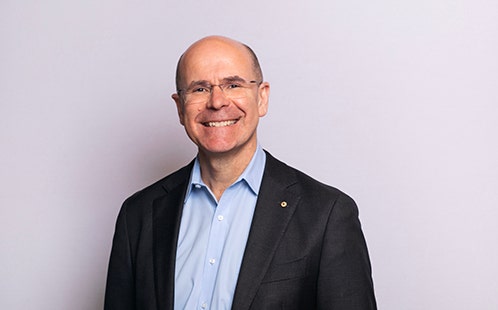
The following is a transcript of an interview that appeared on ABC News 24's Afternoon Briefing program between reporter, Greg Jennett and Vice-Chancellor and President, Distinguished Professor George Williams AO on Tuesday, 20 August 2024.
Greg Jennett:
Now, another matter soon to be dealt with and probably passed by the Senate powers for the Education Minister to cap new foreign student visa numbers next year.
Institution by institution and perhaps course by course, depending on their size and their student profile, it affects different unis in different ways. George Williams is the Vice Chancellor at Western Sydney University. We spoke to him, on this, a short time ago.
George Williams, welcome back to Afternoon Briefing and congratulations on your appointment there at Western Sydney University.
Now, I realise since taking up your position, you've said that you want universities talking less about themselves, the rationale there being that you talk more about the communities you serve. We are going to talk about universities today, though.
The government's drawing closer to putting the missing pieces of the puzzle in place for next year, that's the actual institution by institution caps on foreign student numbers. There is, you will have observed, George Williams, huge dispute within the sector over whether it's needed or not as a regime. Do you recognise the need for these caps?
Professor George Williams:
Well, in our case, no. We see this as a solution in want of a problem.
That's because the caps from the Government's point of view are directed at solving housing issues where international students might take up private sector rentals that perhaps drives up prices, has less availability for other people, but in our case, we've got a bed for every single international student.
In fact, we've got 25 per cent capacity in our colleges and we’re building another 500 beds, so we’ve planned for growth. We have no impact on the local market here in western Sydney, so in our case, we'd say this is just misguided. It actually doesn't need to apply to us, and in fact, risks doing a lot of damage to the western Sydney economy.
Greg Jennett:
Okay, I might explore the accommodation figures you gave us a little further in a moment. Are you already seeing a drop off in inquiries or provisional applications pending visa approval for next year?
Professor George Williams:
Yeah, we are. We're seeing a really big impact upon the students who already want to come and study with us due to changes in how visas are processed. It's much slower, it sends a message to international students that this is a high-risk strategy to come to Australia. They can wait literally weeks or months to actually find out whether they're going to be allowed in the country.
Of course, we've also seen a very high increase in the visa costs as well, and collectively it sends a message from Australia that this is not a country that is as welcoming of international students, and you compare that to the UK where they've got a new government and education. Secretary Bridget Phillips and has just put out a video message saying the UK is open for business. It wants international students, it sees them contributing to their economy, and they're ready to take our students as quickly as they can.
Greg Jennett:
It's certainly a competitive sector, that is true. What proportion of enrolments, I should say, at Western Sydney University do international students currently represent?
Professor George Williams:
In our case, it's about 18% and in addition, we take students offshore. We're opening a new campus in Indonesia, we do so in Vietnam. We're much lower than some others, which might be as high as nearly 50%, and in our case, we think we want to increase the number of international students.
That's partly western Sydney and skills shortages, and in Western Sydney, there's a massive shortage of nurses, there aren't enough domestic students to fill those places, so it's international students who we need to train, that are actually going to staff the hospitals in this region.
Greg Jennett:
Have you put a figure to the Government in any of your dealings with them. That's the university more broadly, not necessarily you personally George, that would strike an optimal number taking into account the factors you just outlined there.
Professor George Williams:
We've attempted to, but we don't understand the basics of how they're going to run this formula. It's a debate in want of clarity at the moment and it's hard to get to first base to even understand, What year they're going to use to work out the percentage? What the percentage will include? Does it include students coming from offshore campuses, which we say should not be included? Does it include some Southeast Asian countries, that are priority countries for our soft diplomacy?
What we do know is that we're very fearful that the Government might impose a cap based upon 2019 student numbers. of course, we've grown since then, along with western Sydney, and our calculation, which we put to Government, is that that would amount to about a $400 million hit to Western Sydney University over five years. That's a hit on equity programs, hit on transnational education and actually a number of other key things for our students and community.
Greg Jennett:
Well, it could also be a hit on jobs directly employed there by the University. You will have seen, as we all have, figures put by Universities Australia. Have you forecast potential job losses, academic or otherwise, if a cap regime comes on to your institution?
Professor George Williams:
No, we haven't, and we haven't because, you know, job losses are absolutely the last resort and not something even with that big hit that we'd expect to need to do. That said, we don't know what the cap might be. We don't know what the Government is planning. What's more likely to happen is that our investment in equity programs will be affected.
Here, two thirds of our students are first in family. We're the university of social mobility, we’ve the highest number of SES students, and the sorts of things we need to do are often food programs. Our students are saying they can't afford to study and eat, so we've got a pantry with free food for our students.
So, they're the sorts of things that are impacted and they're critical, they're about social cohesion, social mobility and a just society, and unfortunately, that's what international students fund and what we need to continue doing.
Greg Jennett:
Yeah, now layered in around that is, I suppose, the us and them nature of debate that generally can come to surround foreign student numbers. You've already touched on that, in a sense, George Williams, by distinguishing the difference, the material difference in accommodation and housing around your university compared to others.
Do you assert that, by and large, foreign students at your university don't take housing places, rental or otherwise, that would otherwise go to Australians?
Professor George Williams:
Yes, that's right, and in our case, a very large number of students, many, many, in fact, don't even enter the housing market at all. They go into homestay, they stay with local western Sydney families, providing a few hundred dollars a week, those families are very welcoming. They're often taking a Nepalese student, going to a Nepalese family, it might be the kids have moved out, and that helps defray cost of living pressures, involving mortgages and the like. So, it's actually propping up families who are doing it tough.
If they don't want to go there, we have a bed for every single student, again, 25 % capacity, there are some who don't take up homestay, don't take up our colleges, but that might be because they've got family here. They don't actually need those options. So, it's just not an issue here because of the capacity and availability.
Greg Jennett:
So why wouldn't that be taken into account by the Government and for whatever better phrase, let Western Sydney University off the hook?
Professor George Williams:
I'd love to know the answer to that question, and that indeed is exactly the conversations we're having, because I can understand where the Government is coming from, but very happy to open our books.
In our case, it's not just, not a housing issue, it's an economic issue we have a lot of businesses around here that will go under if international students aren't available in good numbers. A good example is actually an MP mentioned to me last week in Canberra. They visited a local pizza shop, that pizza shop sells 70 % of all of its pizzas to international students and 100 % of the pizzas are made by international students.
There is no business there without these students who are the lifeblood of many local businesses, and our fear is this might be a one size fits all model. If it happens, and we're not sure it should, it should be tailored to regions, tailored to need and tailored to local communities and as yet we don't know but we're fearful as to where this might come out.
Greg Jennett:
Well, that's a remarkable statistic I wasn't aware until now George Williams that pizza shops were keeping that sort of data on their sales and the demographics to which they go.
Professor George Williams:
Well, if you depend on international students if it's your lifeblood you want to know, because it's hairdressers, pizza shops, the service economy and not only that there's a lot of jobs here that international students fill packing shelves at night in supermarkets. If those go and we saw this in the pandemic, then you have big skill shortages in key areas.
Greg Jennett:
Of course, I take the point there is a little way to go in this debate even though the minister yeah, seems pretty resolute in his determination to complete the project. We might stay in touch with you George Williams it's always a pleasure to have you on.
Professor George Williams:
Thank you, Greg.
ENDS
21 August 2024
Latest News
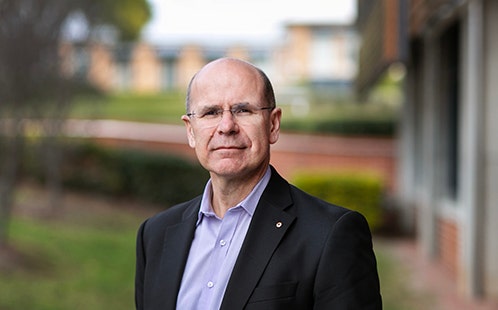
ABC RN transcript: Vice-Chancellor Professor George Williams discusses higher education sector, student support, and the impact of AI
The following is a transcript of an interview that aired on ABC Radio National Saturday Extra between presenter, Nick Bryant and Vice-Chancellor, Distinguished Professor George Williams AO.
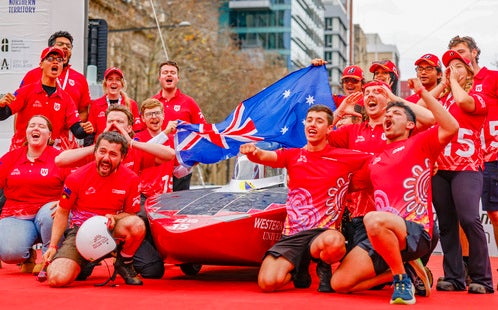
Western Sydney University are the number one Australian solar car team at the 2025 Bridgestone World Solar Challenge
Western Sydney Solar Car team has crossed the finish line placing preliminarily sixth in the world overall, and the number one Australian team in the world’s most prestigious solar car challenge.
Western Sydney University Statement on Cyber Incidents
Western Sydney University has issued an update to its community following confirmation that previously stolen personal information was published online, including on the dark web.