ABC Radio Sydney Breakfast transcript: Vice-Chancellor discusses Western Pantry food security initiative
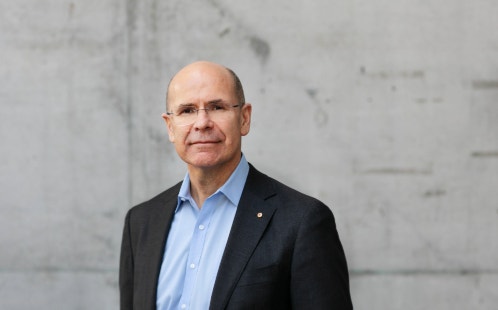
Transcript of an interview that appeared on ABC Radio Sydney Breakfast between presenter Craig Reucassel and Vice-Chancellor and President, Distinguished Professor George Williams AO, on Tuesday, 19 November 2024.
Craig Reucassel:
End of year exams are underway and Western Sydney University are making sure students don't go hungry by providing food essentials through pop up pantries. The pantries are an extension of the Western Pantry initiative, which started at the University back in July. Professor George Williams is the Vice-Chancellor of Western Sydney University. He joins me now. Good morning professor.
Professor George Williams:
Good morning Craig.
Craig Reucassel:
So talk me through these pop up pantries and I guess also how much usage there is, how much need there is for them at the moment?
Professor George Williams:
Yeah, sadly, there's a lot of usage. We started this in July out at Penrith where it wasn't a pop up. We actually had a shopfront. The students could come in and get free food, often free veggies, rice, oats and the like. And the reason we set it up back in Penrith in July is about 1 in 2 of our students are saying they don't have what's called food security. So in any one week they don't have healthy, nutritious food, might have to go without meals and risk coming to class hungry.
And what we've extended that to is our other campuses with a pop up where students can turn up at Parramatta, Liverpool and elsewhere once a week we’ll be there again handing out food and the like, just the staples to get them through the week and sadly, the take up has been enormous. Last week at Parramatta, for example, we had 150 students turning up saying they needed food to get through the week. And since July it's about 3300 visits all up from students. And look, it just shows what we're seeing on the ground that even though there's lots of debates about international student caps and the like, the realities for many domestic students, they just can't afford to eat and study. And if we don't provide free food, they drop out.
Craig Reucassel:
Yeah. I mean, it's extraordinary to hear you say that 50 per cent of your students are food insecure. I mean, this doesn't surprise me. It's not just your university, I was at UNSW the other day. There was an enormous queue. I thought this must be some massive band on or something. I went and started talking to the students they were all there for similarly for a food pantry and this, I have not seen a queue this big in a long time. It was going down the road around the corner. Absolutely amazing to see.
So it's very clear this is happening all around the place. Do we need more than, you know universities doing food pantries? Do we need more support from government for students?
Professor George Williams:
Well, we do, and this is where the debate is just missing I think the real point of higher education at the moment, and that is keeping students in study and these are often disadvantaged students who, frankly, are living in poverty. The youth allowance is only $46 a day and if you're a student living away from home, $46 a day doesn't cut it, in terms of textbooks and the other support you need.
And we've seen a 50 per cent increase, for example, in students who are working full time and studying full time and doing either of those is tough, so 50 per cent increase in students who are doing both. And we really do need to focus on students who are doing it tough. And it's no surprise that the dropout rate is increasing. And across the education system, we're actually becoming not a smarter, but a nation that's actually seeing kids turn away.
Craig Reucassel:
And this is it. I mean, particularly in Sydney, I mean, throughout Sydney, rent is so high. Should we be having a higher rate for people in, you know, a place like Sydney, for instance?
Professor George Williams:
Yeah, we probably should. I mean, you just can't afford, the students just too often cannot afford to pay their rent. And of course, many students aren't young either. They're mature age students, particularly women going back to study, maybe with kids. And it's why it's not just on the breadline, but well below it. And when it's something as basic as food, it shows you how much they are struggling.
I mean, the other figures, there was a figure out recently which asked students why they might drop out and the financial pressures was a key reason. And over the last couple of years, it's gone from 1 in 4 students saying they're thinking of dropping out to about 1 in 2 students, about 45 per cent across the sector, because those financial pressures are so high. Again, a choice between eating and studying is too often the reality for students.
Craig Reucassel:
Yeah, absolutely. And particularly, as you know, they then end up with a debt for the part of the degree that they've done, but without getting the degree in the end as well. So it is a tragic situation.
Professor George Williams:
The other bit of it, the fees, you know, we're talking about a lot of things, but we should be talking about keeping them in study and the fees are too expensive. $50,000 arts degrees, I mean, it really is outrageous. I mean, that's the degree that leads to the lowest income of graduates, but it's the highest fee course. And many students are saying, do I want to be hit with a $50,000 debt, effect me getting a mortgage and a house down the track, and maybe a debt I'll never be able to pay off. So that's another big factor for students as well.
Craig Reucassel:
It's interesting on the text line here, Terry says, Craig, these uni food banks are proof that international student caps are required. It's clear they've driven up costs of rents near university plus add to inflation.
So this again has been turned back to the debate that was in Parliament yesterday about foreign students. We saw the federal government fail to get their cap on foreign students through with the coalition and the Greens teaming up, despite the fact that they're teaming up for very different reasons. The Greens are opposed to it because they think it's racist and that it's scapegoating international students. We're not entirely sure yet as to why the coalition has opposed this, given they've been opposed to increasing migration numbers. But they say they're releasing their own policy soon.
Are you aware, have you been speaking to the coalition about what their approach will be to international students?
Professor George Williams:
Yeah and let me say first that, look, it's a furphy, this link between international students and housing. In our case, for example, we have a bed for every international student. So there is not a single bed that is needed. In fact, we've got 20 per cent capacity in our colleges for the international students, and they actually provide the money that supports our domestic students. Things like our food pantry are supported by international fees, because every dollar an international student brings in 24 cents goes to supporting other things, and today it's equity and domestic students.
But as to the coalition, I think there's a couple of reasons. One is the bill was flawed, poorly drafted, brought in too quickly. And it actually in implementation didn't have a link between housing and the caps. And in our case, again you know, housing isn't an issue. So we ended up with a cap that didn't make any sense. But more broadly, there's an election coming up. And of course, the coalition must have seen some political upside to causing some trouble. And, you know, in the shadow of an election, you get all sorts of decisions.
Craig Reucassel:
Did you say that you have 20 per cent capacity so that in terms of only 20 per cent of the beds for international students are filled at your university, or 20 per cent less.
Professor George Williams:
It means we've got 20 per cent left.
Craig Reucassel:
So 20 per cent left, okay.
Professor George Williams:
Yeah, that's right in fact, we're building another 500 because we plan for the future. And many of our students in Western Sydney live with families as well. They provide a few hundred dollars a week. It helps the family defray cost of living pressures. So in our case, we're absolutely confident it doesn't impact on rents and in fact very often provides income to local families. So there just is not a link for us that is meaningful.
Craig Reucassel:
Yeah, just on the text line, Vanessa student at UTS says Craig Food Pantry Brekky and dinner has been offered at UTS for a few years now. So all universities are dealing with this issue of students not being able to afford, as you say. Yeah, I mean, I'm fascinated if you or your student is having to work full time to get through university, let me know. 1300 777 702 or text us 0467 922 702. Um, do you have any idea where do you get the food from? Do you know that, Professor Williams?
Professor George Williams:
Yeah, we do. And you know part of it, of course. We just need to get commercially rice, oats and things like that. But we have a really big agricultural programme at Western Sydney Uni out at Hawkesbury. We've got large greenhouses doing research into protected cropping and the like. So you'll see vast numbers of capsicums coming through. Or it might be cucumbers or the like, depending on what they're doing there. But yeah, I think so far it's about 132,000kg of vegetables were given to foodbank or our own pantries, and you know, a lot of it's fresh, great quality and the more we can supply it ourselves, the better.
Craig Reucassel:
That's good to hear. Thanks for speaking to us, professor.
Professor George Williams:
Thank you.
Craig Reucassel:
Professor George Williams from Western Sydney University, the vice chancellor there. Yeah, Let us know if you are at university and you are also having to, you know, rely on food charities.
ENDS
19 November 2024
Latest News
ABC RN transcript: Vice-Chancellor Professor George Williams discusses higher education sector, student support, and the impact of AI
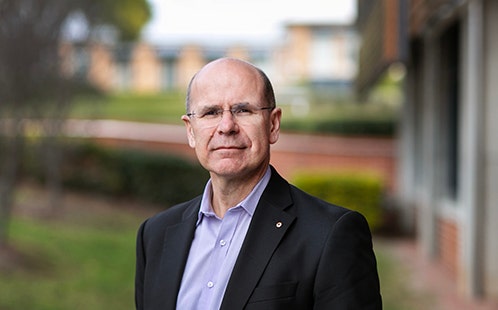
The following is a transcript of an interview that aired on ABC Radio National Saturday Extra between presenter, Nick Bryant and Vice-Chancellor, Distinguished Professor George Williams AO.
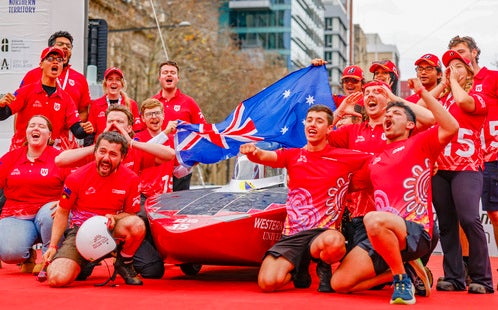
Western Sydney University are the number one Australian solar car team at the 2025 Bridgestone World Solar Challenge
Western Sydney Solar Car team has crossed the finish line placing preliminarily sixth in the world overall, and the number one Australian team in the world’s most prestigious solar car challenge.

Western Sydney University Statement on Cyber Incidents
Western Sydney University has issued an update to its community following confirmation that previously stolen personal information was published online, including on the dark web.