2GB Ben Fordham: Vice-Chancellor George Williams discusses university sector challenges
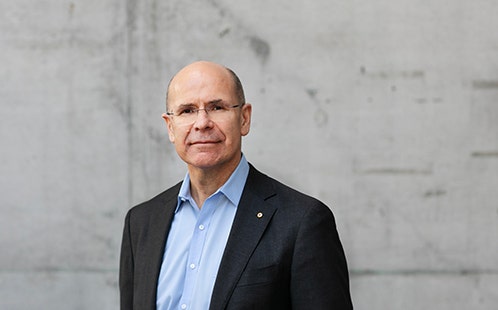
The following is a transcript of an interview that appeared on 2GB Radio between presenter, Ben Fordham and Vice-Chancellor and President, Distinguished Professor George Williams AO on Friday, 30 August 2024.
Ben Fordham:
Well, there's a new boss in town at one of Sydney's major universities, Professor George Williams.
He's the new Vice-Chancellor at Western Sydney University. And one of his first moves in this job has turned a few heads. And it's also landed him a few supporters.
Professor George Williams has requested a pay cut. What? What's wrong with this professor? He's being paid 20 per cent to 25 per cent less than his predecessor. Professor George Williams, the Vice-Chancellor at Western Sydney University, is live in the studio with me right now.
Professor, good morning to you.
George Williams:
Good morning, Ben. Good to be here.
Ben Fordham:
You're a very intelligent man.
George Williams:
Well, maybe not, it sounds like.
Ben Fordham:
You're a constitutional law expert.
George Williams:
True.
Ben Fordham:
I'm worried about you, though. You understand how these pay negotiations work, right? You're supposed to ask for more.
George Williams:
Look, I think so. But I suppose I went into this thinking that universities, well, we need to change. And in my case, I'm not working for a corporation. It's not a business.
Our bottom line is not dollars. It's students and community. And I also felt strongly that unis need to benchmark these salaries against public sector salaries. So we went in, we had a discussion, and we benchmarked it against the public service at the federal level.
That led to a pay cut. I think that's the right approach. It's what politicians and others are saying. And for me, that seems fair and just.
Ben Fordham:
I know that these things are confidential when you're negotiating your pay, but you've been open about it, or certainly someone has, and that's how it's come out into the public domain.
So can you take us into that moment when you said I'd prefer to be paid less?
George Williams:
Yeah, I actually thought about it a lot before I went into that room. It was a long process to get this job. As you can imagine, there aren't many better jobs in this city than being Vice-Chancellor at Western Sydney University.
But I thought it was important both for the sector and the Uni to get a salary that was right. And I felt also that the benchmarking was critical because the community, I think, has rightly been saying, what's wrong with these salaries?
They're at a level we don't understand. And so I went in and worked with our Chancellor, Jennifer Westacott, strong business background. Essentially, we had the agreement. She probably was a bit higher than me. I was a bit lower.
We met at the benchmarking, and essentially that pins me to where you'd get the lowest paid Federal Secretary of the Government Department.
Ben Fordham:
Okay, there are some Vice-Chancellors. In fact, half of the Australian University Vice-Chancellors are getting more than a million bucks a year.
George Williams:
Yeah, and I think...
Ben Fordham:
You could have joined the Millionaires Club.
George Williams:
Maybe, but I think, again, it comes back to while we're here, and universities are here for students and community, and I felt it was right to send a signal, but personally it's just my background as well.
I come from a low SES family, you know, probably the wrong side of the tracks for a good part of my childhood. Faced expulsion from school a lot of the time.
So education changed my life, and I felt, you know, it's about giving back, and this is the job that I can give back.
Ben Fordham:
Alright, let's go through the George Williams story. So you started off in Tassie, and then your folks broke up, and you ended up in Sydney, but I want to get to the moment that you were nearly expelled.
George Williams:
Well, there's a few actually. So yeah, that's right. Family moved from Tasmania. Parents split up when I was about four. You know, pretty tough. No family support at all.
Lived with my mum. Moved around a lot. She had a lot of jobs, often at home by myself. And not surprising, I went off the rails for a good period of time.
And I was the sort of kid you did not want in your class, I think you'd have to say. But the key point for and I think that actually changed my life, were my teachers.
And there was one moment in particular where I had a teacher that put me on permanent detention. And I thought, that's not fair. Every Thursday lunchtime I was going to be on detention.
They said, let's just make this permanent. There's no point doing it week by week. But the teacher had a cunning plan, and the teacher actually got me in class every Thursday and started educating me.
And actually used that time to take me through the material. And that was the point at which I thought, actually, I could make something for myself. This teacher believes in me.
And that was the turning point in my life, thanks to education and a great public school teacher.
Ben Fordham:
Do you remember the name of that teacher?
George Williams:
I don't anymore. I was about eight at the time.
Ben Fordham:
No, that's all right. Because they do make a difference. I think back to a few in my life who really changed things. Mrs Pike was one. She was Miss Bowron.
And then she got engaged while I was in year two. It broke my heart. Mr Patterson, who I had in year five, others in high school as well, they make all the difference.
But you don't want words spreading around the university that you're a naughty boy when you're at school. They'll start flying up.
George Williams:
I tell you what, we've got a lot of kids who are on the wrong side of the tracks who come to Western Sydney Uni. And that's the point.
I mean, two-thirds of our students are from families that have never had anyone go to university. We've got the highest number of kids who come from low SES or poverty backgrounds.
And our business is getting them ahead, getting them a better life. So we welcome them and, like me, give them opportunities.
Ben Fordham:
I've never been to university. And when I have a look at the fees, I wonder, I mean, I know there's a system in place to pay it back, but I just wonder how people can afford it.
George Williams:
It's a really good point, Ben. I think you talked earlier about people's dreams being shattered with housing, but it's also being shattered with education. And I support a system where students contribute money back through fees, pay it back as they earn.
But the fees are now so high. An arts degree, for example, 50K over three years. We're a lot of people who are saying it's too much. I'm not going to study at all.
And we're pricing them out of their dreams, essentially. So it's no surprise to have lower incomes. Unemployment is high for people who don't have a uni degree. And then, of course, the housing market hits them.
So we've got to get all of this right for our young people.
Ben Fordham:
Professor George Williams is with us, the new Vice Chancellor of Western Sydney University. He's only been in the job four weeks. What are the big challenges facing the university sector as far as you see them, Professor?
George Williams:
Well, let me give you a couple. I mean, one at our end, a critical one is retention, just keeping kids in university because the cost-of-living pressures are so high that a lot of our students are saying they can't study and eat.
So we're in the education and food business. We've got a pantry with rice, oats and the like. Breakfast and dinners. So at that point, it's really on the ground real issues to keep students in study.
But, of course, the other big issue this week is those caps, which means that we're going to be prevented from taking around 1,000 international students next year we wanted.
And that's income we would have actually liked to use to support our domestic students and equity programs.
Ben Fordham:
How many foreign students do you have?
George Williams:
So we've got 9,000. That's about 20 per cent of our students. And it's a good mix. So there's no student body that's higher than 20 per cent of the total. There's Nepalese students, there's Indian, a smaller group of Chinese students.
And, of course, they largely match the community that we're educating, because Western Sydney, of course, is the most diverse in the country.
Ben Fordham:
The University of New South Wales has got about 20,000 foreign students, Uni of Sydney, 31,000 overseas students. Do you understand why Australians and now the federal government have said, look, we need to recalibrate here a little bit with a number of people coming in?
George Williams:
Yeah, I do, actually. I can understand where the government's coming from, and I've heard loud and clear people talking about problems within classes as well in terms of the right language being spoken and how it affects domestic students.
And our point is, Western Sydney's different. We've got far lower number of students. And in our case, it's all about accommodation, of course, as bit, heating up the housing market.
But we've got a bed for every single international student. We planned ahead, 20 per cent capacity. A lot of our students go into homestay, which is providing a few hundred bucks a week for local Western Sydney families.
And the other key bit is a lot of our students are studying nursing and they're going direct into Western Sydney. In fact, Ben, God forbid you had to go into hospital, there's a good chance you'd have your blood taken by a Western Sydney student who's come from overseas, filling a gap, that actually a domestic student doesn't want to do.
So we need these students in Western Sydney.
Ben Fordham:
So how will it impact you as you recalibrate?
George Williams:
Well, I mean, the big impact is Western Sydney, of course. There's going to be fewer nurses that we need to fill the big shortages. There'll be families who'd like a bit more income that can't take into international students.
But the bottom line for us, it'll be 26 and a half million dollars next year. And that's the hit. That's the hit next year, just next year. And it gets bigger and bigger every year.
And that's essentially money that cross subsidises domestic students for their food, equity studies programs. And we're going to have to look hard at how we deal with it.
Ben Fordham:
It'll probably lead to a better experience for a lot of the kids at the Uni though, because we've heard from many of them where they say, you know, you do a group assignment and that can be really challenging when you're dealing with people who don't have a strong command of the English language and you're all in there together, working together, puts a lot of pressure on the kids who are able to communicate.
And they're thinking, well, I haven't paid all of this money to come here and to be a teacher.
George Williams:
Yeah, and agree. If we've got those problems, they have to be dealt with. And I would say at our end though, that we're not getting the same stories you get from some of those other unis.
And that's partly because we don't have any group from overseas that's so large. So for example, the Chinese students and other universities might be 70 per cent. In our case, they're 13 per cent.
It's diverse. You couldn't speak a language and actually pick your group. So in fact, it has to be diverse, open, and we actually model what the government's been saying.
And that's why we're saying with these caps, we understand it, but can you just tailor it for Western Sydney to actually match our differences? And critically, with the accommodation, which is the biggest driver of this, none of our students needs to go into the private market.
So why would you hit us for that?
Ben Fordham:
Do you have trigger warnings and safe spaces at Western Sydney University?
George Williams:
Oh, in some cases, we do. I mean, I'm still getting across some of those things. You know, four weeks into the job, I'm visiting the campuses. I haven't actually seen any of those safe spaces.
But we would, for example, with our prayer rooms for some of our religious groups and the like. And again, the diversity means we've got to have all different forms of religion.
And essentially, our job is to cater to our students' needs.
Ben Fordham:
Well, you've given a very good ad for Western Sydney University, I think, this morning, which is great. And hopefully, we can talk to you regularly because I know we've spoken to you over the years in your other capacity as a constitutional law professor.
But it would be great to be able to talk to you because a lot of the time when we ask Vice-Chancellors on, they're not all that keen to speak.
Mark Scott from Sydney University has been on from time to time, but we'd love to continue that. And congratulations on the stance you've taken on the salary because I think it's earned you a lot of fans.
George Williams:
Yeah, thanks, Ben. I'd love to come back. I'd love to hear from your listeners too. If they've got issues with unis, I'd like to hear because unis have got a job to do to win people's faith back.
And for me, it starts with Western Sydney University.
Ben Fordham:
And next time my contract's up, I won't be engaging your services to negotiate on my behalf.
George Williams:
I think that would be unwise.
Ben Fordham:
Professor George Williams, the Vice-Chancellor of Western Sydney University, thank you so much.
George Williams:
Thank you, Ben.
ENDS
30 August 2024
Latest News
ABC RN transcript: Vice-Chancellor Professor George Williams discusses higher education sector, student support, and the impact of AI
The following is a transcript of an interview that aired on ABC Radio National Saturday Extra between presenter, Nick Bryant and Vice-Chancellor, Distinguished Professor George Williams AO.
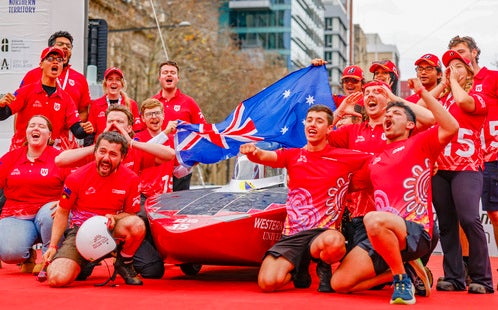
Western Sydney University are the number one Australian solar car team at the 2025 Bridgestone World Solar Challenge
Western Sydney Solar Car team has crossed the finish line placing preliminarily sixth in the world overall, and the number one Australian team in the world’s most prestigious solar car challenge.
Western Sydney University Statement on Cyber Incidents
Western Sydney University has issued an update to its community following confirmation that previously stolen personal information was published online, including on the dark web.