2GB Ben Fordham transcript: Vice-Chancellor Professor George Williams discusses the unfair cost of university degrees and plans to reduce student debt
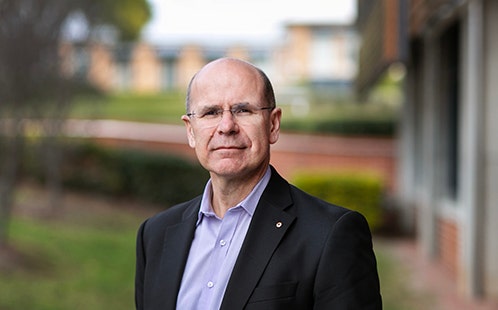
The following is a transcript of an interview that appeared on 2GB Radio between presenter, Ben Fordham and Vice-Chancellor and President, Distinguished Professor George Williams AO on Monday, 4 November 2024.
Ben Fordham:
Well, the Prime Minister has made an election pledge. Anthony Albanese says labor will erase around $16 billion from HECS debts if he wins the election. Under the plan, $5,500 will immediately be shaved off the average student debt and the average debt is around 27,000. Aussies with a larger HECS debt of around $50,000 will have $10,000 taken off their balance. There'll also be major changes to HECS repayment rules which labor says will deliver cost of living relief.
The announcement has been welcomed by students, but a number of economists aren't convinced. Chris Richardson says the announcement is a fairness fail. He makes the point that people who will never go to university are funding places for people who do. He says it's a tax cut targeted to the big end of town, with money going from the less well off to the better off. The designer of the HECS scheme, Bruce Chapman, says the one off debt forgiveness is more about politics than economics, and the boss of a major Sydney university says it's a step in the right direction
However, he's calling for more action to deal with the actual cost of degrees. Distinguished Professor George Williams is the vice chancellor of Western Sydney University, and he joins us on the line. Professor, good morning to you.
Professor George Williams:
Good morning. Ben.
Ben Fordham:
Can I ask you first of all about what Chris Richardson says? He says it's a fairness fail and people who will never go to university are funding places for people who do.
Professor George Williams:
Well, I think he could have also added that it's not just those who don't go to uni, it's those who haven't gone to uni yet because of course this helps you if you've got a debt, but it doesn't help new students coming into the system. They're going to be stuck with higher fees, and there's no suggestion their debt is going to be reduced. And he's right that the reduction is not means tested. So whether you're rich or you're poor, you get the same reduction.
Ben Fordham:
You say the federal government has to fix the root of the problem. If university degrees weren't so expensive to start with, then they wouldn't be in so much debt. These students
Professor George Williams:
Yeah. That's right. I mean, what the government's doing. And let's be clear, this will be a big win for about 3 million Australians who are getting about $5,000 on average from their debt. That will help them with cost-of-living issues. It will make a real difference to those people.
But what it's doing, it's a bit like you've got a mortgage and you've got a high mortgage. You're getting 20% off that. What it doesn't touch is the housing price in the first place, which is the real problem in that market. And it's the same here with student fees. We've got really inflated debt. It's about $81 billion that our students owe.
But the reason for that debt is because the fees are too high. And the best example is if you do a humble arts degree now. So you might want to be an English teacher. So you study English literature that costs you $50,000 over three years. And that's an enormous amount for a young person to take on 50 K at the beginning of their life. And of course, it flows through into their ability to get a home loan affects them later. Maybe when they're thinking of starting a family and we're just charging students too much at the beginning.
Ben Fordham:
Economists also make the point that graduates who've paid off their loan or paid-up front, they'll be feeling dudded to
Professor George Williams:
I don't think they'll be happy. That's right. Because if you've just paid your loan off, it's not going to help you. And it's why this is a big help to those 3 million people. But yes, there's groups of people who are not going to be happy. Um, and if they'd had some notice, maybe they wouldn't have just paid off their home loan. Or as I say, those who haven't gone to uni or those coming into uni.
Now, you know younger people who are facing this series of issues that's going to make it hard for cost of living. So it is targeted, it helps a particular group, but it's undeniable. There are other groups that does not help.
Ben Fordham:
You've watched politics for a long time, professor. It's a vote winner, would you say?
Professor George Williams:
Well, it's a vote winner with 3 million people. And that's a large number of voting people. And of course, the government is concerned about cost-of-living issues for younger people. And this is a direct way of targeting those people, whatever they earn.
But as I say, there's another group of younger people who are coming into the system. They get nothing out of this and that fee system is just broken. It is unfair and it's actually dissuading the poorest people in Australia from getting a degree in the first place. And that's what we're seeing at Western Sydney Uni.
People are just saying, I don't want a 50 K debt at the beginning of my life, so they're not getting a degree that will get them a better job and the community is being denied their talents.
Ben Fordham:
How do they fix that issue?
Professor George Williams:
Well, I think you go to the front end of this rather than the back end. Looking at debt. You look at the fact that we have scalings that came in 2021, and what happened in 21 is the degree for which you earn the lowest graduate salary, that your humanities degree has the highest debt.
It's completely the wrong way round. It should be fairly equalised across degrees. Just have a link between what you earn and what you pay. I mean, that's what the Howard government did many years ago and we should restore to that. And I think the overall level of debt should also be reduced.
Better to reduce the debt in the first place and the loan, rather than just effectively reducing it once you've already incurred it for a select group of people.
Ben Fordham:
We appreciate you jumping on the phone nice and early, professor. Thank you so much.
Professor George Williams:
Any time. Thanks, Ben.
Ben Fordham:
Distinguished Professor George Williams, the Vice-Chancellor of Western Sydney University. And I've got a feeling the respected economist Chris Richardson, his comments will bite. Anthony Albanese today because Albo doesn't want another class war going on. And Chris Richardson is saying it's a fairness fail And I think that this is a relevant point. People who will never go to university or who are yet to go to university are funding the places of people who are. He says it's a tax cut targeted to the big end of town, with money going from the less well off to the better off. So where does that sit with Albo going into bat for the battlers?
ENDS
4 November 2024
Latest News
ABC RN transcript: Vice-Chancellor Professor George Williams discusses higher education sector, student support, and the impact of AI
The following is a transcript of an interview that aired on ABC Radio National Saturday Extra between presenter, Nick Bryant and Vice-Chancellor, Distinguished Professor George Williams AO.
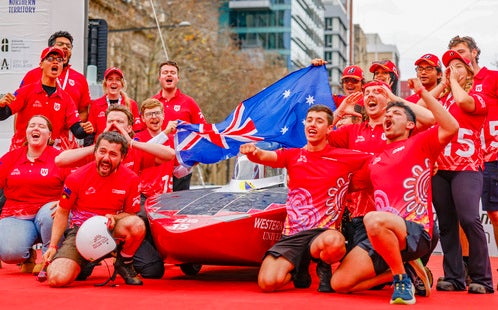
Western Sydney University are the number one Australian solar car team at the 2025 Bridgestone World Solar Challenge
Western Sydney Solar Car team has crossed the finish line placing preliminarily sixth in the world overall, and the number one Australian team in the world’s most prestigious solar car challenge.
Western Sydney University Statement on Cyber Incidents
Western Sydney University has issued an update to its community following confirmation that previously stolen personal information was published online, including on the dark web.