Humanitarian student finds meaning in Türkiye field work
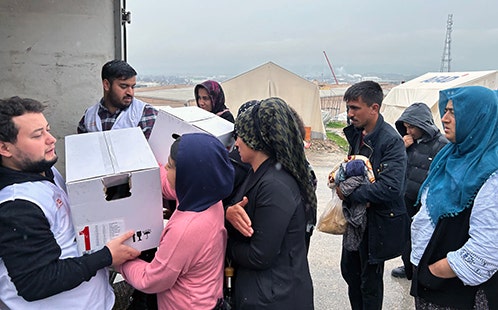
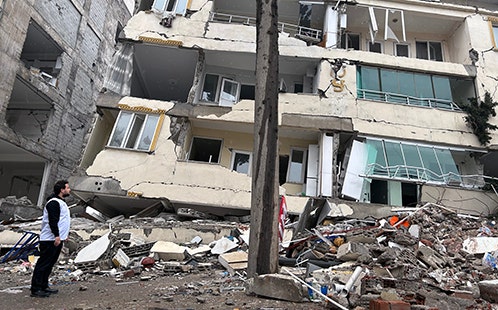
Baris Unal is one of the individuals who have been on the ground as part of the global response to the devasting Türkiye-Syria earthquakes.
Two months after the crisis unfolded claiming the lives of 50,000 people, Baris reflected on his time working for a non-government organisation providing relief in Türkiye and the work remaining to return the community to its feet.
A postgraduate student at Western Sydney University studying the Masters of Humanitarian and Development Studies, he is building on qualifications gained at the prominent Istanbul University.
“I believe that in times of crisis, it is important to come together as a community and support one another. Based on my observations in the field, I can say that recovery from the disaster in Türkiye-Syria will be a long and challenging process,” said Baris.
“The earthquakes affected many provinces in Türkiye, an expansive area home to 13 million people. Accordingly, we worked to ensure a mobile kitchen became operational in the earthquake zone. It currently serves 2,000 people every day.”
Baris visited the disaster zone with Penny Appeal Australia, a registered charity working to alleviate poverty through sustainable programs. He works for the charity as a Programs Manager, alongside his studies at the University.
With extensive experience working with Australia-based Non-Governmental Organisations accredited by the Australian Government's Department of Foreign Affairs and Trade, he has worked with Doctors Worldwide Turkey for two years, collaborating with the World Health Organization, International Medical Corps, Deutsche Gesellschaft für Internationale Zusammenarbeit GmbH and Bureau of Population, Refugees, and Migration of the United States.
“Non-Governmental Organisations play a critical role in responding to disasters and providing support to those in need. Their work helps to alleviate suffering and facilitate recovery in the aftermath of disasters. Without NGOs, it is very hard for local communities to recover and to get organised from disasters and crises,” he said.
“I believe that it's not quite possible to have the right motivation without visiting the field in this work. It's just like the other works project processes, paperwork, agreements, reports, meetings, but after visiting the field and witnessing the situation, meaning comes.
“We usually work with qualified partners that are recognised by authorities and international organisations to be able to deliver aid in the field. There are some processes and documents to be completed in this process. After witnessing what's happening in the field, I try not to delay any work because every day we delay, aid is reaching the field late.”
The Master of Humanitarian and Development Studies at Western Sydney University, the only degree of its kind in Australia, is helping develop qualified workers in disaster relief and development to assist in emergencies both in Australia and overseas.
“We have lecturers who have been on the board of the Australian Red Cross, who have worked at a high level at the United Nations, consulted at the state level in emergency management and have conducted field practice and research on malnutrition,” said Baris.
“All of our lecturers who attend our classes are highly experienced in terms of both theoretical knowledge and their professional career. This is very valuable for me because you can directly learn how to apply the theoretical knowledge in the field.”
The twenty-eight-year-old hopes to become an executive within a multinational non-profit organisation and continues to further his development in the field while remaining based in Western Sydney.
“I can say that following and analysing the innovations and developments that we can implement, especially within humanitarian organisations and in projects on the ground, keeps me feeling motivated.”
ENDS
17 April 2023
Latest News
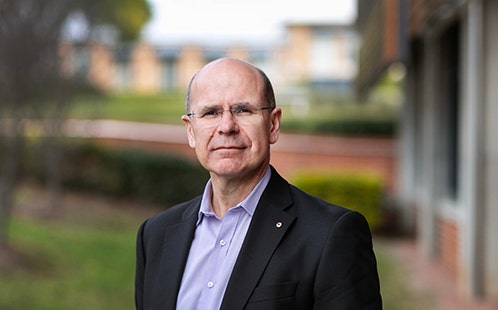
ABC RN transcript: Vice-Chancellor Professor George Williams discusses higher education sector, student support, and the impact of AI
The following is a transcript of an interview that aired on ABC Radio National Saturday Extra between presenter, Nick Bryant and Vice-Chancellor, Distinguished Professor George Williams AO.
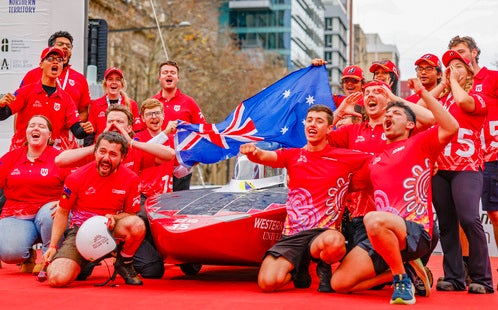
Western Sydney University are the number one Australian solar car team at the 2025 Bridgestone World Solar Challenge
Western Sydney Solar Car team has crossed the finish line placing preliminarily sixth in the world overall, and the number one Australian team in the world’s most prestigious solar car challenge.

Western Sydney University Statement on Cyber Incidents
Western Sydney University has issued an update to its community following confirmation that previously stolen personal information was published online, including on the dark web.