Experts share insights during FIFA Women’s World Cup
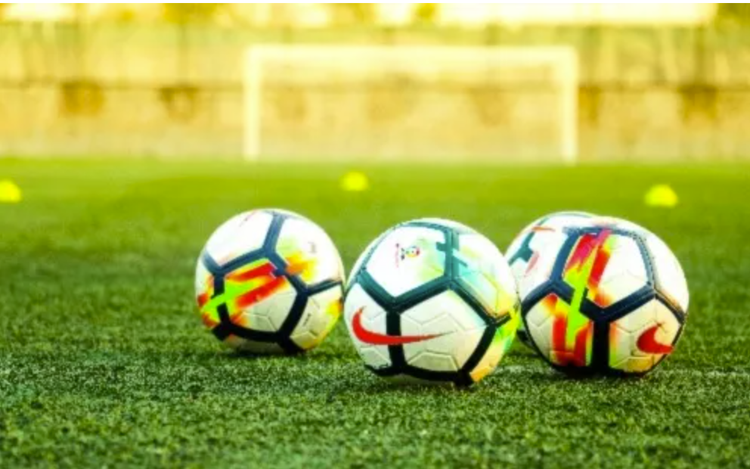
As the FIFA Women’s World Cup 2023 gets underway in Australia and New Zealand, Western Sydney University experts have shared key insights on their research into issues that impact women in sport including sexism and discrimination, the commercialisation of women's sports and what hosting this global event means for the region.
Dr Jess Richards - School of Business
Dr Jess Richards is a Senior Lecturer in Sports Management specialising in fan engagement, fan zones, and women's sports. With extensive experience as a consultant for prominent organisations such as Rugby League, Football Australia, and Rugby Union Australia, Jess offers expert commentary on the Women's World Cup and its value to Australian sport. Currently convening the International Women in Sport Symposium (opens in a new window) to be hosted by the University’s School of Business on 17-18 August, Jess aims to highlight women's contributions to sports at all levels.
“For Australia, hosting a major international tournament like the Women's World Cup will significantly boost women's participation in sports. The visibility of top-level female athletes competing on home soil will inspire a new generation, fostering increased participation rates and opportunities for women in sports from the field to the boardroom.”
“Australia's response to the Women's World Cup is highly anticipated. Fan zones have been meticulously planned to capture the nation's excitement and put Australian women's football on the global stage. These vibrant spaces will create a carnival atmosphere, offering families and the community a safe and thrilling experience. The fan zones ensure the tournament's impact reaches all Australians by leaving a legacy beyond just that experienced in the stadiums.”
Emeritus Professor David Rowe - Institute for Culture and Society
Emeritus Professor David Rowe is a Cultural Researcher at the Institute for Culture and Society, with a special interest in Media, Communication, Sport, Politics and Society. His previous projects include the Australian Research Council-funded ‘A Nation of ‘Good Sports’? Cultural Citizenship and Sport in Contemporary Australia' and he has recently published commentary on key issues in women’s sport and media (opens in a new window).
“Hosting the 2023 FIFA Women’s World Cup in Oceania is a landmark moment. As the largest sports event in the region since the Sydney 2000 Olympics, it reveals just how far some women’s professional sports have come, but also how much further all women’s sports at all levels have to go across the globe. While celebrating the moment, there are still many questions to ask about this tournament, ranging from what it means for the intensified commercialisation of sport, the environmental consequences for the Pacific of sports mega events, the implications for sport diplomacy in a region that has become a geopolitical hotspot, and the potential impact of the event on persistent inequalities in sport and the wider society, including those relating to First Nations peoples.”
Dr Michelle O’Shea - School of Business
Dr Michelle O’Shea is a Senior Lecturer at Western Sydney University. Her research interests are in the areas of sport, culture and society. More specifically her research involves the critical examination of professional and non-profit sport organisation functioning addressing issues relevant to gender and diversity, sport organisation community and societal impacts, sport marketing and social media communications. More recently her scholarship is concerned with illuminating and understanding how gender inequities are constructed and reproduced in broader organisation and institutional contexts. The impacts of which can in part be seen through her policy advocacy in domains relevant to women’s physical and economic wellbeing.
“While the Women’s World Cup presents us with a powerful opportunity to showcase the Matilda’s and women’s professional sport, it’s the legacy planning that matters. Once the World Cup roadshow moves on without a well thought out strategy and long-term commitment we will be left with an underfunded and undervalued sport reliant on these kinds of events to bring it profile and funding.”
Associate Professor Jorge Dorfman Knijnik – School of Education, Institute for Culture and Society and Centre for Educational Research
Associate Professor Jorge Knijnik is an expert in human rights in education and sports. He is an inaugural committee member of Women in Football Australia, a national association whose mission is to support gender equity within the Australian sports context. Jorge has recently launched four books on Women’s Football, and his research findings have impacted international UNICEF and UN Women public policies.
“While gender equity narratives like the #AsOne2023 movement were key to the successful bidding process of Australia and New Zealand, they don’t account for what is happening on the ground. A 2021 survey by ‘Women in Football Australia’ revealed that 55.1 per cent of women involved in football have reported experiencing sexism or discriminatory behaviour in the game. Hence, it is necessary to produce an in-depth investigation of how the 2023 FIFA Women’s World Cup will influence the gender equity and human rights agenda on football organisations that cater for girls and women’s participation in the ground level.”
Dr Andy Grainger – School of Health Sciences
Dr Andy Grainger is an expert in the sociology of sport and the socio-cultural analysis of sport and physical culture. As a lecturer in sport development, leisure and recreation, Andy can speak to issues surrounding the globalisation and commercialisation of women’s football, FIFA governance (including FIFA Women’s football strategy and policy), sport policy and ‘football diplomacy’, and the global political economy of sport more generally. Andy has recently published several co-authored articles on the politics of the bid process for the 2023 FIFA Women’s World Cup and is the co-editor of the recently released collection, The 2023 FIFA Women's World Cup: Politics, Representation, and Management.
“In the Gianni Infantino-led ‘FIFA 2.0’ era, the Women’s World Cup has become a prominent staging ground for displaying FIFA’s commitment to women’s football. However, while the 2023 tournament presents an enormous opportunity for the women’s game in Oceania, the Asia-Pacific, and beyond, our research suggests that optimism needs to be tempered with caution. As we have already seen with the negotiations over European broadcasting rights for the tournament, women’s football is increasingly being judged, like the men’s game, in terms of its commercial value and viability. The commercial growth of women’s football is certainly something to be celebrated. But adopting a financial-bottom-line growth model has the potential to lead to the very same global inequities now so prevalent in men’s football.”
Dr Rohini Balram – School of Social Sciences and School of Education
Dr Rohini Balram’s research centres on migrant women of colour in sports in the Oceania region. She is an ethnographic arts-based researcher whose work centres on gender, race, class, and other socio-cultural factors with a specific focus on the lack of sports participation and near invisibility of migrant women in sporting arenas of the Oceania and South Pacific regions. Rohini’s PhD study investigated sport and physical activity participation experiences of marginalised young Indo-Fijian women in Fiji, revealing the urgent need for culturally inclusive and innovative pathways for girls and women to fulfil the country’s ratification to the Convention on the Elimination of Discrimination Against Women (CEDAW).
“Athletic Indo-Fijian women and girls are positively disrupting the traditional status quo of Fijian gender, racial, class and physicality by consistently exercising their sporting agency and actively negotiating physical education and physical activity opportunities. Playing sports in spaces from which they have been previously excluded from, these young women – seen as ‘space invaders’ of Fijian sporting spaces - are driving change and tackling social norms head on. These athletic women continue to push for innovative team sports despite their requests failing to penetrate the racial, gendered, and orthodox perceptions of their families and communities.”
PhD Candidate Chelsea Oester – School of Health Sciences
Ahead of the Women’s World Cup, Western Sydney University has partnered with FIFA and Orreco to fund Chelsea Oester, a PhD candidate with the University’s School of Health Science. Her PhD research is focused on the influence of the menstrual cycle on football performance and health. The aim of her research project is the development and validation of a screening tool that will identify players at risk of having a self-perceived decrease in performance and participation. With this tool, she hopes to increase awareness and help players around the world to continue playing. Chelsea has come to Western Sydney University from Zurich, Switzerland, where she had previously worked in FIFA’s medical department.
"It’s interesting how little most women know about the menstrual cycle, despite us having our cycle every month. My hope is that my research shines the spotlight on women’s health in sport and making sport science more accessible for women and grassroots athletes.”
“The FIFA Women's World Cup tournament will greatly empower women and girls, and positively influence their participation in soccer around the world. A major international tournament like the Women's World Cup is a huge chance to speak about topics that are still seen as taboo such as the menstrual cycle and how it might influence performance and participation."
A collection of research by the University’s Institute for Culture and Society (ICS) on sport, gender and identity can be found here (opens in a new window).
More information about the International Women in Sport Symposium, hosted by Western Sydney University’s School of Business from 17-18 August 2023, can be found here (opens in a new window).
ENDS
17 July 2023
Photo credit: Travel Nomades via Unsplash
Latest News
ABC RN transcript: Vice-Chancellor Professor George Williams discusses higher education sector, student support, and the impact of AI
The following is a transcript of an interview that aired on ABC Radio National Saturday Extra between presenter, Nick Bryant and Vice-Chancellor, Distinguished Professor George Williams AO.
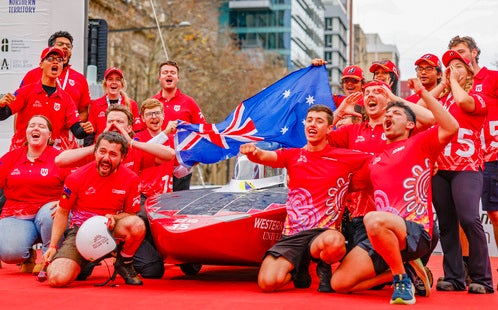
Western Sydney University are the number one Australian solar car team at the 2025 Bridgestone World Solar Challenge
Western Sydney Solar Car team has crossed the finish line placing preliminarily sixth in the world overall, and the number one Australian team in the world’s most prestigious solar car challenge.

Western Sydney University Statement on Cyber Incidents
Western Sydney University has issued an update to its community following confirmation that previously stolen personal information was published online, including on the dark web.