World-first artificial intelligence to enhance radiotherapy and personalise cancer care
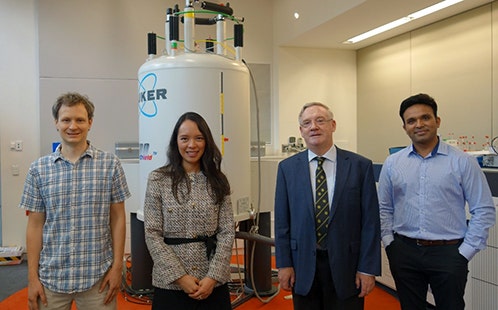
Dr Tim Stait-Gardner, Dr Trang Pham (UNSW/Liverpool Hospital), Professor Bill Price and Dr Abhishek Gupta
In a world-first, Western Sydney University researchers together with an expert team will utilise artificial intelligence to enhance radiotherapy, following a grant from Cancer Council NSW worth more than $430,000.
The study will support a next-generation radiotherapy technology developed by the Ingham Institute called 'MRI-Linacs' to characterise cancer heterogeneity – a major cause of cancer recurrence.
Lead Chief Investigator Professor Bill Price, from the University’s School of Science, said the research will allow clinicians to better predict the effectiveness of treatment and enable personalised care.
“Radiotherapy is an important part of treatment for many cancer patients, however, in current practice it offers little capacity for personalised care,” said Professor Price.
“We have identified an opportunity to further enhance treatment by considering biological characteristics of an individual’s tumour with the help of artificial intelligence.”
According to Professor Price, the implementation of this new enhanced imaging technology along with the precision of MRI-Linacs has the potential to greatly improve treatment outcomes and patient survival rates.
While the study will focus on four particularly problematic cancers – pancreatic, oesophageal, liver, and rectal – this new approach has the potential to enhance radiotherapy effectiveness for any solid cancers.
As part of the research, the team at Western Sydney University, which includes Drs Abhishek Gupta and Tim Stait-Gardner, together with Dr Trang Pham a Radiation Oncologist from Liverpool Hospital and UNSW, will use ultra-high-strength MRI scanners to produce ‘microscopic’ resolution images of tumour samples. These highly detailed images will allow the team to characterise the biological differences between tumours.
They will then use a specialised form of artificial intelligence, called deep learning, to transfer this knowledge into clinical MRI scanners to enhance the resolution of imagery in MRI-Linacs.
The study, Targeting cancer heterogeneity with ultra‐high field MRI and radiotherapy using deep learning, will be a collaboration between Western Sydney University, UNSW, Liverpool Hospital Prince of Wales Hospital, Ingham Institute, University of Queensland, and Auckland Bioengineering Institute.
ENDS
18 May 2022
Latest News
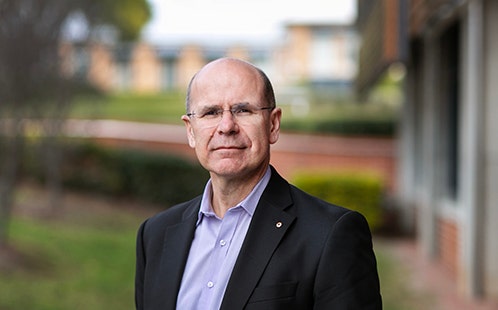
ABC RN transcript: Vice-Chancellor Professor George Williams discusses higher education sector, student support, and the impact of AI
The following is a transcript of an interview that aired on ABC Radio National Saturday Extra between presenter, Nick Bryant and Vice-Chancellor, Distinguished Professor George Williams AO.
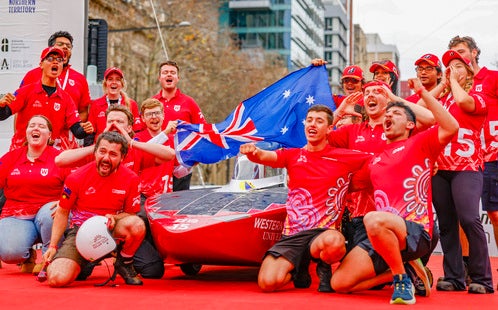
Western Sydney University are the number one Australian solar car team at the 2025 Bridgestone World Solar Challenge
Western Sydney Solar Car team has crossed the finish line placing preliminarily sixth in the world overall, and the number one Australian team in the world’s most prestigious solar car challenge.
Western Sydney University Statement on Cyber Incidents
Western Sydney University has issued an update to its community following confirmation that previously stolen personal information was published online, including on the dark web.