Isolation proven to cause speech processing differences in young autistic adults, new study finds

World-first research from Western Sydney University confirms young Australian adults diagnosed with autism process speech differently due to significant social isolation and limited variety of in-person social interactions.
Published in the international Autism Research (opens in a new window) journal, the study revealed that in-person social interaction affects speech processing, and that for peak cognitive performance, regular experience with a variety of new talkers is required.
Findings show that Australian English young autistic adult listeners recognise words and speech sounds as well as IQ-matched non-autistic comparison listeners. However, cognitive flexibility to adapt to speech from a new talker was observed to only differ in the autistic group.
This key finding is believed to stem from a lack of experience with a variety of new talkers and is further supported by data reported by the autistic participants who advise spending only 2.7 hours per week interacting with people outside their immediate circle of family and friends. This contrasts with the 18.3 hours reported by the neurotypical comparison group.
Lead author, Samra Alispahic from the University’s MARCS Institute for Brain, Behaviour and Development says that the new findings point to a national gap in disability policies and support services for young autistic adults.
“Social isolation does not always stem from the typical characteristics of autism, or a ‘lack-of-want’ by young autistic people to engage in social activities. Rather, it can be the consequence of a shortage of integration and transition programs, as well as adequate resources for meaningful social interactions and engagement,” said Ms Alispahic.
“A lack of talker variability affects how we process and adapt to other people’s speech, resulting in long-term ramifications for language-use, learning and development.”
Importantly, Ms Alispahic said this inflexibility might be reversible with regular practice of in-person engagement and interactions with a wider range of new talkers.
Strikingly, the study also revealed that 68 per cent of the autistic participants were unemployed at the time of testing, with one in every two reporting never being employed, further adding to social isolation.
“Our research further echoes the sentiments of participants and their families that once adulthood is reached, NDIS funding is markedly cut, and autistic individuals simply ‘vanish’,” said Ms Alispahic.
“There are no national policies, therapeutic or otherwise, relative to social interventions that exist at present. It’s up to families to organise grassroots-level social groups, so that autistic children, teenagers and adults may interact in inclusive environments and with like-minded peers,” she said.
Co-author of the paper, the late Distinguished Professor Anne Cutler, was a world-renowned pioneer whose contributions advanced scientific understanding of spoken language processing and shaped the field as it is known today.
Professor Cutler’s legacy is evident with this paper being published posthumously. The research team is committed to honouring Professor Cutler’s enduring research excellence in the field of psycholinguistics, as well as informing speech processing in neurodivergent populations while advocating for positive changes to disability policy.
ENDS
1 September 2022
Danielle Aiken, Media Officer
Image Credit: Ashkan Forouzani
Latest News
ABC RN transcript: Vice-Chancellor Professor George Williams discusses higher education sector, student support, and the impact of AI
The following is a transcript of an interview that aired on ABC Radio National Saturday Extra between presenter, Nick Bryant and Vice-Chancellor, Distinguished Professor George Williams AO.
Western Sydney University are the number one Australian solar car team at the 2025 Bridgestone World Solar Challenge
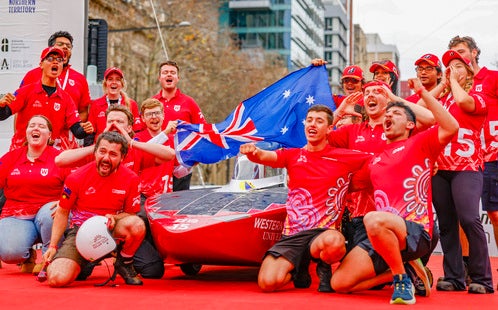
Western Sydney Solar Car team has crossed the finish line placing preliminarily sixth in the world overall, and the number one Australian team in the world’s most prestigious solar car challenge.

Western Sydney University Statement on Cyber Incidents
Western Sydney University has issued an update to its community following confirmation that previously stolen personal information was published online, including on the dark web.