Penrith platypus population to be conserved through new grant
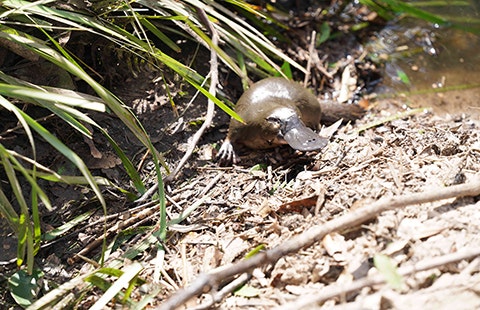
Mulgoa Valley Landcare Group, in partnership with Western Sydney University and Hawkesbury-Nepean Landcare Network, has secured a $55,000 grant to conserve platypus populations in the greater Nepean River catchment following the 2019-20 bushfires.
‘The Penrith Platypus Project’ received funding through the Landcare-Led Bushfire Recovery Grants Program and aims to create a more resilient platypus population in the region. It also will develop a refuge for platypus to help protect them from future fire events.
President of Mulgoa Valley Landcare Group Lisa Harrold said newly discovered platypus populations in the area have been impacted by habitat loss, including from water pollution and sediment build-up.
“Current estimates indicate an 18 per cent decline in platypus numbers as a direct consequence of the 2019-20 bushfires,” said Ms Harrold.
“This collaborative project will ensure identified populations in Penrith, including those in Jerry's and Mulgoa Creeks, can be monitored and their habitat improved.”
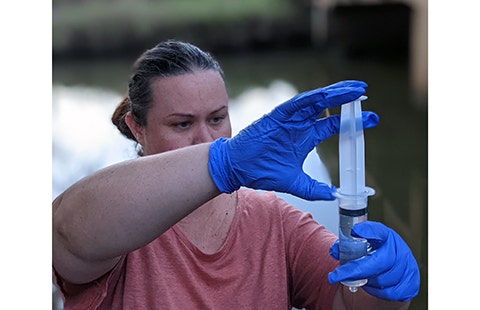
Research lead Dr Michelle Ryan from Western Sydney University’s School of Science said the project will focus on platypus Environmental DNA (eDNA) sampling, habitat assessment and restoration over a six-month period.
“eDNA testing by Western Sydney University has only last month revealed a population in the Penrith area which are using Mulgoa and Jerry's Creek tributaries as habitat,” said Dr Ryan.
“We need to monitor the platypus and commence habitat restoration to secure this population from future fire impacts.”
The project will invite the local community to learn more about platypus in their region through online information sessions with schools and residents.
The research team will also monitor water quality to complement the long-term vegetation restoration works already in place within the sub-catchments of Jerry's and Mulgoa Creeks.
Local Landcare Coordinator Katherine Clare from the Hawkesbury-Nepean Landcare Network said platypus aren’t an anecdotal species, they are present in our local waterways, in the stream at the back of our properties and local parks.
“Research and habitat restoration are essential to saving this unique species, especially improving their resilience after fires,” said Ms Clare.
“As population growth in Penrith continues, community awareness and engagement in this project is essential for the long-term survival of the species.”
To learn more about The Penrith Platypus Project, visit the Mulgoa Valley Landcare Facebook Group (opens in a new window).
ENDS
29 September 2021
Ali Sardyga, Senior Media Officer
Photo credit: Michelle Ryan
Latest News

ABC RN transcript: Vice-Chancellor Professor George Williams discusses higher education sector, student support, and the impact of AI
The following is a transcript of an interview that aired on ABC Radio National Saturday Extra between presenter, Nick Bryant and Vice-Chancellor, Distinguished Professor George Williams AO.

Western Sydney University are the number one Australian solar car team at the 2025 Bridgestone World Solar Challenge
Western Sydney Solar Car team has crossed the finish line placing preliminarily sixth in the world overall, and the number one Australian team in the world’s most prestigious solar car challenge.

Western Sydney University Statement on Cyber Incidents
Western Sydney University has issued an update to its community following confirmation that previously stolen personal information was published online, including on the dark web.