National study finds disadvantaged Australian adults are the least media literate
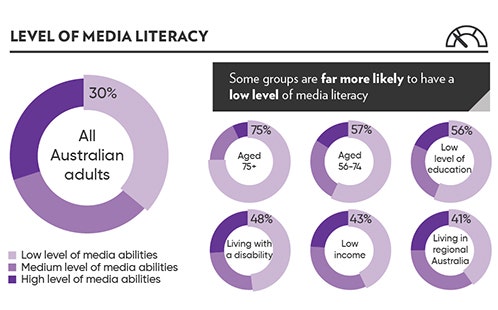
Australian adults who live in regional areas, older Australians, people with low levels of education, and people who are living with a disability are all more likely to use fewer types of media and have a lower media ability, a new national study has found.
In a collaboration between Western Sydney University, Queensland University of Technology and University of Canberra, the Adult Media Literacy in Australia: Attitudes, Experiences and Needs study (opens in a new window), provides the first comprehensive analysis into how Australians understand and use different forms of traditional and digital media.
The findings show that Australian adults use several different types of media each day and believe a diverse range of media activities are important in their lives, but their confidence in their own media abilities is unexpectedly low.
The researchers are calling for a national media literacy strategy and targeted support to develop the media literacy of all Australians, as part of several recommendations made in the report.
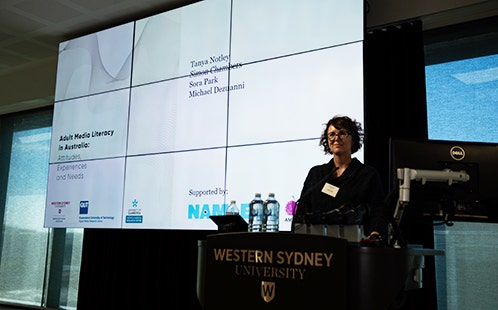
Lead author Dr Tanya Notley, from Western Sydney University’s Institute for Culture and Society and School of Humanities and Communication Arts, said the research found Australian adults largely have low media literacy abilities and many have few avenues for support, with vulnerable people most at risk of being disconnected.
“Our study points to a significant gap in the media literacy skills of adult Australians. Of particular concern, are the low media abilities reported among groups who are already socially and economically disadvantaged,” said Dr Notley.
“The ability to access, use and critically engage with a range of media sources is essential for full participation in society. It’s through media, especially digital media, that we increasingly seek social connection, information and employment. Australians who are not media literate are very likely to experience different forms of social, economic and cultural exclusion.”
Of the 3,510 Australian adults surveyed in November and December of 2020, it was found:
- Most Australian adults use 2-3 different types of media on a daily basis.
- Social media is by far the most common type of media used, with 83% of adults using social media on a daily basis.
- Overall media use is lower among adults who live in regional areas, have low levels of education, or are living with a disability.
- Gen Z, high income earners and people with a high level of education have the highest level of media ability.
- Australians have a moderate level of confidence in their ability to use media and media technologies to access information, but they are far less confident they can take steps to identify misinformation.
- 37% of adults had access to no source of media literacy support across their lifetime, or access to one source of support.
- Among those who have access to support, the most common source they turn to is online resources (45%) followed by friends (42%) and family (41%).
- Heavy users of social media are almost four times more likely to have high levels of civic engagement (30%) when compared with non-users (8%).
- Four out of five Australians (81%) say children should receive media literacy education in school.
Study co-author Professor Michael Dezuanni from Queensland University of Technology explained:
“We believe a national, coordinated education program is needed for adults, with strategies and resources to empower people from disadvantaged backgrounds. It’s also crucial that we educate young people so they can be media literate from an early age.”
According to Professor Sora Park from the University of Canberra, who is also a co-author of the study:
“Our findings also show that people with higher levels of media literacy are more likely to participate in civic engagement, which tells us that supporting people to be media literate will not only improve their everyday lives but also contribute to developing our democracy.”
For more information, download the report here (opens in a new window).
ENDS
14 April 2021
Latest News
ABC RN transcript: Vice-Chancellor Professor George Williams discusses higher education sector, student support, and the impact of AI
The following is a transcript of an interview that aired on ABC Radio National Saturday Extra between presenter, Nick Bryant and Vice-Chancellor, Distinguished Professor George Williams AO.

Western Sydney University are the number one Australian solar car team at the 2025 Bridgestone World Solar Challenge
Western Sydney Solar Car team has crossed the finish line placing preliminarily sixth in the world overall, and the number one Australian team in the world’s most prestigious solar car challenge.
Western Sydney University Statement on Cyber Incidents
Western Sydney University has issued an update to its community following confirmation that previously stolen personal information was published online, including on the dark web.