Media literacy lessons a must for schools
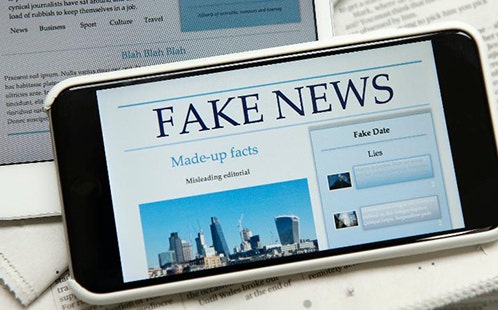
The COVID-19 pandemic has highlighted the importance of teaching students the difference between real and fake or misleading news say the authors of a new report into news media literacy education.
The News Literacy and Australian Teachers: How News Media is Taught in the Classroom report also recommends teachers be given more time, resources, and curriculum support to do so.
A collaboration between QUT’s Digital Media Research Centre (opens in a new window)(DMRC) and Western Sydney University’s Institute for Culture and Society, with funding from the Museum of Australian Democracy (MoAD) and Google Australia, the report is the latest outcome of the Advancing the Media Literacy of Young Australians project and surveyed several hundred primary and secondary school teachers Australia-wide.
Associate Professor Michael Dezuanni, Associate Director of the DMRC, said the overwhelming majority of teachers felt it was extremely important for students to learn how to critically read the news, as well as learn about news bias and how to fact check for themselves.
A third of the respondents also lacked confidence in approaching the topic in class, while others struggled with poor quality internet access.
“News media literacy should be a critical component of a broader digital media literacy education program, but most teachers surveyed said they are not well supported to teach it under the Australian Curriculum, and some schools do not value it highly” said Associate Professor Dezuanni.
Co-author Dr Tanya Notley from Western Sydney University said the need for the study was driven by the way in which the internet has dramatically changed how all Australians participate in society and how they gather their news and entertainment. She added this was especially the case for younger people, with online news engagement starting for many children during their primary school years.
“At the same time, news is now produced and circulated more rapidly, using an ever-growing number of social media platforms. Quite often social media users encounter news from a range of sources even while events are still unfolding,” Dr Notley said.
“A demanding, constant 24-hour news cycle across many digital platforms makes verifying sources and claims more complicated than ever before.
“This has created flashpoints for claims and counterclaims of fake news at critical moments during elections, natural disasters, and most recently, as the world struggles with COVID-19. In the past couple of months, we have seen a rash of conspiracy theories, bogus remedies and more spread, often by celebrities many young people follow on social media.”
Associate Professor Dezuanni added that very little had been previously known about how news media literacy is taught in our schools and even less known about how teachers feel on the subject and how it can be improved.
“Only last year, the Australian Competition and Consumer Commission’s Digital Platforms Inquiry emphasised the importance of digital media literacy education in schools,” he said.
“Our project is aimed at helping federal and state governments develop strategies for advancing news media literacy in the education system and to ensure it has more prominence in the 2020 review of the Australian Curriculum.
“We also hope the research will be of interest to news media organisations looking to grow their engagement with young Australians, schools, and teachers, as well as the producers of news media literacy support materials.”
The aim of the research complements the brief of the Museum of Australian Democracy according to MoAD Manager, Learning, Deborah Sulway.
“At MoAD, we engage and inform young citizens, empowering them to use their voice and actively participate in democracy,” Ms Sulway said.
“We work closely with teachers, to educate young Australians to be informed digital media literate citizens and have their voices heard.” Deborah Sulway, Manager Learning at MoAD.”
Read the full report (opens in a new window)(PDF 1.06MB).
ENDS
29 May 2020
Media release (opens in a new window)issued by QUT media.
Latest News
ABC RN transcript: Vice-Chancellor Professor George Williams discusses higher education sector, student support, and the impact of AI
The following is a transcript of an interview that aired on ABC Radio National Saturday Extra between presenter, Nick Bryant and Vice-Chancellor, Distinguished Professor George Williams AO.
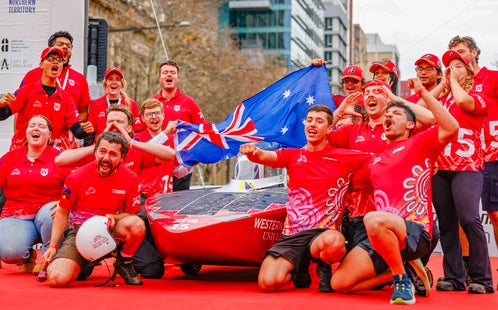
Western Sydney University are the number one Australian solar car team at the 2025 Bridgestone World Solar Challenge
Western Sydney Solar Car team has crossed the finish line placing preliminarily sixth in the world overall, and the number one Australian team in the world’s most prestigious solar car challenge.

Western Sydney University Statement on Cyber Incidents
Western Sydney University has issued an update to its community following confirmation that previously stolen personal information was published online, including on the dark web.