Teaching Law in Western Sydney: What our Students Taught Me about Belonging, Identity and the Profession
By Maria Bhatti
"When I first began researching the experiences of Muslim law students, I expected to find challenges. What I did not expect was how profoundly their voices would reshape the way I approach teaching."
When I first began researching the experiences of Muslim law students, I expected to find challenges. What I did not expect was how profoundly their voices would reshape the way I approach teaching. The findings of our study speak not only to the experiences of Muslim students, but to broader questions about who feels they belong in law school and in the legal profession, and how gender and intersecting identities shape that experience.
Together with my colleague Sandy Noakes, we recently published findings from a qualitative study conducted with Muslim law students at WSU's School of Law. Using focus groups facilitated by members of the Muslim Legal Network, rather than by us as their academic teachers, we listened to students' perspectives on belonging, representation and the transition into the legal profession. What emerged was both affirming and confronting.
What WSU Gets Right
The students told us something that might surprise people at other institutions: they felt they belonged at WSU. In a landscape where Muslim students in Australian universities have reported rising levels of discrimination, WSU's culturally diverse campus offered something rare: a sense of safety. The most recent Islamophobia in Australia report documents a 250% increase in reported online incidents compared to previous study periods, which makes this finding all the more significant.
One student put it plainly. At another university, he said, he might have had to hide his religion to be safe on campus. At WSU, he could simply be a law student who is also Muslim.
That observation is important. It also raises a harder question: What does it mean when belonging is contingent on geography? When the sense of safety ends at our postcode?
Where the Work Begins
The students' sense of belonging shifted markedly when they looked outward toward the legal profession they were training to enter. There, they saw very little of themselves. Not in the partners' directories of major firms. Not at networking events held in bars they could not attend for religious reasons. Not in the mentors available to guide them.
One student near the end of her degree described looking at representation outside of law school and simply not seeing it. Another spoke about the inner struggle of asking herself why she was there, not because she lacked ability or commitment, but because the profession's culture appeared structured for someone else entirely.
This gap between belonging at law school and belonging in the legal profession is, in my view, one of the most important challenges our school can address. If we prepare students for a profession without honestly naming the barriers they will face, and without actively working to address those barriers, we are doing only half the job.
Gender, Intersectionality and the Classroom
Gender-based discrimination was a thread running through every theme in our research. The female students in our study carried a compounding weight that their peers often did not. They spoke about managing visibility as visibly Muslim women, navigating stereotypes, balancing carer responsibilities, and in some cases doing all of this as mature-aged students and new English speakers. These are not separate challenges. They operate together and reinforce one another.
The female students in our study carried a compounding weight that their peers often did not. They spoke about managing visibility as visibly Muslim women, navigating stereotypes, balancing carer responsibilities, and in some cases doing all of this as mature-aged students and new English speakers.
Research consistently shows that women participate less frequently in law school classroom discussions, with adverse effects on confidence, grades and career outcomes. For Muslim women, the intersecting pressures of faith, gender, cultural background and visibility intensify this further. One student spoke about being unable to attend key networking events held in venues that conflicted with her religious practice, placing her at a practical disadvantage in building the professional connections that legal careers depend upon.
These findings are consistent with the most recent Islamophobia in Australia report, which found that a significant majority of Islamophobia victims are women, and with research from the United States, Canada and the United Kingdom documenting similar intersectional challenges in higher education.
How it Changed My Teaching
Hearing these students changed how I think about curriculum and classroom design.
Hearing these students changed how I think about curriculum and classroom design. Several spoke about wanting more nuanced engagement with diverse legal traditions woven across the curriculum, rather than confined to a single elective. I have also become more attentive to who speaks in my classroom and why some students do not. It is equally important to ask whether diverse students feel seen and represented at law school, whether staff on faculty reflect their backgrounds, and whether the law school actively encourages connections with diverse practitioners who can speak to students' professional futures.
What Comes Next
Our research is preliminary: nine students, one institution, one moment in time. However, their experiences point toward questions every Australian law school should be sitting with. Who feels safe here? Who can see themselves in our curriculum, our staff and our professional networks? The student voices in our study made clear that the challenges do not end at graduation, and my next research focuses on the experiences of Muslim lawyers in the legal profession itself. Understanding what happens after law school is, I think, where some of the most important work begins. At WSU, we have a genuine opportunity. Our student community is one of the most diverse in the country. That diversity, including the full complexity of intersecting identities our students carry, is not a challenge to be managed. It is an advantage, and one that we have a responsibility to build on.
About the author
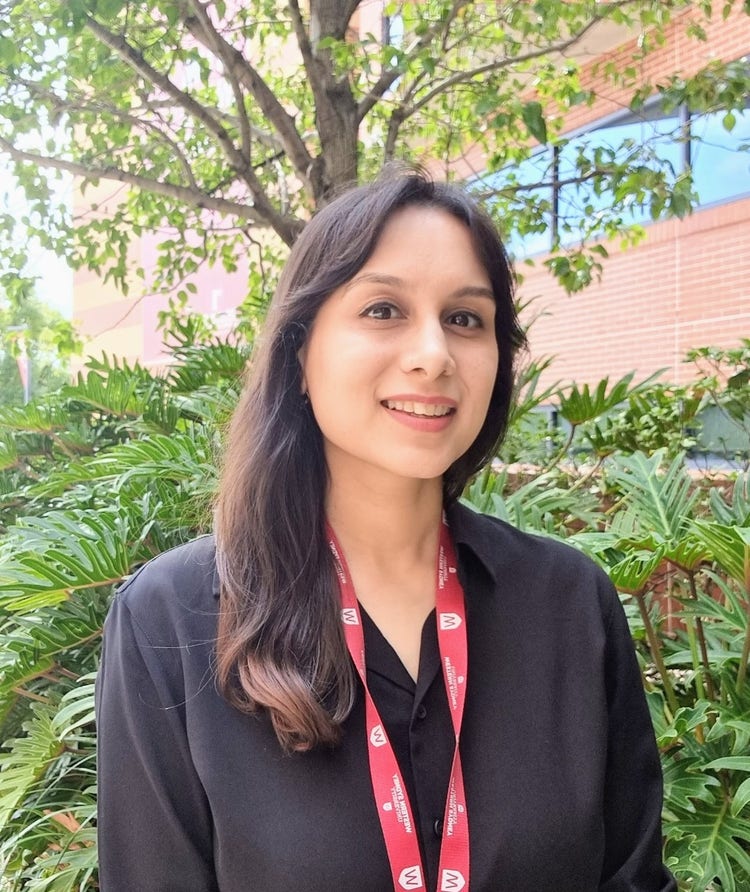
Dr Maria Bhatti is Senior Lecturer in Law and JD Program Lead at Western Sydney University, where her research sits at the intersection of law, religion, and society. She specialises in international and comparative law, religious and secular legal frameworks, and Islamic finance and dispute resolution, publishing in leading journals including the UNSW Law Journal, the Australian Journal of Human Rights, and the Monash University Law Review, and authoring Islamic Law and International Commercial Arbitration (Routledge, 2019). Her research has a sustained focus on equity and access to justice for Muslim communities in Australia. Building on her published work examining Muslim law students' experiences of belonging within legal education, her current research extends this inquiry into the profession, investigating how institutional and professional cultures shape participation and access for a community that remains underrepresented in Australian legal practice. Maria holds LLB and LLM degrees from the University of Melbourne and a PhD from Monash University.