Learning together to live with fire: Can Indigenous cultural burning practitioners catalyse new models of broader community resilience for bushfire risk
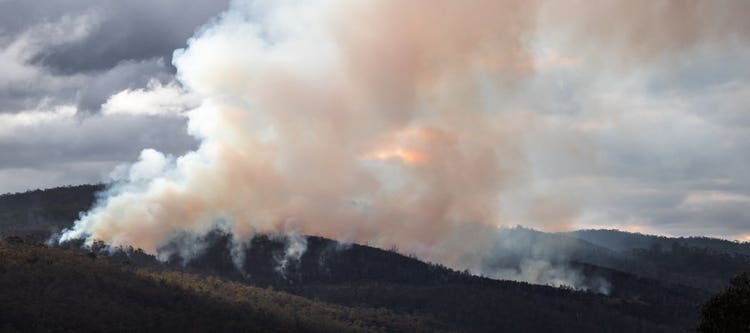
Controlled burns creating thick smoke over the bush in Australia. Image: faithie / Adobe Stock
Summary
The revival of cultural burning is of great significance to Indigenous communities, but interest in cultural burning is much wider. Indeed, there has been an upsurge in broader interest in intentional fire for a range of cultural, social, environmental, and risk management purposes. Some of this is generated through Indigenous cultural burning practitioners engaging with non-Indigenous landowners, RFS brigades, and agencies about cultural burns on private and other lands. The significance of this interest is at least threefold. First, it signals the possibility of expanding and resourcing Indigenous organisations to apply cultural burning in their regions for both their own and others' purposes. Second, it suggests that non-Indigenous engagement with cultural burning may be a pathway for broader communities to develop better understanding of the role and immanence of fire in landscapes. Significantly, this could lead to a greater willingness to use fire when and where appropriate for a range of goals, including the holistic resilience of communities and landscapes. Third, it raises the possible risk of the misappropriation of knowledge versus the benefits of wide public participation in Caring for Country practices. This research proposes to address these possibilities through examining how non-Indigenous landowners, residents, RFS brigades, and others learn about, and act on, community resilience and preparedness through engaging with Indigenous cultural burning. We propose to identify programs and places where this engagement has occurred and document and interpret its forms, processes, consequences, and implications for policy and for resourcing of cultural burning. In short, we ask to what extent do the outcomes of non-Indigenous engagement with cultural burning provide evidence that supports resourcing cultural burning practitioners to achieve both broader community preparedness and risk reduction goals as well as Indigenous aspirations?
Researcher(s):
Funding:
NSW Bushfire and Natural Hazards Research Centre $374,500
Period:
8/2025 - 11/2026
Project Website:
https://www.nsw-bnhrc.org/projects/learning-together-to-live-with-fire
Contact: