‘OUR RAT KING xdd’: The role of emote-humour in constructing cross-platform communities online
Geoffrey Lee, University of Sydney
Ryan Stanton, University of NSW
Abstract
This article examines the role of emotes, also known as emojis, in constructing humour on the game live streaming platform Twitch. Emotes on Twitch are a key part of how users produce humour, remixing and creating new emotes based on the content of live streams. These emotes are subsequently adopted by live streamers into recurring jokes made during their own broadcasts, encouraging their viewers to develop unique responses that become enshrined as memetic practices.
This article analyses how the collaboration between live streamers and their viewers, facilitated by these emotes, enables the co-creation of a strong community identity that not only allows live streamers to retain viewers throughout their broadcasts, but also enables the expansion of their brand beyond livestreaming as they move onto other platforms.
Although the original co-creation of humour through emotes is intertwined with Twitch’s infrastructure, viewers innovate and adapt their practices as they communicate on other platforms. Studying the processes by which this emote-humour spreads on and beyond Twitch therefore reveals how platform tools are being used to foster a novel form of multimodal, collaborative cultural production that is increasingly being incorporated into how communities communicate with and identify each other both on and across various platforms.
Introduction
Since its introduction in 2011 as the game-focused spin-off to the general live streaming platform Justin.tv, Twitch has grown to attract millions of viewers to hundreds of thousands of live streamers (or streamers). These streamers are individuals who broadcast themselves using a combination of screen-recording software and live camera footage; the broadcasts feature a diverse range of content including casual and competitive game playthroughs, streams dedicated to ‘IRL’ (in real life) content, and a variety of other non-game media such as artistic showcases or produced shows. The prevalence of this more varied content showcases Twitch’s growth into an all-round media platform, having expanded beyond its game-focused origins.
Common to all Twitch streams, however, is interaction between the streamer and their viewers, often facilitated by a synchronous message feed commonly referred to as ‘chat’ running parallel to the broadcast and allowing audiences—or ‘chatters’—to regularly communicate with the person they are watching (Anderson, 2017). Emotes, small icons comparable to emojis, are a central part of this ‘chat’ feature; in addition to a platform-wide collection of emotes available to all users, Twitch offers each streamer an ‘emote library’ that can be filled with custom emotes for chatters to send with their messages to the streamer.
Those who pay a regular subscription fee to a specific streamer gain access to a wider selection of emotes to use in the streamer’s chat, encouraging streamers to offer appealing emotes that users will subscribe to use. Although they have the potential to contribute to harassment and toxicity (Kim et al., 2022), emotes have largely been used to express different affects (Carter & Egliston, 2021) and respond to different on-stream situations (Chow, 2016).
Humour is one of these typical use cases: whether responding to a joke the streamer has made or accompanying a joke message in chat, emotes are closely intertwined with the construction of humour within livestream broadcasts. This relationship has been acknowledged (Johnson, 2024a) but has not yet been thoroughly investigated. This is consistent with the broader treatment of humour on Twitch which, similarly, has been acknowledged by multiple scholars who examine how it is used within communities (Euteneuer & Meints, 2020; Mihailova, 2022; Woodcock & Johnson, 2019). However, while the effects of humour on the platform have been examined, there has not yet been any dedicated investigation into how it is constructed.
Emotes, with their breadth of customisation, ease of use, and inherent multimodality, make them well suited to being incorporated into memetic humour practices, which can then be disseminated across various platforms. Despite these characteristics, however, they have been treated as auxiliary to interactions and practices occurring on the platform more generally (Jackson, 2021).
As this article will argue, understanding the specific platform features and processes responsible for the construction of what we call emote-humour will not only provide insight into how these particular gaming subcultures practice comedy, but will also contribute to an overarching discussion of how technological infrastructures are increasingly shaping how we communicate with each other.
Studying how, in the case of emote-humour, platform features enable the co-creation of community practices and foster a culture of collaboration and participation, reveals the constant, dynamic negotiation that is occurring as users strive to find new ways to express themselves. Analysing the cross-platform spread of emote-humour will also contribute to a better understanding of the increasingly multi-platform makeup of online communities, demonstrating how cultural production is occurring across platforms. This article’s examination of emote-humour is therefore also an investigation into how our communication practices are being influenced by platforms, a relationship that is regularly evolving and subsequently requires constant scrutiny.
This article starts by briefly introducing the existing research into the use of humour and emojis (or emotes as they are called) in online contexts, before explaining how they are specifically integrated into the structure of Twitch. Afterwards, it reviews existing literature regarding online humour, its relationship with the technological tools, and the culture within which it is situated. Having laid this groundwork, this article then moves into its findings, which centre around examples drawn from a current doctoral project conducting a digital ethnography on how humour practices on one platform are transmitted onto many across the Internet.
From the collected data, we present three examples of emote-humour grounded in a particular Twitch streamer and their community: these examples represent the stages of emote-humour as a recurring, memetic practice, then its combination with existing practices and knowledge to produce new remixes, and finally, its manifestation on other platforms in a variety of different forms.
Common to these three examples is a negotiation not only between community members and the tools they use to communicate, but also between community members and their shared identities. Communities are in a constant state of dialogue over their boundaries, determining who is part of the community, what the community identity is, and what behaviours are acceptable.
Examining how these communities construct humour practices reveal the extent to which these questions are shaped by platform features and guidelines and draws attention to the increasingly complex intertwining of communication practices with the various affordances of specific platforms within online subcultures. As this article will reveal, the monetisation of these affordances by platforms creates financial incentives for creators to engage their communities across platforms, further complicating this dynamic between cultural, technological, and now economic concerns.
While this article is centred on a single community, its findings provide insights into the influence technological mediums have on our cultural practices that can be applied both to other communities on Twitch and beyond. This article concludes by forwarding this research area as both novel and significant: as an exceptionally interactive and participatory form of communication, emote-humour is a key practice that provides a window into the broader, ongoing discussion of how platforms and the economic interests that underpin them are shaping both how we interact with each other and see ourselves.
Background
Research into the relationship between digital humour and the evolution of online cultures can be traced back to the early stages of computer-mediated communication, when researchers examined Usenet groups to understand how individuals communicate humour in a medium where cues such as facial expressions or tones of voice were not available (Baym, 1995). With the arrival of Web 2.0, described as ‘the web of social media, of sharing, and interacting online’ (Attardo, 2023, p. 9), this research has transitioned to analysing the immensely participatory culture and its effects on humour. Connections have been drawn between the specific characteristics of this internet—interactivity, multimedia and global reach—and the kinds of humour that manifest online, which are now a combination of existing and new humour types (Shifman, 2007).
One such form is the meme—cultural artifacts designed to be repeatedly shared and remixed in. The meme has dominated academic discourse (Denisova, 2019; Gal et al., 2015; Katz & Shifman, 2017; Milner, 2012; Nissenbaum & Shifman, 2015; Shifman, 2014) in a manner that reflects popular culture’s obsession with the concept. Central to the meme’s dissemination are practices of mimicry and remix (Shifman, 2014), and although emotes do not employ the same image-caption format as typical memes, the importance of these practices to their dissemination justifies them being described as memetic. Of the two practices, remix is especially significant in its use of different tools and media to produce new cultural artifacts in a way that requires a form of digital literacy (Knobel & Lankshear, 2008).
These digital literacies differ from culture to culture, establishing boundaries between those who know how to use memes and those who don’t: shared knowledge resources therefore become necessary to understand both the humour and the technological structures it is presented within (Chiaro, 2017). Consequently, digital humour can be used to build bonds between community members who share little in common beyond knowledge (Mullan, 2020, 2024), or as an exclusionary and harmful tool when used by communities with malign intentions, such as the alt-right (Askanius, 2021), or in communicating populist rhetoric (Nørgaard Kristensen & Mortensen, 2021), and spreading fake news (Rodríguez-Ferrándiz et al., 2023). Furthermore, Reza Arab and Jessica Milner Davis (2022), drawing upon a wealth of research varying from ethnographies (Jackes, 1969; Radcliffe-Brown, 1940) to studies of practical jokes (Marsh, 2015), demonstrate how humour has also been vital to similar inclusionary and exclusionary dynamics within in-person communities. While the potential exclusionary effects of humour also apply to emote-humour, this article’s emphasis will be on its capacity to establish and maintain communities.
Emojis, from which Twitch emotes are descended, have become a staple in computer-mediated communication research; a field of study initially focused on the use and interpretation of emoticons within messages (Walther & D’Addario, 2001). Despite both being visual symbols, there are significant differences between emoticons and emojis: emoticons are ASCII-based and composed of keyboard symbols whereas emojis are actual pictures requiring software support, a distinction that is often blurred by both researchers and users (Tang & Hew, 2019). Research into emoticons has continued to develop despite their use being gradually overtaken by emojis and stickers (Konrad et al., 2020) with researchers arguing emoticons help clarify the meaning of messages in a medium without body language or facial expressions—functioning as ‘indications of illocutionary force of the textual utterances that they accompany … what the user intends by what he or she types’ (Dresner & Herring, 2010).
Despite technical and visual differences, emojis still function similarly to their predecessors and are often used as emotion signifiers (Li & Yang, 2018; Riordan, 2017); in line with these signifying functions, emojis also play a significant role in communicating and responding to humour with laughter (Gibson et al., 2018; Qiu et al., 2024). Twitch emotes not only continue this lineage of computer-mediated communication, but further it through the feature’s integration with Twitch’s participatory culture.
Unlike emojis, where the choices of expression are limited to those offered through the supporting software, emotes can be created by users and added to Twitch channel libraries; with the addition of third-party add-ons, emote libraries can expand into hundreds of custom-made emotes unique to each streamer channel. This specificity allows for emotes to develop niche cultural meanings that continue evolving as viewers of a livestream add new and remix existing emotes. Understanding this process therefore requires a basic level of Twitch digital literacy, which the following section aims to provide alongside a brief overview of common Twitch cultural practices.
Twitch
Although Twitch has a homepage, from which the user can access a variety of different streamer’s channels, this article focuses on the individual streamer’s pages rather than the collective platform. On each channel (Figure 1), the broadcast feed takes up the majority of the screen. This feed typically contains the streamer’s screen and their chosen focus—in this case the game they are playing—with a smaller portion dedicated to the streamer. The left bar contains a list of currently active livestream channels that the user ‘follows’ as well as other ‘recommended’ livestream channels based on the content being watched. On the right is the ‘chat’, the website’s integrated messaging system where viewers can communicate with the streamer. As seen in this example screenshot, emotes are a regular occurrence in chat, whether as standalone messages or as attachments to textual messages.
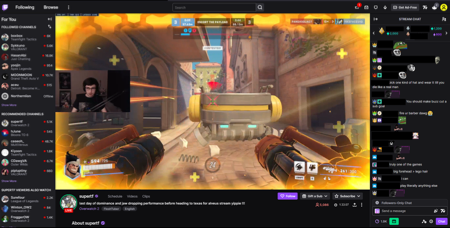
Figure 1: An example of the Twitch livestream page layout with usernames censored for anonymity. Screenshot taken from supertf’s live stream.
On Twitch, streamers will typically dedicate most of the broadcast screen to their gameplay, with a smaller square reserved for camera footage of themselves. Despite this emphasis on gameplay, studies of Twitch have shown how the platform facilitates the spotlighting of human users (both streamer and viewer) through features such as the camera showing the streamer, the viewer labels (little icons on the left side of the ‘chatter’s’ username) and streamer profile pictures (Anderson, 2017).
Through its design, Twitch significantly highlights interaction across multiple levels and directions: for example, subscriptions are a recurring donation to streamers which allow viewers to send messages to the streamer and can trigger other events on screen (Johnson & Woodcock, 2019).
While interaction on Twitch is often centred around viewers conversing with the streamer through chat, in the case of larger audiences’ messages often become less coherent and more homogenous as viewers seek to contribute to the crowd-like atmosphere instead of distinguishing themselves (Carter & Egliston, 2021; Chow, 2016).
In these situations, memetic practices that draw on a shared history between streamer and viewers allow for meaningful participation to still occur (Jackson, 2021). However, emote usage is fast developing beyond specific situation-response practices: they are being intertwined with a wider culture of humour that is being spread beyond Twitch to other social media platforms.
Examining emotes will therefore provide a window into how this humour dissemination process, although participatory, is still being shaped by the infrastructures of the platforms such that they take different forms on different platforms. Before it spreads, however, emote-humour must first transition from a one-off joke to an established practice. Through the analysis of how specific emotes are used to build solidarity and establish a unique streamer identity with a particular community, this paper will provide a guide for how emotes expressing absurd or exaggerated identities facilitate the co-creation of memetic humour practices. Before we discuss these examples, however, it is necessary to clarify the methods used in this research.
Methods
The following examples draw from a wider ethnographic doctoral project consisting of multiple hours of observing various Twitch livestreams a week, with the following examples being from one of these streamers.
In addition to this non-participant observation, the project also involved following streamer accounts on Twitter and YouTube, as well as joining their communities on Reddit and Discord. Ethnographies of the internet have become established as a means to understand the nuanced practices of online cultures (Hine, 2008; Kozinets, 2020), benefitting from the wealth of interactions available for observation on places such as discussion forums or social media platforms.
During this observation process, researchers made regular field notes recording humorous interactions, some of which are being presented here through the lens of multimodal discourse analysis (Kress & Bezemer, 2023; O'Halloran, 2021), an approach that situates the various types of symbols within the wider contexts that give them meaning. As the wider doctoral project observation is still ongoing, the findings here are preliminary and are intended to provide a sense of the increasing complexity of emote-humour online as well as their integration within a broader trend of cross-platform interactions such to provoke further research into the area.
As previously established, the spread of humour across online-platforms like Twitch involves multiple steps—starting with repetition and progressing towards cross-platform use. The following section expands on these steps, outlining the usage of emotes and emote humour in three key ways. We begin with the use of emotes and their remixes within livestreams and ending with their spread onto platforms such as YouTube and Reddit. Ultimately, this all reiterates the importance of platform features to the co-construction of cultural practices, revealing the role of platforms in shaping how communities form and interact.
‘You Little Rats’
There is a game of competitive League of Legends (Riot Games, 2009) being livestreamed by Marc ‘Caedrel’ Lamont, an ex-professional player, commentator, and analyst turned streamer. It is thirty-six minutes in (above average for a usual game), and the two teams—at this point of the season placed worst and second worst in the European region, in which competition the game is taking place—are struggling to gain an advantage over each other. What follows is a series of mistakes made by players on each team, and as Caedrel watches the action unfold he stares in disbelief, exclaiming ‘What is happening?’. His facial expression continues to worsen, and he starts gesturing, eventually going to aggressively scratch his head (Figure 2) in confusion. His speech is erratic, stretching out words and even speaking a line in German—translated as ‘What is happening? I don’t understand!’—as the action unfolds.
Moments like these are common to Caedrel’s livestreams, where, despite being an analyst able to explain in-game choices and events in a clear and engaging manner, Caedrel will often produce exaggerated reactions that represent him as an occasionally irrational, eccentric person. Consistent with theories espousing incongruity as a characteristic underlying humour (Forabosco, 1992), the disparity between Caedrel’s professional experience and his occasional lapses into exaggerated, unprofessional gesticulation provide the underlying principle for much of his channel’s humour.
However, it is not only Caedrel’s reaction that is humorous. The gameplay itself is incongruous: the players on screen may currently be performing the worst out of the other teams in the region, but in this instance, they appear to be playing exceptionally bad in terms of both decision making and mechanics (the actual use of keyboard and mouse to interact with the game). The result is a two-fold spectacle wherein the viewers laugh both at the game being played on screen and Caedrel’s response to it, and in laughing themselves, the viewers layer a third response which can subsequently be laughed at as well, with Caedrel often responding to his chat’s absurd behaviour. While theoretically this could initiate an infinite chain of responses, the constant succession of new in-game events makes it difficult for any single moment to hold Caedrel and his chat’s attention. Such ephemerality encourages community to bond over shared moments such as these (Hamilton et al., 2014), and it is into this culture that his community’s emote use practices fit.
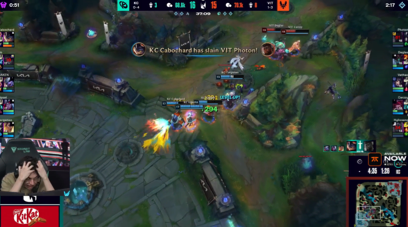
Figure 2: Caedrel reacts to bad gameplay. This and subsequent screenshots of both Caedrel and his chat are taken from Caedrel's livestream.
Laughter-related emotes, for example, function to extend what would otherwise be an ephemeral moment. This can be seen in the messages sent in Caedrel’s chat ‘laughing’ at and questioning (with varying numbers of ‘?s’) the bad gameplay being broadcast, as well as Caedrel’s response to it (Figure 3). Unlike typical laughter indicators like ‘haha’ or ‘ha ha ha’ or even emojis (Chiaro, 2017), one specific emote (and its variations) used within Caedrel’s chat to signal laughter is seen as the culturally appropriate way to laugh in his community—sending these emotes therefore functions not only as a way to share in an ephemeral moment as a community, but also as a display of cultural knowledge and membership. Emote use enables the digital participation of viewers in humour but is predicated on having the same livestream experiences, facilitating a sense of humour that becomes increasingly niche and self-referential as it remixes itself.
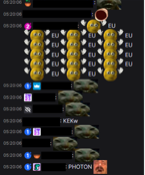
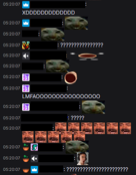
Figure 3: Screenshots of Caedrel’s chat during the moment depicted in Figure 2.
Of these various emotes appearing within the above screenshots (Figure 3), the one that is central to Caedrel and his community is ‘xdd’, which corresponds to the low-quality, laughing rat face sent across multiple messages.1
Extending Johnson’s (2024b, p. 157) observation that Twitch emote use is ‘often a kind of roleplaying’, sending xdd is a way of roleplaying as the laughing rat—this third layer of the humour spectacle revolves around the juxtaposition between the rat character and the reality that Caedrel’s viewers are not, in fact, rats. Specifically, features such as the rat’s wide smile and slight squint can be interpreted as an ‘exceptionally cheeky expression’ (Meowdekaiser, 2024) that contrasts against an otherwise serious, competitive game.
In this way, sending emotes becomes not only a way to respond to humour, but to participate in its creation as well, a process that gains further complexity when considering the aforementioned other layers of humour: Caedrel, for example, in his exaggerated behaviour, can also be seen as acting like a cheeky rat, and when his chat sends the xdd emote, they are not only insinuating that they are behaving like rats, but that Caedrel is doing so as well.
Such practices are reinforced by Caedrel’s own behaviours when, while reading out messages sent by viewers in his chat, he adopts a higher pitched tone of voice, signaling his roleplaying as the xdd rat. By representing a caricature of reality, these emotes therefore portray an absurd identity, wherein they create disparity between the streamer or the chat and the character they roleplay through sending an emote in chat. This absurdity extends the juxtaposition of socially acceptable and unacceptable behaviour on livestreams, which, in the context of performance (Jackson, 2023; Scully-Blaker et al., 2017; Woodcock & Johnson, 2019), becomes humorous and entertaining instead of distasteful.
The establishment of emote-humour practices therefore hinges on the displaying of certain incongruous characteristics by the streamer or their chat, which then are represented as emotes, which in turn can then be used in response to moments in later livestreams. As a result, the ways in which both streamer and chat perform within Twitch are tangibly changed through the use of emotes, representing the influence platforms have on the users who interact on them.
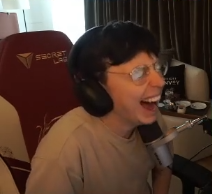
Figure 4: Screenshot of Caedrel responding to particularly ‘rat-like’ gameplay.
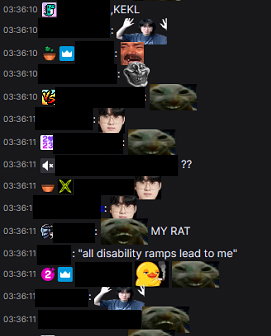
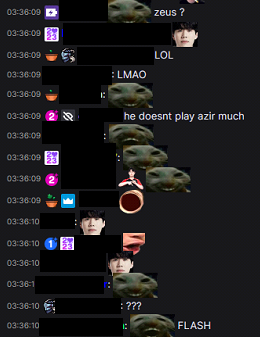
Figure 5. Caedrel’s chat reacting to a particularly ‘rat-like’ gameplay.
It is not only Caedrel and his chat, but the players on screen who are vulnerable to being called rats. After watching one such player, ‘Zeus’, make an overconfident decision and die in game, Caedrel laughs (Figure 4) and remarks ‘he is mental… he is just mental.’ Like in the earlier example, the chat erupts into a myriad of xdd emotes (Figure 5), this time roleplaying as the cheeky competitive player who has just gotten himself killed.
On the surface, this sequence of emote spam does not appear much different to the first example—this adaptability where a single emote can be sent and refer to viewers, Caedrel, or players on screen, heightens the resulting humour as viewers must rely on contextual clues and established cultural norms to both communicate emote-humour and interpret it. In this example, the use of two other emotes, ‘ZESHY’, which features a close-up of the Zeus’ face fading into another player (‘TheShy’), infamous for playing overconfidently and being punished, and ‘Zeuscaught’, which depicts the player with his hands raised as if being arrested, provides the additional context with which to interpret the community’s behaviour as roleplaying—or at least directly commentating on—Zeus’ in-game actions.
This multimodal adaptability allows for emotes to be deployed in a variety of situations and communicate numerous meanings, resulting in a culture of participatory play where viewers must combine different multimodal elements to construct meaning. Such a process that has already been observed in internet memes (Vásquez & Aslan, 2021) but is now occurring synchronously between thousands to tens of thousands of people on Twitch, is a phenomenon possible only through the livestream experiences shared by the community.
Analysing the case of xdd and its depicted cheeky rat reveals that emote-humour functions in two primary ways: the depiction of an exaggerated identity and ambiguity that allows emotes to adapt to multiple meanings across different media. The former centres around behaviour displayed on screen, whether by the streamer, their chat, or anyone else, is being broadcast. The resulting incongruity between the expected identities of these individuals and their performed identity produces a participatory form of humour that viewers are invited to participate in.
This collaborative nature is heightened by the multimodal adaptability of emotes: viewers sending emotes construct meaningful connections between multiple layers of media, whether that be the game being broadcast on screen, the streamer’s reaction, or messages being sent in the chat. These connections often exist simultaneously, with a single use of an emote roleplaying as multiple absurd characters at once.
As a result, the livestream community cultures to which emote-humour is central increase their capacity to incorporate new experiences into their practices. Even as streamers play new games, introduce new people onto their stream, or merely continue broadcasting novel experiences, emotes can be used to create new absurd identities that can be incorporated into existing cultural practices. To achieve this, viewers work together in real time to co-create connections between stream events and established cultural meanings with humour, strengthening the bonds between them as they do so. In the next section, this article will examine how Caedrel’s community uses remix to extend xdd’s original meaning to new shared experiences, building solidarity as they do so.
To Infinity and Beyond
In their discussion of digital remix practices, Knobel and Lankshear (2008, p. 26) acknowledge that not all remixes of memetic content result in subsequent remixes and instead prove to be ‘infertile’, raising questions about ‘what gets remixed, how items get remixed, when remix begets innovation, and the directions this takes’. Although such a comprehensive investigation is beyond the scope of this article, this section argues that the absurd identity and multimodal adaptability that characterise xdd encourages the production of new remixes that apply the emote and its concept of cheekiness to novel stream experiences.
This section examines how, from these xdd remixes, cultural practices can be co-created that unite viewers as they bond over the absurd identities portrayed in the emotes, they send. Not all remixes are the same, however, with some being tied to more complex cultural practices while others have no apparent meaning. Discussing the differences between these emote remixes illustrates the various ways in which emote-facilitated versatility, and solidarity might manifest during a Twitch livestream.
First is the simplest form of xdd emote remixes: the emote equivalent of wordplay. These wordplay remixes will often involve corresponding transformations of both the image and code elements of the emote. The ‘ppx’ emote (Figure 6), for example, is merely the xdd image flipped diagonally, while also being the diagonal reflection of the code. Similarly, the ‘dddd’ emote image is an edge portion of the xdd image containing the rat’s cheek and eye (Figure 6), correlating to the ‘d’ of the xdd being stretched and then mirrored—hence, ‘dddd’ as the code.
These transformations extend both the character incongruity and multimodal adaptability of the original xdd whereby xdd is treated as the new standard, and its remixes become the contrasting and subsequently humorous abnormal. Initially, these emotes are humorous only because they are absurdly different to the original, however, as they are incorporated into cultural practices, remixes develop nuanced purposes that make each one unique beyond merely functioning as a laughter response to events on screen.
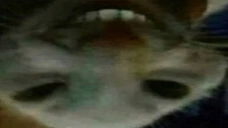

The ‘ppx reset’, for example, is a cultural practice established by Caedrel to diffuse tense moments with humour, demonstrating how emote remixes might be employed to address various livestream events in ways that bring the community together. After watching a match between two of the best Korean League teams, Caedrel is sent—and subsequently shares with chat—a short video of one of the losing team’s players banging his head against the wall.
Discussion of the video clip in Caedrel’s chat subsequently showcases a variety of opinions ranging from sympathetic to critical. As the resulting discourse develops, criticism shifts to Caedrel for sharing a potentially sensitive video. In response, he deletes the stream recording, preventing viewers from accessing it after the livestream finishes, and calls for a ‘ppx reset’. Immediately after, the chat is flooded with the upside-down rat, overwhelming the other messages discussing the issue and serving to ‘reset’ the conversation so that discussion can continue focused on new topics.
Ppx does not completely resolve the issue—ten minutes later, the conversation has shifted to another controversial topic and Caedrel calls for another reset, demonstrating the limited effectiveness of this usage of ppx. Drawing on Carter and Egliston’s (2021) framing of emotes as pitch within a digitally mediated crowd, the ppx reset uses the humorous transformation from the original xdd as a form of crowd control. However, rather than it functioning as an authoritative measure forced upon the viewers by Caedrel, it instead is a collaborative effort where Caedrel encourages his chat to control themselves—the ppx reset would fall flat if, for example, none of the viewers responded and instead continued their heated discussion. In this way, the co-created nature of the emote’s meaning is made clear.
Even if the streamer may attempt to assign emotes to unique meanings or to different cultural practices, their viewers must still cooperate for connections to be established. Such a relationship helps build solidarity within the community: by following the rules of the ppx reset, viewers of Caedrel’s livestream not only prove themselves to be conscientious members of his community, but they also participate in its maintenance throughout the livestream.
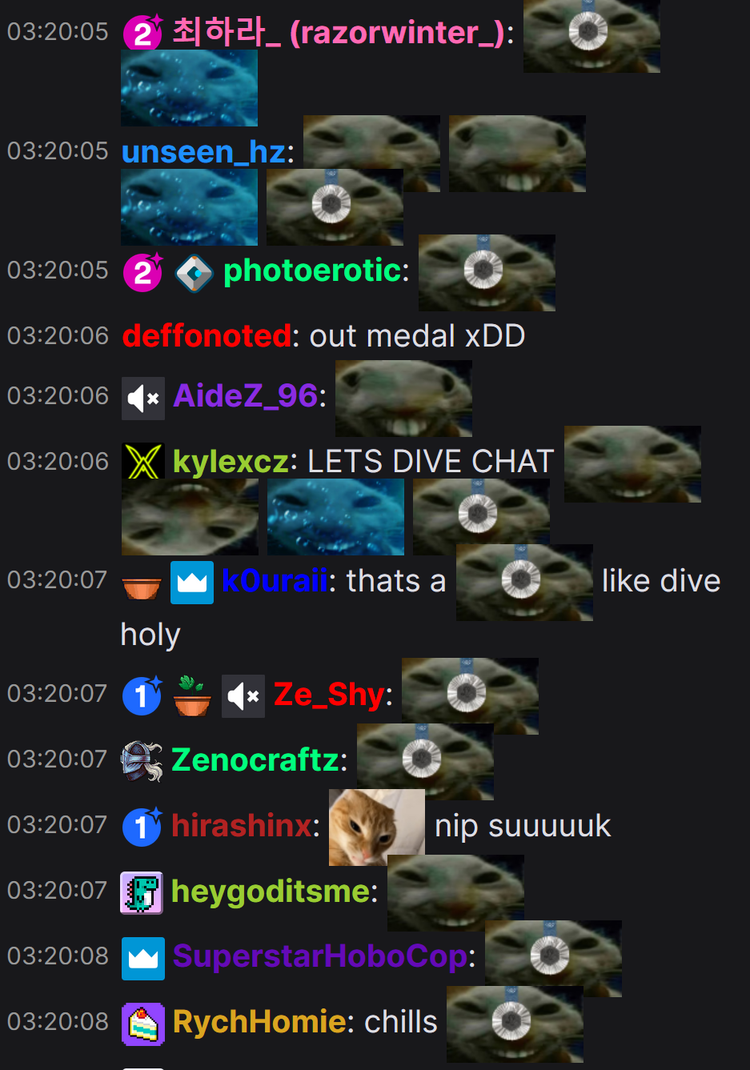
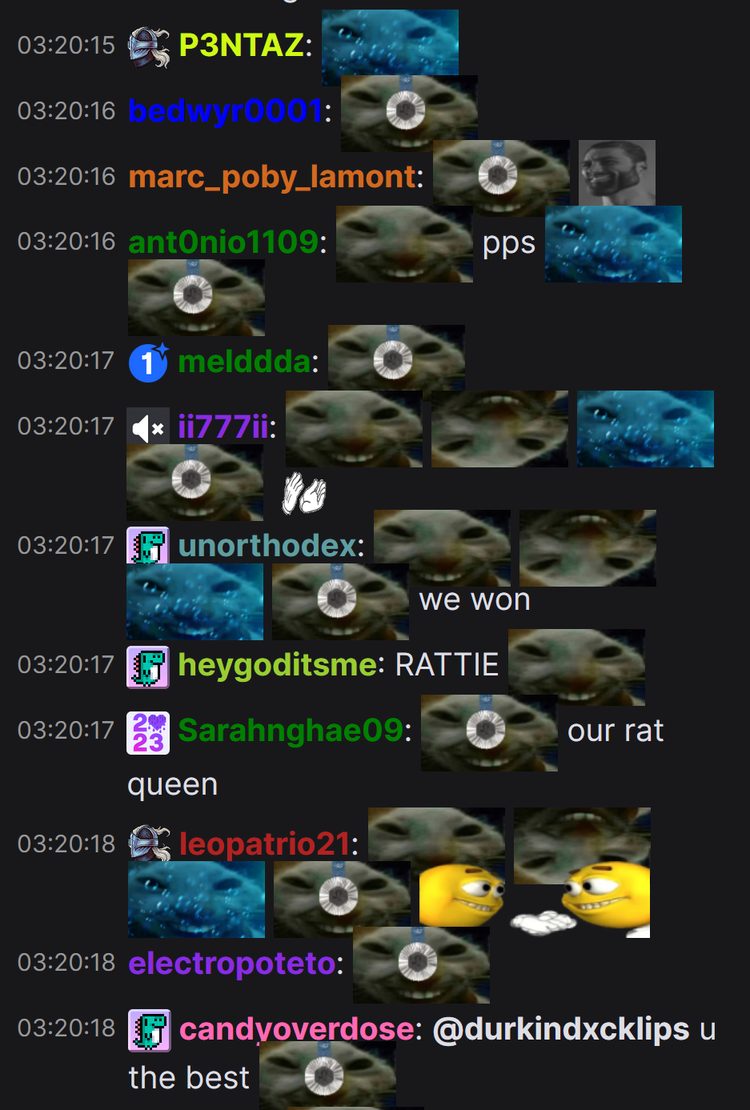
Figure 7: Chat attempts to ‘dive’.
The use of the ppx remix in an established cultural practice such as a ‘ppx reset’ does not preclude it from other contexts, highlighting the adaptability of its meaning as it is incorporated into a variety of other jokes. During another competitive game on August 15, shortly after the conclusion of the Paris Olympics, one of the playing teams is attempting to execute a game strategy called a ‘tower dive’.
Over the next few minutes, Caedrel’s viewers attempt their own version of the ‘dive’ in chat with the xdd emote remixes, transforming the game’s understanding of the word ‘dive’ into its traditional meaning of plunging into water. The specific emote sequence, ‘xdd ppx xdddrowning maddie’ is a reference to Olympic Diving Silver Medalist Maddison Keeney, who posted a video showing her watching Caedrel’s livestream via iPad in the Paris Olympic Village to Caedrel’s community Discord server. Her Olympic achievement was commemorated in the form of an emote, ‘maddie’, depicting the xdd rat with the Paris silver medal hanging over its forehead, enabling a slew of emote-puns regarding the act of diving, of which the earlier example is one.
In this emote dive sequence, the ppx represents the diving flip done before hitting the water (xdddrowning) and surfacing to win a silver medal (maddie). Ppx’s visual sign is incorporated into a broader cultural narrative wherein one member’s successes are shared by the whole community—as in a message sent by Maddison a few minutes earlier, it is ‘OUR MEDAL’—such that the dive emote sequence is both an example of humorous visual- and wordplay and a display of one’s subcultural knowledge about Maddison and her Olympic success.
Emote remixes therefore allow for the encapsulation of shared stream experiences into familiar, community-specific expressions that can in turn be moulded to numerous different humour practices, with even the same instance of remix being employed in varying situations. Common to all these applications is that they are co-created: whether the streamer asks for the participation of their viewers or the viewers initiate a cultural practice themselves, a distinction that can also be described as streamer-led or spectator-led mimesis (Jackson, 2021), emote-humour within Twitch livestreams requires the synchronous participation of multiple parties. This cooperation not only helps to unite streamer communities over their shared culture, but results in more creative uses of emotes, enabling them to expand across multiple platforms, a process that the next section will examine in more detail.
The Rat King and His Kingdom
In addition to Twitch, viewers can interact with Caedrel on Instagram, YouTube, Twitter, Reddit, and Discord, with each providing slightly different ways to communicate. Such differences manifest in the varying forms emotes take on each platform; despite these variations, their underlying, common absurd identity enables them to be understood. The practice of adapting emotes to different infrastructures therefore extends the participatory play originating on Twitch, allowing viewers to build community solidarity across multiple platforms. This process is particularly evident in the crowing of Caedrel as the ‘Rat King’, which presents the initial absurdity of his on-stream behaviour as emblematic of his community. A promotional video posted by British esports organisation Fnatic to their YouTube channel announcing Caedrel’s signing as a content creator exploits this humour to establish a connection to their own brand.
The video opens with Caedrel talking about how he cannot livestream the European competitive league as he must be affiliated with one of the competing esports teams before cutting to a message from ‘Swallaspaa’ (or ‘Pete’, as Caedrel calls him), a Fnatic content creator, asking Caedrel to ‘JOIN ME’. A fade into the video’s title card, ‘Journey of the Rat King’, reveals its central premise. The video leans into the recurring joke of Caedrel being the Rat King, portraying a swarm of rats following him as he makes his way to Fnatic’s front door. As Caedrel remarks, ‘maybe they’ll take us in there’ (FNATIC, 2024), he turns to one particular rat that responds in squeaks—an appearing speech bubble helpfully translates the rat’s opinion, revealing the emote ‘xddshrug’. Although its code is not featured, the image and its connotations of uncertainty are clear enough to Caedrel’s community to be included within the video as a cultural equivalent of ‘I don’t know’. Its inclusion, as well as the scurrying rats acknowledge the centrality of xdd-based emote-humour to Caedrel’s streamer identity and help to build rapport between an otherwise faceless esports organisation and Caedrel’s community.
The responses to this video are also indicative of the strength of Caedrel’s emote-humour, with multiple ‘xdd’ comments from viewers underneath the video demonstrating community solidarity as the rats stand with Caedrel’s decision to join Fnatic. An outlier comment reflects a potential drawback to Caedrel’s branding, however, with a question asking ‘Why is [Caedrel] called the Rat King?’ (Jakob446, 2024) revealing how such developed cultural practices might alienate those who are not familiar with Caedrel or his livestreams. Other references to ‘ratrel’ and ‘the rat’ highlight how iconic Caedrel’s underlying character incongruity has become. Despite YouTube’s infrastructure not affording the display of the xdd image, resulting only in the comments appearing as pure text xdds, its meaning is still clear enough to Caedrel’s community to be sent—the thorough integration of these emotes into developed humour practices allows them to be understood by other community members. These variations testify to the cross-platform versatility of emote-humour: as cultural practices are co-constructed on recognisable character incongruities, only the slightest reference is required for them to be understood.
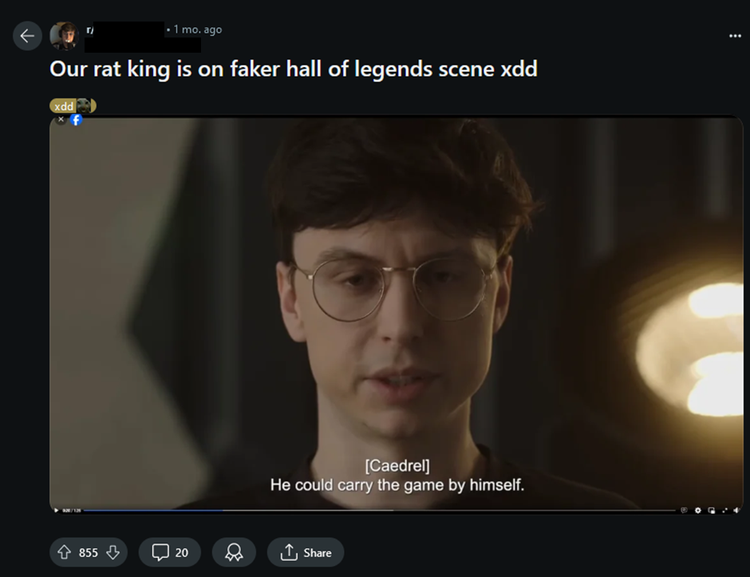
Figure 8. The ‘Rat King’ on Reddit. Screenshot taken from ‘Our rat king is on faker hall of legends scene xdd’ (PsychologicalRow1769, 2024). Subsequent screenshots of comments are from the same reference.
Emote-humour’s manifestation on other platforms is not limited to official media or established organisations attempting to harness the community’s solidarity. Members of the community continue engaging in play by applying emote-humour’s multimodal adaptability to other Caedrel-related media they engage with. Caedrel’s community subreddit is filled with examples of cross-platform emote-humour: one post involves a screenshot of a promotional video featuring Caedrel released by League of Legends publisher Riot Games, with the seemingly official and serious nature of the content being contrasted against the appearance of the ‘Rat King’. The word xdd is enough to solidify the interpretation of Caedrel’s video appearance as non-serious, utilising the title/image format provided by Reddit to create a new form of emote-humour without the image of the emotes themselves.
Like with YouTube, Reddit allows for asynchronous comments to be made, resulting in subsequent jokes being made about Caedrel and his identity as the Rat King. These comments might be compared to the phenomenon of ‘ping-pong-punning’ that happens in the comment sections of online newspaper articles (Chiaro, 2017), with users attempting to create as many novel examples of Rat King wordplay as possible. Reddit’s infrastructure allows for images to be attached with comments, opening up various multimodal ways of representing the Rat King that range from absurd screenshots taken from the livestream to the simple rat emoji found on one’s keyboard software. The asynchronous and integrated multimodal nature of Reddit allows for more diverse joke forms, with expressions deviating from the original standardised emote-humour practices. Despite this diversity, community members are still able to understand each other and even continue adding jokes onto the conversation, adapting their humour practices to the different affordances of Reddit and YouTube.
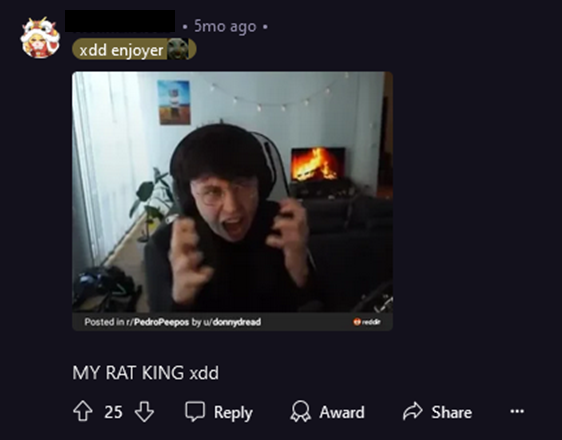

Figure 9.1. Rat King wordplay in Reddit comments 1.
Worth noting is the fact that this post is a reaction to another promotional video. Although not about Caedrel—the ‘faker hall of legends’ video is a commemoration of the game’s most decorated competitive player, Lee ‘Faker’ Sang-hyeok—him being spotlighted within a community post reveals how these streamer communities might shape the way their members engage with media online. In this case, community members are prompted only by Caedrel’s presence to respond to an otherwise serious video honouring a storied player with emote-humour.
While the large corporation does not engage with the ‘Rat King’ aspects of Caedrel’s streaming persona in this video, they are adopted by fans in their interaction with it. Such a connection highlights the potential of community versatility: with emote-humour’s ability to apply to an indefinite number of different media, communities can continue incorporating media from sources outside of Twitch into their shared experience, a process that is further facilitated by the multiple platforms that online communities now call home. As communities subsequently discuss these new connections using emote-humour practices, they reinforce their own established identity, demonstrating that they do, in fact, know who the Rat King is and what kind of Rat King jokes are funny. Because of this solidarity, emote-humour practices can continue developing even outside of Twitch, helping to explain how Twitch cultural practices are being disseminated across platforms.
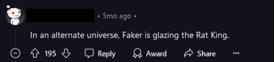
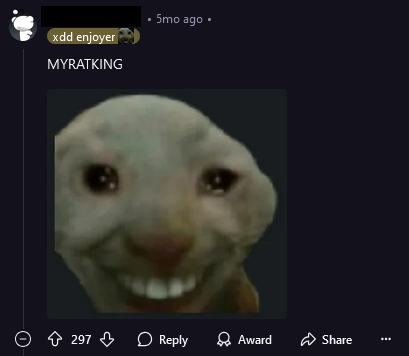
Figure 9.2. Rat King wordplay in Reddit comments 2.
These two examples represent the different ways in which the community versatility and solidarity effected by emote-humour can be harnessed. In the first, the existing identity established through emote-humour is employed by larger corporations to build rapport on YouTube with Caedrel’s community over a hiring decision. In the second, community members experiment with multiple forms of humour within the parameters afforded by Reddit and transform non-humorous media through the usage of emotes.
In both cases, emote-humour diverges in form from its original manifestations on Twitch while still retaining the central character incongruity of the cheeky rat. They demonstrate the importance of character incongruity and multimodal adaptability to establishing emote-humour practices that can unite the community and be applied to a variety of on-stream experiences. This versatility and solidarity allow livestream communities to continue interacting on other platforms, facilitating the dissemination of Twitch cultural practices across the internet.
Discussion
By closely examining three stages of emote-humour’s spread from Twitch to other platforms online, this article provides a framework with which to study a rapidly evolving form of computer-mediated communication. Such a framework must be situated within the broader context of Twitch as a platform, as well as the other platforms to which emote-humour might spread. This relationship between emote use and the platforms enabling them is most evident in their monetisation and their role within the streamer’s attempt to secure financial stability. Emotes are typically associated with the Twitch subscription perk, wherein viewers pay a monthly fee, which Twitch takes a cut of, to gain access to various benefits. As streamers gain more subscribers, they unlock more slots for Twitch emotes available for use by their subscribers—this sense of progression, which underpins other streaming milestones such as viewer counts and days livestreamed, has been described as gamification elements that frame the livestreaming career as a fun and engaging prospect (Siutila, 2018).
Streamers have a financial incentive behind making their emotes appealing, with establishing emote-humour practices around them being one of them. Using subscriber-only emotes allows viewers to flaunt their status as supporters of a channel, a display that is furthered when it is aligned with established cultural practices. Emotes therefore function as an in-group signifier, proving that the user sending them is a legitimate member of the community with the appropriate cultural knowledge. When combined with the pressure for content creators to disseminate their cultural production to mitigate issues such as platform precarity (Cunningham & Craig, 2019; Poell et al., 2022), the versatile and solidarity-promoting emotes emerge as means to both interact with and promote interaction within streamer communities.
While this article has emphasised how emote-humour facilitates cultural flow, first from character incongruity and multimodal adaptability to versatility and solidarity, and then outward beyond Twitch, it is also important to note the frictions that may complicate this process. This discussion of the frictions builds upon Jackson and Johnson’s (2024) use of ‘capital flow’ and ‘capital friction’ to examine how streamers encourage and discourage spending within their livestreams. Using these terms, subscriber-only emotes, a feature requiring the viewer to pay to access that can then be used to demonstrate support for and receive attention from the streamer, can be framed as an exchange of ‘economic capital’ for ‘symbolic capital’ (Jackson & Johnson, 2024).
As these emotes are used on platforms such as Twitter or YouTube, which provide revenue to the streamer based on engagement with their content, this symbolic capital is then exchanged back into economic capital (for both the streamer and the platform). Jackson and Johnson’s (2024) use of capital also helps to further explain the incentives for emote use by viewers: emote-humour is no longer merely a game, but a competition in which viewers compete to create the funniest emote-joke, gain the streamer’s recognition and subsequently symbolic capital. Such a dynamic might seemingly dissuade co-creation within livestreams, but the constant remixing of new emote variants and emote-humour forms suggests that, at least in the case of Twitch livestreams, competition and collaboration might not be exclusive.
One possible explanation is the existing community solidarity: as viewers unite over shared character incongruities, acknowledgment of one is treated as an acknowledgment of the whole. To return to the ‘tower dive’ example, Maddison states that her Olympic Medal is ‘OUR MEDAL’ to the chat. Competition is therefore conducted in a playful manner in line with the platform’s overall gamification, allowing for the maintenance and development of solidarity through the constant one-upping of emote-humour.
Complicating these flows of economic and symbolic capital is the presence of third-party browser extensions that provide emote library alternatives on top of Twitch’s subscriber-only system. These extensions are encumbered with their own monetisation methods which streamers must engage with in order to provide additional emote options to their community, One such provider, 7tv, holds all the xdd emotes and their remixes, meaning that participation in these specific emote-humour practices does not require subscription to his channel—potentially disrupting the transition of symbolic capital from the audience into economic capital for Cadreal.
However, the immense size of Caedrel’s community increases advertising revenue in a way that means this capital transformation is not as pivotal for his career as for others, as he is less reliant on subscription revenue. In fact, a different capital transformation is occurring here: Caedrel pays 7tv to provide his emotes as part of their library, sacrificing his economic capital to increase his symbolic capital. Ultimately the hope here is that this symbolic capital will once again feed back into further attention on his channel which will transform into economic revenue through new subscriptions or advertising revenue. However, these flows are speculative: without access to streamer perspectives, it is unclear how effective this capital transformation is.
The act of co-creating emote-humour practices might seem like a game viewers play while watching someone play games, but the existence of tools such as 7tv and the practices which emerge around these emotes showcase that the reality is much more complex and requires further investigation.
Conclusion
From a specific case study of a live streamer and his community, we forward character incongruity and multimodal adaptability as two emote-humour characters that enable its transformation into recurring, memetic practices. These memetic practices demonstrate two community effects, versatility and solidarity, that facilitate emote-humour’s spread from Twitch to other online platforms. This dissemination process must be contextualised within the capital flows and frictions that exist within Twitch; with the spread of emote-humour, however, these flows and frictions now extend the platform as well, and this article argues they must be viewed considering the connections between platforms, which together form a complicated metagame that demands research.
This article’s analysis is grounded in a specific set of emote-humour practices within a specific community, which, while providing the depth needed to comprehensively understand how emote-practices are co-created and spread, is accompanied by certain caveats. For example, while Caedrel’s community is rich in examples of emote-humour practices—xdd is not the only one, and a more comprehensive investigation into how it is connected to other emote-humour practices is warranted—it is not the aim of this article to suggest that all uses of emotes on Twitch will conform to these patterns, but to demonstrate the existence of these patterns in the use of emotes that can occur on the platform.
Other patterns also exist, including the use of emotes for harmful and toxic purposes, a potential that has been amply acknowledged by researchers of Twitch culture (Carter & Egliston, 2021; Johnson, 2024a; Kim et al., 2022; Mihailova, 2022; Riddick & Shivener, 2022; Taylor, 2018). The potentially harmful nature of this humour can even be seen in the example of xdd, which is effectively calling someone, whether streamer, viewer or professional player, a rat, an action which can be seen as offensive in the wrong context.
Furthermore, during major competitive events, Caedrel’s viewership on Twitch can peak over a hundred thousand (TwitchTracker, 2024)—communities of smaller sizes and focusing on different topics such as music, conversation or other intimate practices (Ruberg & Lark, 2021), might use emotes in drastically different ways and analysing these streams will contribute to a fuller representation of emote-humour’s role within platform dynamics both within and beyond Twitch.
Similarly, examining non-English-language livestreams or livestreams on other platforms will contribute to the broader discussion of platform connections that this article intends to stimulate. One such example is BiliBili, a Chinese streaming platform that contains a ‘Bullet Chat’ feature where comments scroll across the screen throughout the broadcast; researching the intertwined variations of language and platform features presented by ‘Bullet Chat’ are essential to build on the rigour of the emote-humour characteristics posited here.
This article prioritises analysis of the emote-humour characteristics and effects; to do this the decision was made not to conduct a micro-level linguistic analysis of interactions between streamer and chat as in research done by scholars like Daniel Recktenwald (2017). However, such analysis, as well as the use of transcription, would be immensely helpful in expanding the relationship between emotes and language, both spoken and written, outlined here. There are various avenues in which this initial investigation of emote-humour can be extended, and this article aims to serve as a provocation for future research in this area. Like emotes themselves, the emote-humour characteristics and community effects that this article forwards are malleable and are designed to be applied to different emote-related phenomena while still providing a common analytical baseline.
In addition to these concepts, this article also intends to provide a model for how a close study of streaming cultures might interface with broader platform dynamics, highlighting the complex and changing relationships between them in a way that encourages future studies to extend the work that this article has begun. In providing this model, we reveal the extent to which digital communities are constantly negotiating their boundaries and identities, as well as the close relationship of this process with the platforms that facilitate them.
These findings contextualise emote-humour’s dissemination across the internet, proposing key characteristics, effects, and platform dynamics that provide insight into the intricate inter-platform connections shaping how creators and consumers communicate in the co-production of culture. As platform infrastructures continue developing, these connections become increasingly complex, with their effects being mediated through more layers of technology.
Understanding these relationships is therefore urgent, and this article initiates this effort through the elucidation of how users co-operate with each other, and platform features to transform humour subcultures online.
Notes
- Although more can be said about the specifics of how the use of ‘xdd’ was established within Caedrel’s community, such an exploration is not the focus of this article. A brief summary of the emote’s origin and its initial use within Caedrel’s channel can be found in Meowdekaiser’s (2024) YouTube video.
References
Anderson, S. L. (2017). Watching people is not a game: Interactive online corporeality, Twitch.tv and videogame streams. The International Journal of Computer Game Research, 17(1).
Arab, R., & Milner Davis, J. (2022). Humour and belonging: A thematic review. The European Journal of Humour Research, 10(2), 1-13.
Askanius, T. (2021). On frogs, monkeys, and execution memes: Exploring the humor-hate nexus at the intersection of neo-Nazi and alt-right movements in Sweden. Television & New Media, 22(2), 147-165.
Attardo, S. (2023). Humor 2.0: How the Internet Changed Humor. Anthem Press.
Baym, N. K. (1995). The performance of humor in computer-mediated communication. Journal of Computer-Mediated Communication, 1(2).
Carter, M., & Egliston, B. (2021). The work of watching Twitch: Audience labour in livestreaming and esports. Journal of Gaming & Virtual Worlds, 13, 3-20.
Chiaro, D. (2017). The Language of Jokes in the Digital Age: Viral Humour. Routledge.
Chow, E. (2016). Crowd Culture & Community Interaction on Twitch.tv [Master's Thesis, University of Vaasa]. Vaasa.
Cunningham, S., & Craig, D. (2019). Social Media Entertainment. New York University Press.
Denisova, A. (2019). Internet Memes and Society: Social, Cultural, and Political Contexts. Routledge, Taylor & Francis Group.
Dresner, E., & Herring, S. C. (2010). Functions of the non-verbal in CMC: Emoticons and illocutionary force. Communication Theory, 20(3), 249-268.
Euteneuer, J., & Meints, J. (2020). It was just a joke: Demagoguery, humor, and video game streaming. Gamevironments (13), 358-381.
FNATIC. (2024). The Rat King is here!!! ? [YouTube Short]. YouTube.
Forabosco, G. (1992). Cognitive aspects of the humor process: The concept of incongruity. HUMOR, 5(1-2), 45-68.
Gal, N., Shifman, L., & Kampf, Z. (2015). ‘It gets better’: Internet memes and the construction of collective identity. New Media & Society, 18(8), 1698-1714.
Gibson, W., Huang, P., & Yu, Q. (2018). Emoji and communicative action: The semiotics, sequence and gestural actions of ‘face covering hand’. Discourse, Context & Media, 26, 91-99.
Hamilton, W. A., Garretson, O., & Kerne, A. (2014). Streaming on Twitch: fostering participatory communities of play within live mixed media. Proceedings of the SIGCHI Conference on Human Factors in Computing Systems, Toronto, Ontario, Canada.
Hine, C. (2008). Virtual ethnography: Modes, varieties, affordances. In N. Fielding, R. M. Lee, & G. Blank (Eds.), The SAGE Handbook of Online Research Methods (pp. 257-270). SAGE Publications, Ltd.
Jackes, M. (1969). Wikmunkan joking relationships. Mankind, 7(2), 128-131.
Jackson, N. (2023). Persona Play in Videogame Livestreaming: An Ethnography of Performance on Twitch [Doctoral Thesis, UNSW]. Sydney.
Jackson, N. J. (2021). Understanding memetic media and collective identity through streamer persona on Twitch.tv. Persona Studies, 6(2), 69-87.
Jackson, N. J., & Johnson, M. R. (2024). Frictions and flows in Twitch’s platform economy:
Viewer spending, platform features and user behaviours. Information, Communication & Society, 1-21.
Jakob446. (2024). Why is he called the rat King? [Comment on the YouTube video "The Rat King is here!!! ?"]. YouTube.
Johnson, M. R. (2024a). Humour and comedy in digital game live streaming. New Media & Society, 26(6), 3045-3067.
Johnson, M. R. (2024b). Twitch. Polity Press.
Johnson, M. R., & Woodcock, J. (2019). ‘And today’s top donator is’: How live streamers on Twitch.tv monetize and gamify their broadcasts. Social Media + Society, 5(4).
Katz, Y., & Shifman, L. (2017). Making sense? The structure and meanings of digital memetic nonsense. Information, Communication & Society, 20(6), 825-842.
Kim, J., Wohn, D. Y., & Cha, M. (2022). Understanding and identifying the use of emotes in toxic chat on Twitch. Online Social Networks and Media, 27.
Knobel, M., & Lankshear, C. (2008). Remix: The art and craft of endless hybridization. Journal of Adolescent & Adult Literacy, 52(1), 22-33.
Konrad, A., Herring, S. C., & Choi, D. (2020). Sticker and emoji use in Facebook Messenger: Implications for graphicon change. Journal of Computer-Mediated Communication, 25(3), 217-235.
Kozinets, R. V. (2020). Netnography today: A call to evolve, embrace, energize, and electrify. In R. V. Kozinets & R. Gambetti (Eds.), Netnography Unlimited: Understanding Technoculture using Qualitative Social Media Research. Routledge.
Kress, G., & Bezemer, J. (2023). Multimodal discourse analysis. In M. Handford & J. Paul Gee (Eds.), The Routledge Handbook of Discourse Analysis (2nd ed., pp. 139-155). Routledge.
Li, L., & Yang, Y. (2018). Pragmatic functions of emoji in internet-based communication: A corpus-based study. Asian-Pacific Journal of Second and Foreign Language Education, 3(1), 16.
Marsh, M. (2015). Practically Joking. Utah State University Press.
Meowdekaiser. (2024, August 15). The History Behind The xdd emote (rat variant).
Mihailova, T. (2022). Navigating ambiguous negativity: A case study of Twitch.tv live chats. New Media & Society, 24(8), 1830-1851.
Milner, R. M. (2012). The world made meme: Discourse and identity in participatory media (Publication Number 3541828) [Ph.D., University of Kansas]. ProQuest One Academic; Social Science Premium Collection. Ann Arbor.
Mullan, K. (2020). Pile of dead leaves free to a good home: Humour and belonging in a Facebook community. In K. Mullan, B. Peeters, & L. Sadow (Eds.), Studies in Ethnopragmatics, Cultural Semantics, and Intercultural Communication: Ethnopragmatics and Semantic Analysis (pp. 135-159). Springer Singapore.
Mullan, K. (2024). Humour and creativity in a family of strangers on Facebook. In P.-V. Béatrice (Ed.), Interactional Humor (pp. 289-318). De Gruyter Mouton.
Nissenbaum, A., & Shifman, L. (2015). Internet memes as contested cultural capital: The case of 4chan’s /b/ board. New Media & Society, 19(4), 483-501.
Nørgaard Kristensen, N., & Mortensen, M. (2021). ‘Don’t panic people! Trump will tweet the virus away': Memes contesting and confirming populist political leaders during the COVID-19 crisis. Information, Communication & Society, 24(16), 2442-2458.
O'Halloran, K. L. (2021). Multimodal discourse analysis. In K. Hyland, B. Paltridge, & L. L. C. Wong (Eds.), The Bloomsbury Handbook of Discourse Analysis (pp. 249-266). Bloomsbury Academic.
Poell, T., Nieborg, D. B., & Duffy, B. E. (2022). Platforms and Cultural Production. Polity Press.
PsychologicalRow1769. (2024, May 23). Our rat king is on faker hall of legends scene xddReddit.
Qiu, J., Chen, X., & Haugh, M. (2024). Emojis and jocular flattery in Chinese instant messaging interactions. In P.-V. Béatrice (Ed.), Interactional Humor (pp. 231-262). De Gruyter Mouton.
Radcliffe-Brown, A. R. (1940). On joking relationships. Africa, 13(3), 195-210.
Recktenwald, D. (2017). Toward a transcription and analysis of live streaming on Twitch. Journal of Pragmatics, 115, 68-81.
Riddick, S., & Shivener, R. (2022). Affective spamming on Twitch: Rhetorics of an emote-only audience in a presidential inauguration livestream. Computers and Composition, 64, 102711.
Riordan, M. A. (2017). Emojis as tools for emotion work: Communicating affect in text messages. Journal of Language and Social Psychology, 36(5), 549-567.
Riot Games. (2009). League of Legends. Riot Games.
Rodríguez-Ferrándiz, R., Sánchez-Olmos, C., & Hidalgo-Marí, T. (2023). For the sake of sharing: Fake news as memes. In M. Filimowicz (Ed.), Information Disorder: Algorithms and Society. Routledge.
Ruberg, B., & Lark, D. (2021). Livestreaming from the bedroom: Performing intimacy through domestic space on Twitch. Convergence, 27(3), 679-695.
Scully-Blaker, R., Begy, J., Consalvo, M., & Ganzon, S. C. (2017). Playing alone and playing for on Twitch: Livestreaming from Tandem Play to Performance. Hawaii International Conference on System Sciences, Hawaii.
Shifman, L. (2007). Humor in the age of digital reproduction: Continuity and change in internet-based comic texts. International Journal of Communication, 1, 187-209.
Shifman, L. (2014). Memes in Digital Culture. The MIT Press.
Siutila, M. (2018). The gamification of gaming streams. GamiFIN.
Tang, Y., & Hew, K. F. (2019). Emoticon, emoji, and sticker use in computer-mediated communication: A review of theories and research findings. International Journal of Communication, 13, 27.
Taylor, T. L. (2018). Watch Me Play: Twitch and the Rise of Game Live Streaming. Princeton University Press.
TwitchTracker. (2024). Caedrel. Retrieved November 20, 2024.
Vásquez, C., & Aslan, E. (2021). ‘Cats be outside, how about meow’: Multimodal humor and creativity in an internet meme. Journal of Pragmatics, 171, 101-117.
Walther, J. B., & D’Addario, K. P. (2001). The impacts of emoticons on message interpretation in computer-mediated communication. Social Science Computer Review, 19(3), 324-347.
Woodcock, J., & Johnson, M. R. (2019). The affective labor and performance of live streaming on Twitch.tv. Television & New Media, 20(8), 813-823.
About the authors
Geoffrey Lee is a PhD candidate at the University of Sydney’s Department of Media and Communications. His thesis will explore how humour on Twitch and is part of the Sydney Games and Play Lab. He is also interested in the intersection of livestreaming, games culture, and platformisation.
Ryan Stanton is a Lecturer in Gaming and Society at the University of New South Wales. His research focuses on analysing the various social and cultural aspects of games and gaming communities and has covered various topics including the first large scale analysis of gaming podcasts, games journalism and marketing, and gaming communities.
He is currently researching live service games and what happens when these games are shut down and rendered unplayable. Ryan has presented research at a variety of leading conferences including DiGRA, AoIR, and ICA, and has been previously published in journals including Games and Culture and the Journal of Gaming and Virtual Worlds.