Western Sydney Orbital, (WSO)
Design. Build. Launch. Operate.
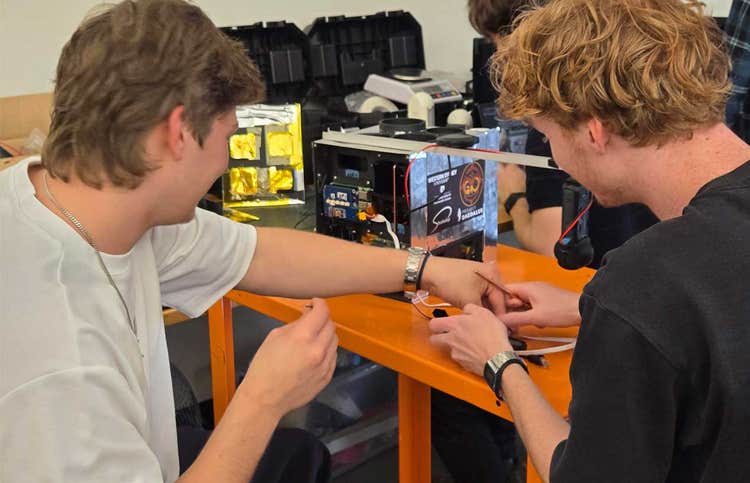
The Western Sydney University Microsatellite Project is a student-led initiative to design, develop and operate a 3U CubeSat, generating real scientific data from space.
Students from across the Faculty of Engineering, Computing and Science will contribute to the mission from initial concept and engineering design through to launch, in-orbit operations and scientific data analysis.
Building a satellite from the ground up
The Microsatellite Project will give students the opportunity to work on a real space mission, developing a 3U CubeSat designed to produce scientific output.
The project is planned as a three-year development program, taking students through mission definition, engineering design, testing, launch and, ultimately, operation of the spacecraft in orbit.
Project highlights
- 3U CubeSat mission
- Three-year development program
- Student-led design, development and operation
- Real scientific output from orbit
- Student-run ground control operations
- Opportunities across engineering, computing, science and communications
- Target of 15–20 founding students
Space, done differently
The project is designed around the idea of "Space, Done Differently", with students developing a mission concept that creates a distinctive identity for Western Sydney University.
Rather than being a purely academic exercise, the project will bring together students from across the Faculty to work on a complete space mission, from the spacecraft itself through to the scientific payload and the ground systems needed to operate it.
From concept to orbit
The mission combines three key components:
1. Spacecraft platform
Students will develop a 3U CubeSat platform incorporating:
- Power systems
- Communications
- Attitude control
- Onboard computing
- In-orbit operations management
2. Science payload
Students will define and develop scientific instruments focused on issues relevant to Australia and the Western Sydney region, producing real scientific data for research.
3. Ground control
Students will operate a ground control station responsible for:
- Telemetry
- Commanding the spacecraft
- Payload data processing
- Supporting research and teaching
These three components form the core of the proposed mission architecture.
A three-year journey to space
Year 1 - Mission definition and preliminary design
Year 2 - Engineering models and critical design
Year 3 - Build, test and launch
Post-launch - Operate and analyse
QuadStar
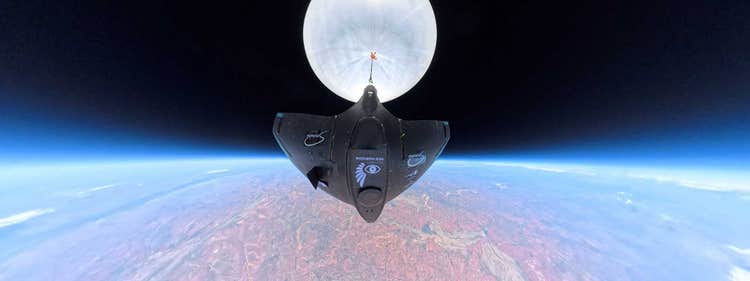
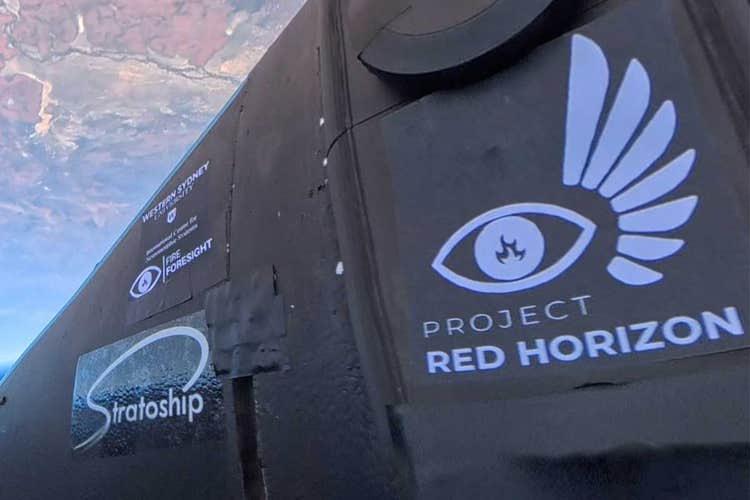
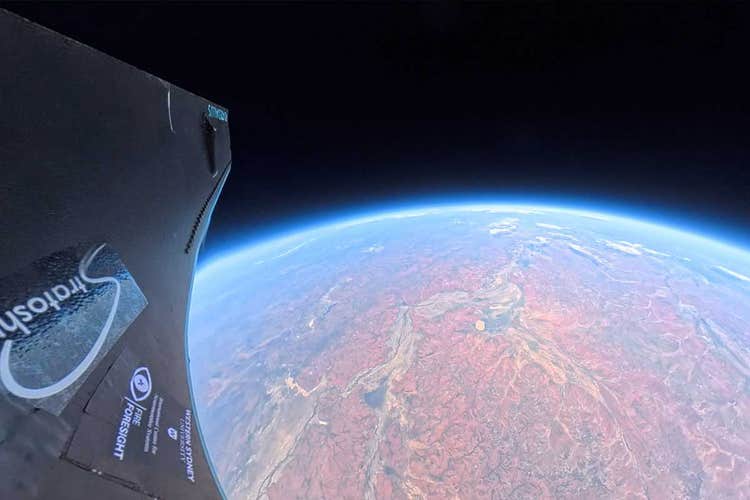
QuadStar is the first flight experiment from Western Sydney Orbital. It's a 12U-sized imaging payload, designed and built at the International Centre for Neuromorphic Systems, that will be carried on a high-altitude balloon to around 22 km.
It carries four aligned cameras: two conventional cameras and two neuromorphic "event" cameras, which are inspired by the human eye and only record changes in light. QuadStar will test whether stars can be detected in daylight, at dusk and at night, and the results will help inform how future satellites, including our student CubeSat, could use stars for navigation. QuadStar has passed its Flight Readiness Review and is now with our flight provider, waiting for a suitable launch window expected in Q1 2027, subject to rideshare availability.
Western Sydney Orbital is led by Project Director Brian Falzon, Executive Dean of Engineering, Computing and Sciences, and Chief Systems Engineer Nic Ralph, Lecturer, International Centre for Neuromorphic Systems
Join the mission
Want to help build a satellite?
The project will open applications to students across the Faculty, with an initial target of 15–20 founding students.
Students will have the opportunity to contribute to the development of a real space mission and work alongside academics across spacecraft systems, science, software, control systems, mission operations and engagement.
For more information email Nic on N.Ralph@westernsydney.edu.au
Study Engineering. Explore Space. Build the Future.
The WSU Microsatellite Project gives students the opportunity to apply what they learn in the classroom to a real-world space mission.
Students from across Engineering, Computing and Science can contribute to different aspects of the mission, from designing the spacecraft and developing flight software to analysing scientific data and operating the satellite from the ground.
You don't need to study a degree specifically focused on space or satellites to get involved. The project brings together students with different skills and areas of expertise to design, build and operate a 3U CubeSat.
Bachelor of Engineering (Honours)
Develop engineering skills that can be applied to spacecraft design, systems engineering, electrical systems, mechanical systems and mission development. The degree offers majors including Electrical, Mechanical and Robotics & Mechatronics Engineering.
Bachelor of Engineering Science
Build broad engineering knowledge that can be applied across the spacecraft platform, systems and technical development of the mission.
Bachelor of Computer Science
Apply computing and software skills to areas including flight software, onboard computing, data systems and ground control.
Bachelor of Science (Applied Physics)
Apply physics, mathematics and computing knowledge to scientific payload development, space science and analysis of data returned from the mission. Western's Applied Physics major specifically includes applications such as space science and aerospace.
Bachelor of Science
Develop scientific and analytical skills that can contribute to the mission's scientific payload and research activities.
Bachelor of Data Science
Apply data analysis and computational skills to process and interpret data collected by the satellite.
Bachelor of Mathematics
Apply mathematical and analytical skills to modelling, systems, data analysis and scientific research.