Keynote speakers
Exploring Edge Physical Intelligence: Extreme Quantisation, Limitless Memory, and Rapid Evolution
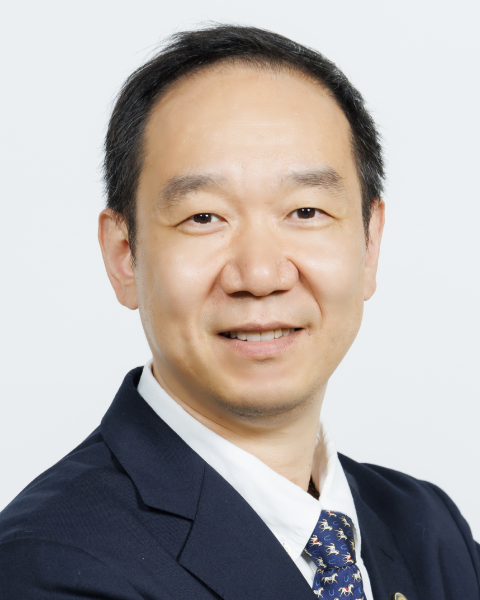
Professor Song Guo
Chair Professor in the Department of Computer Science and Engineering, Hong Kong University of Science and Technology, Hong Kong
Physical intelligence, as applied to edge systems such as robotics and autonomous driving, imposes increasingly stringent requirements on intelligent models. These models must not only comprehend and describe the world but also act effectively within it.
To address the critical challenges faced by current intelligent models during edge deployment, such as limited computational resources, high storage consumption, inadequate inference capabilities, and poor physical adaptability, we undertake a series of novel explorations.
Our objective is to develop truly embodied and adaptive edge physical intelligence. Specifically, to mitigate the substantial computational and deployment costs of intelligent models on edge devices, we introduce a policy-adaptive quantisation technique. This approach effectively accelerates computation and reduces resource consumption, enabling models to operate efficiently on constrained hardware while maintaining high performance.
Considering that edge devices struggle to meet the exponentially growing storage demands of intelligent models, we design and integrate an AI+SSD-based 'infinite' memory mechanism to effectively support ultra-long context inference.
Furthermore, to overcome the limitations of insufficient cognitive and inference capabilities in edge intelligent models, we propose a reinforcement learning-based 'extreme cognitive learning' framework.
This framework imbues models with meta-cognitive abilities such as self-reflection, evaluation, and control, thereby significantly enhancing their decision-making performance. Moreover, to tackle the challenges of low learning efficiency and slow adaptation to novel physical environments in physical intelligent models, we introduce a world model-driven 'rapid evolution strategy.'
This strategy enables iterative interaction between simulated and real environments, leading physical intelligent models to efficiently acquire and optimise physical skills.
Biography
Song Guo is a Chair Professor in the Department of Computer Science and Engineering at the Hong Kong University of Science and Technology. Professor Guo made fundamental and pioneering contributions to the development of edge AI and machine learning systems.
He has published many papers in top venues with wide impact in these areas and has been consistently recognised as a Clarivate Highly Cited Researcher. He is the recipient of the IEEE 2024 Edward J. McCluskey Technical Achievement Award, and over a dozen Best Paper Awards from IEEE/ACM. Professor Guo is the Editor-in-Chief of IEEE Transactions on Cloud Computing.
He has served on the IEEE Fellow Evaluation Committee for both the Computer and Communications Societies. He has also served as organising and technical committee chair for many IEEE/ACM conferences and workshops. Professor Guo is a Fellow of the Canadian Academy of Engineering, a Member of Academia Europaea, and a Fellow of the IEEE.
'This is Not a Testbed': How to Build and Operate Experimental Infrastructure
Professor Kate Keahey
Senior Scientist, Argonne National Lab and University of Chicago, USA
Technology appears to advance at an ever-accelerating pace, creating new opportunities for the advancement of science. Improved sensor technologies now enable precise measurement of a growing range of physical phenomena. Single-board computers (SBCs), such as Raspberry Pi and NVIDIA Nanos, allow computing to be deployed in hitherto unviable settings cost-effectively. Networking technologies have improved in both quality and coverage, allowing us to connect them all into a powerful observatory instrument adaptable to investigating a wide range of questions.
Like a telescope array that uses computation to stitch together input from multiple single telescopes to obtain the desired picture of the sky. A generalised instrument of this kind can rely on a combination of sensing and computation deployed in the field to 'stitch together' a picture of qualities relating to fields ranging from hydrology to medicine. And then, powered by emergent AI capabilities, investigate problems ranging from floods and wildfires to social inequalities.
The big question is: how do we really put together, customise, and adapt those technological advances so that they not only work in concert but actually support real scientific investigations?
Building experimental systems is both risky and complex: what problems should they solve? Are they the same ones they are capable of solving? If we build it, will they come?
At the same time, it is both rewarding and necessary for experimental systems to become scientific instruments that can address a new range of problems.

In this talk, I will present lessons learned from the development of two NSF-funded, influential, and very distinct experimental systems: the Chameleon project and the FLOTO instrument for distributed broadband research. Chameleon represents over 10 years of experience constructing, operating, and evolving an instrument for computer science research and education that has to date been used by over 14,000 users, who collectively produced over 1,000 scholarly publications in computer science.
It has supported innovative educational ventures, student competitions, and artifact evaluation initiatives, changing community practices for sharing research and education experiences in digital form. FLOTO has built an edge-to-cloud instrument that deployed an unprecedented 600 SBCs nationwide in the United States to measure broadband, highlight areas of need, and help ensure equitable access to the Internet for all Americans.
Both represent experimental systems with distinct objectives and challenges - and both provide lessons learned on how to leverage the exponentially growing opportunities in experimental system design.
Biography
Professor Kate Keahey is one of the pioneers of infrastructure cloud computing. She created the Nimbus project, recognised as the first open-source Infrastructure-as-a-Service implementation, and continues to work on research aligning cloud computing concepts with the needs of scientific data centres and applications.
To facilitate such research for the community at large, Kate leads the Chameleon project, providing a deeply reconfigurable, large-scale, and open experimental platform for Computer Science research. To foster the recognition of contributions to science made by software projects, Kate co-founded and serves as co-Editor-in-Chief of the SoftwareX journal, a new format designed to publish software contributions.
Professor Kate is a Scientist at Argonne National Laboratory and a Senior Scientist at the University of Chicago Consortium for Advanced Science and Engineering (UChicago CASE).
Cloud computing and security in the era of quantum processors
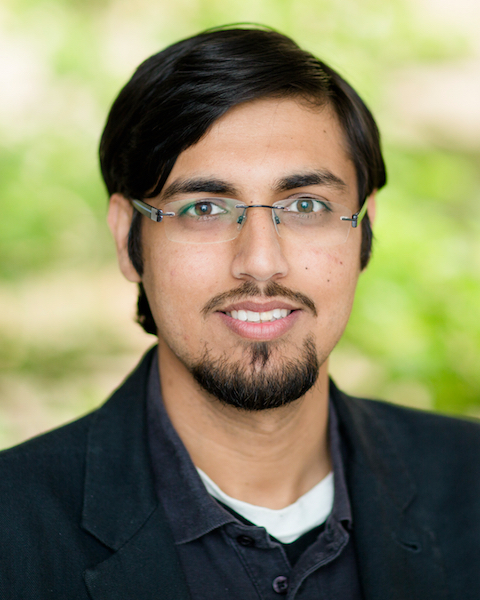
Professor Muhammad Usman
Head of Quantum Systems, Senior Principal Staff Member at CSIRO, Australia
Quantum computing is presently one of the most rapidly advancing technology areas, with significant work in progress on both hardware and software fronts.
During the last five years, the emergence of a variety of small-scale quantum processors consisting of a few tens to a few hundreds of qubits has led to the rapid development of software and algorithms, with thousands of researchers around the world benchmarking their ideas through cloud access to the quantum processors.
Quantum cloud computing and the security of quantum computation in shared cloud environments have, in themselves, become an important sub-area of research.
In this talk, I aim to start with a brief, gentle introduction to quantum computing, providing an overview of the recent developments and open research questions. I will then highlight our recent research work on quantum cloud computing and security, covering quantum computing as a service, resource management in cloud services, and security attacks and defence in shared quantum computing platforms.
Biography
Professor Muhammad Usman is the Head of Quantum Systems and Senior Principal Staff Member at CSIRO, which is Australia's National Research Organisation. He has over 15 years of research and teaching experience in Quantum Computing with a track record of over 125 research papers in high-impact international journals.
Professor Usman is leading a team of over 20 researchers working at the forefront of quantum algorithms, quantum software engineering, and quantum security. He is a fellow of the Australian Institute of Physics (FAIP) and serves on the executive editorial boards of multiple international journals, including IOP Nano Futures and Nature Scientific Reports. He has academic associations at the University of Melbourne, Monash University, and RMIT.
Professor Usman's work on Quantum Computing was the Winner of the State of Victoria iAward 2024, Innovative of the Year 2023 Award by Defence Industry, Winner of the Australian Army Quantum Technology Challenge in three consecutive years (2021, 2022 and 2023), Rising Stars in Computational Materials Science by Elsevier in 2020, and Dean's Award for Excellence in Research (Early Career) at the University of Melbourne in 2019.
He is a recipient of prestigious international research fellowships from Fulbright USA (20005-2010) and DAAD Germany in 2010. He received his PhD in Electrical and Computer Engineering from Purdue University, USA, in 2010.